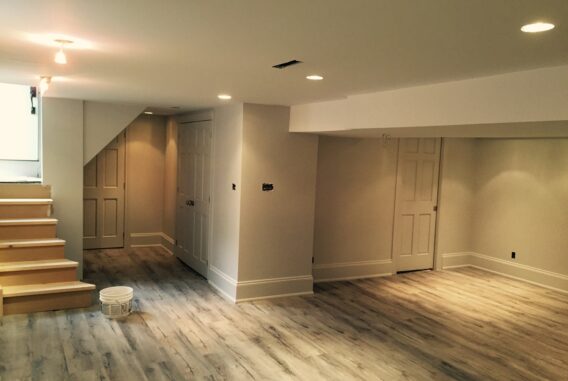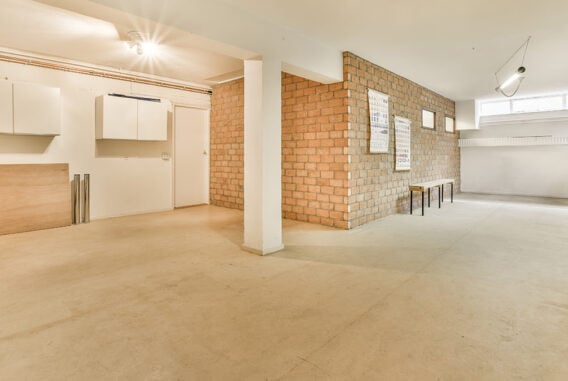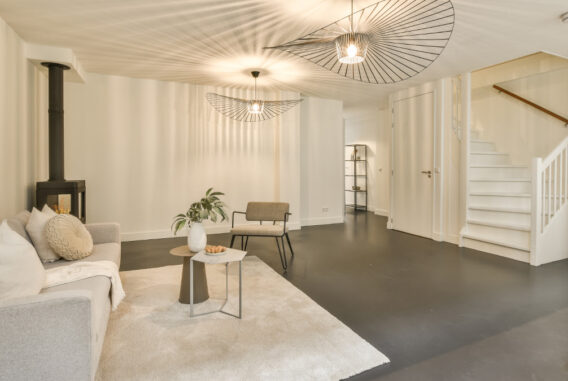
An unfinished basement is often a dark and dingy space used mostly for storage, cobweb gathering, and maybe laundry. A finished basement, meanwhile, is a total transformation into a bright, useful, and compelling space.
Does a finished basement add value to your New Jersey home? Unquestionably yes. It’s just a matter of how much finishing work you want to have done, what amenities you want installed in the basement, and how significant the return on investment can be.
Exploring the Types of Finished Basement
First up, one thing you can consider is what kind of basement you have, and what that means for the style of finishing and the value added to the home.
First up, the rarest: the walkout basement. Walkout basements are most common in homes built into hills, where the basement is below-grade on one side of the home, but above-grade on the other. These have full access doors and windows, and are effectively an entirely new room added to the home. In fact, when they’re finished, they don’t even feel like basements anymore!
Sometimes, your home may be built into a slope but not designed for a walkout basement. In these cases, you may go with the second type of finished basement, or you might invest in further landscaping to create a full walkout basement. For obvious reasons, that will be the most expensive option, but it can be very compelling for certain homeowners.
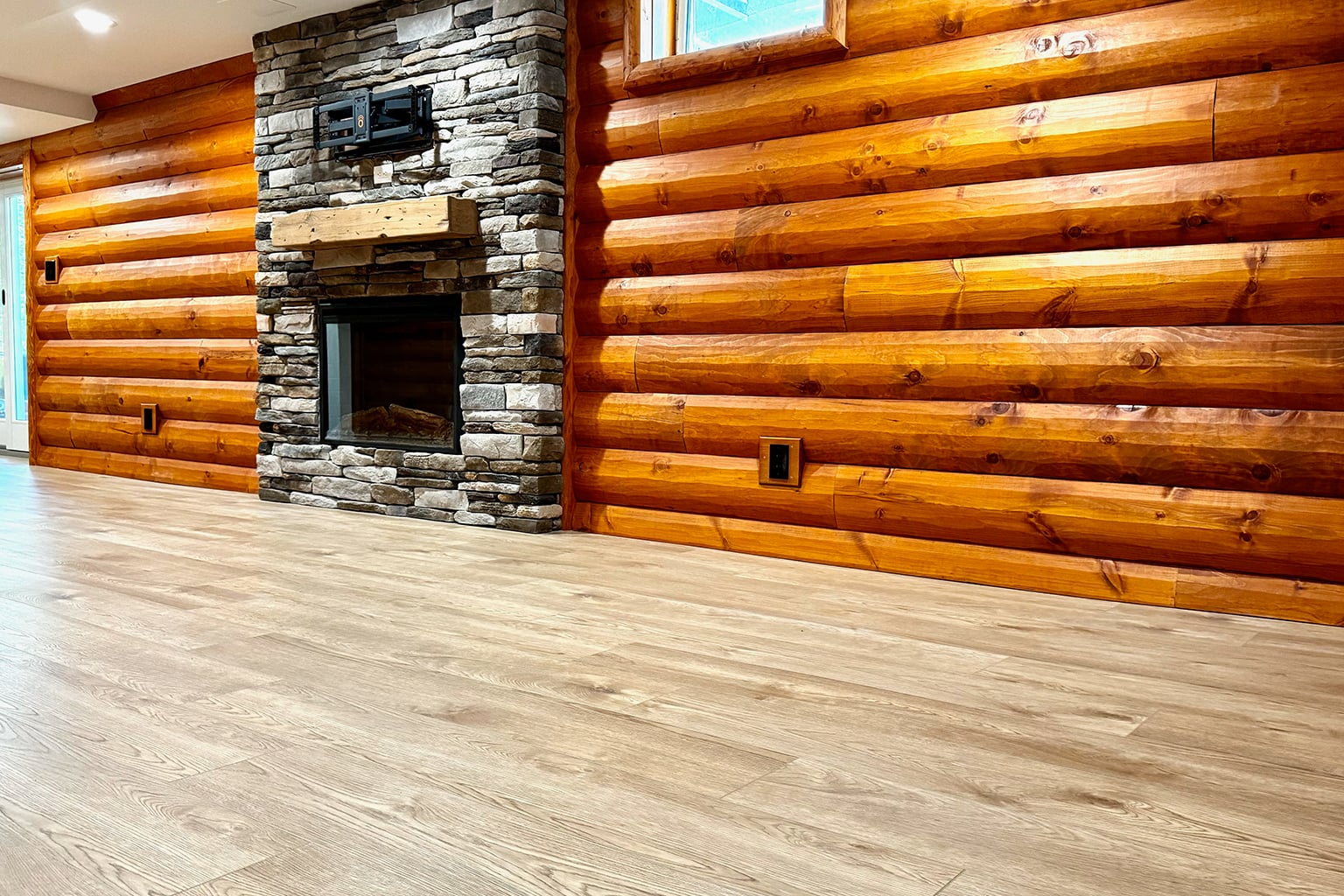
The middle tier of basement is the garden-level basement. These are common in split-level homes and homes where the basement isn’t as deep as it is in other locations. The level of the lawn is only partway up the basement, which leaves room for windows and natural light, but no room for an access door (short of building something like a sunken stairway or cellar hatch, anyway).
These tend to be appraised quite highly for their investment, and it’s almost entirely based on the presence of natural light. Sometimes, if the window space is large enough to count as an egress window, a whole new bedroom can be added in the basement. Otherwise, it may not be allowed to be called a bedroom, but it can still be a very useful office space or lounge room.
Most commonly, you simply have a full, below-grade basement. These don’t have natural light and, since they’re most common, they’re appraised the lowest. At the same time, though, as long as the basement design and finishing are well done, it can be the lowest investment as well.
Why Buyers, Families, and Homeowners Love Finished Basements
Why are finished basements so compelling? They’re useful space!
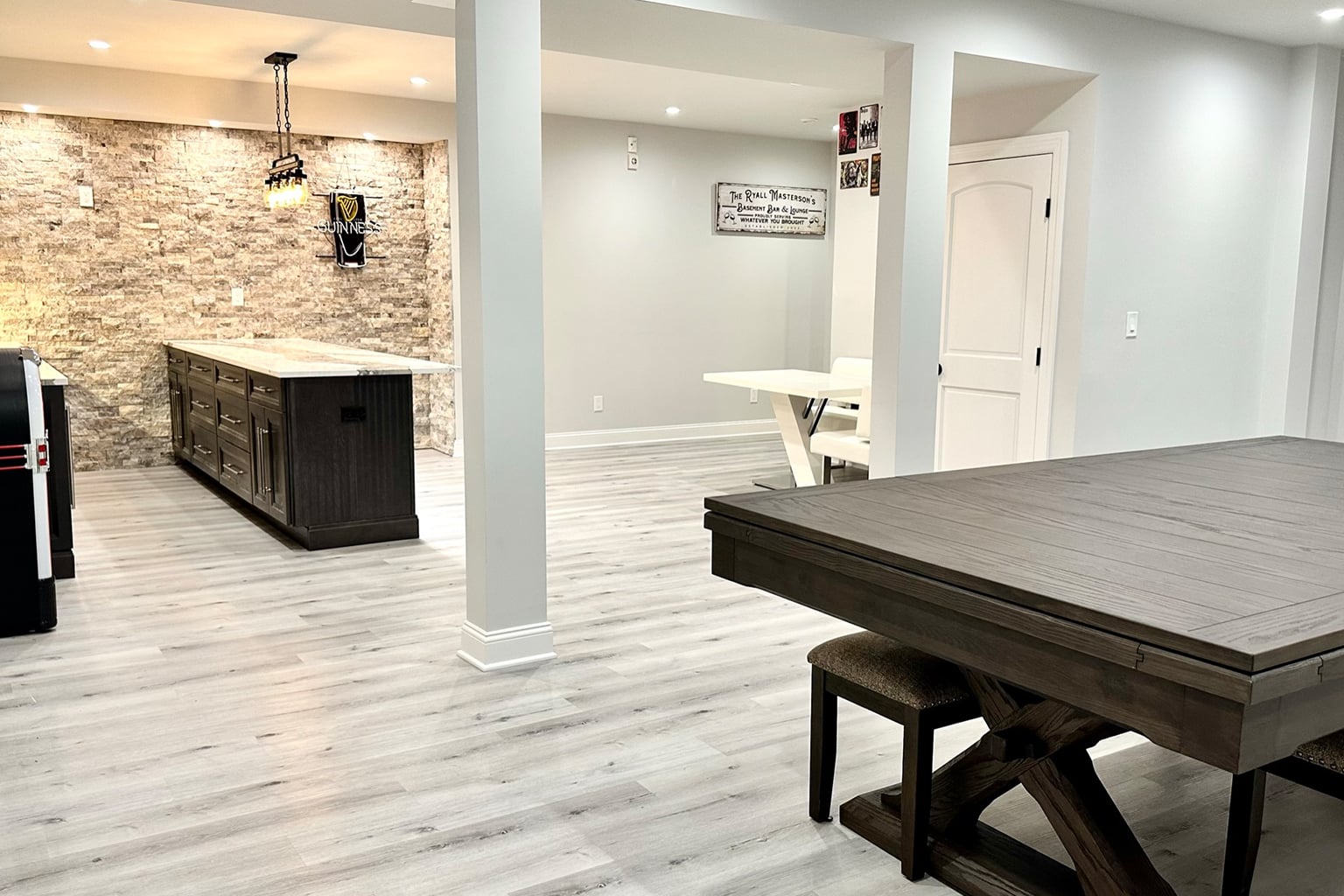
Just think of all the things you could do with another room in your home:
- Adding a family room where the family can hang out in the evenings.
- Adding a lounge and recreation area where amenities like a bar and pool table can fit nicely.
- Adding a home theater, where the lack of natural light works to your advantage.
- Adding a home gym, where you don’t have to worry about damaging floors or making noise for those below you.
- Adding a secondary kitchen for those big family events when just one isn’t enough.
- Adding a space to move facilities like laundry to free up more space on the main floor.
- Adding a home office space where you can be insulated from the rest of the home, to get some serious work done.
- Adding a guest suite, Airbnb, or rental unit (ideal for basements with external access).
- Adding another bathroom to alleviate those family conflicts over long showers.
- Adding a wine cellar to take advantage of the more stable below-grade climate.
- Adding an organized storage space (rather than shelves and stacks of boxes in a dingy unfinished basement).
- Adding a playroom where children can enjoy a space mostly of their own.
- Adding a dedicated den, man cave, crafting room, or other space.
The fact is, your basement is a space in your home that, when left unfinished, isn’t doing you any favors. Putting that finishing work in will increase the square footage of usable space in your home without the hassle of an extension, new floor, or outbuilding that takes much more investment to create. After all, it’s space you already have!
What Are the Challenges with Finishing a Basement?
It’s important to be realistic when discussing major home renovation projects, and a finished basement is one of the bigger projects you can take on without creating an entirely new space. As such, there are a few key challenges that need to be handled appropriately. Fortunately, professional home remodeling services like ours will get you where you want to be.
Controlling Moisture
One of the most important concerns with a finished basement is moisture intrusion. Unfinished basements often don’t mind a little moisture, since it can easily soak back into the ground, and won’t cause problems with the structure of the home. Some require an active sump to keep the space dry. Others won’t have moisture issues at all.
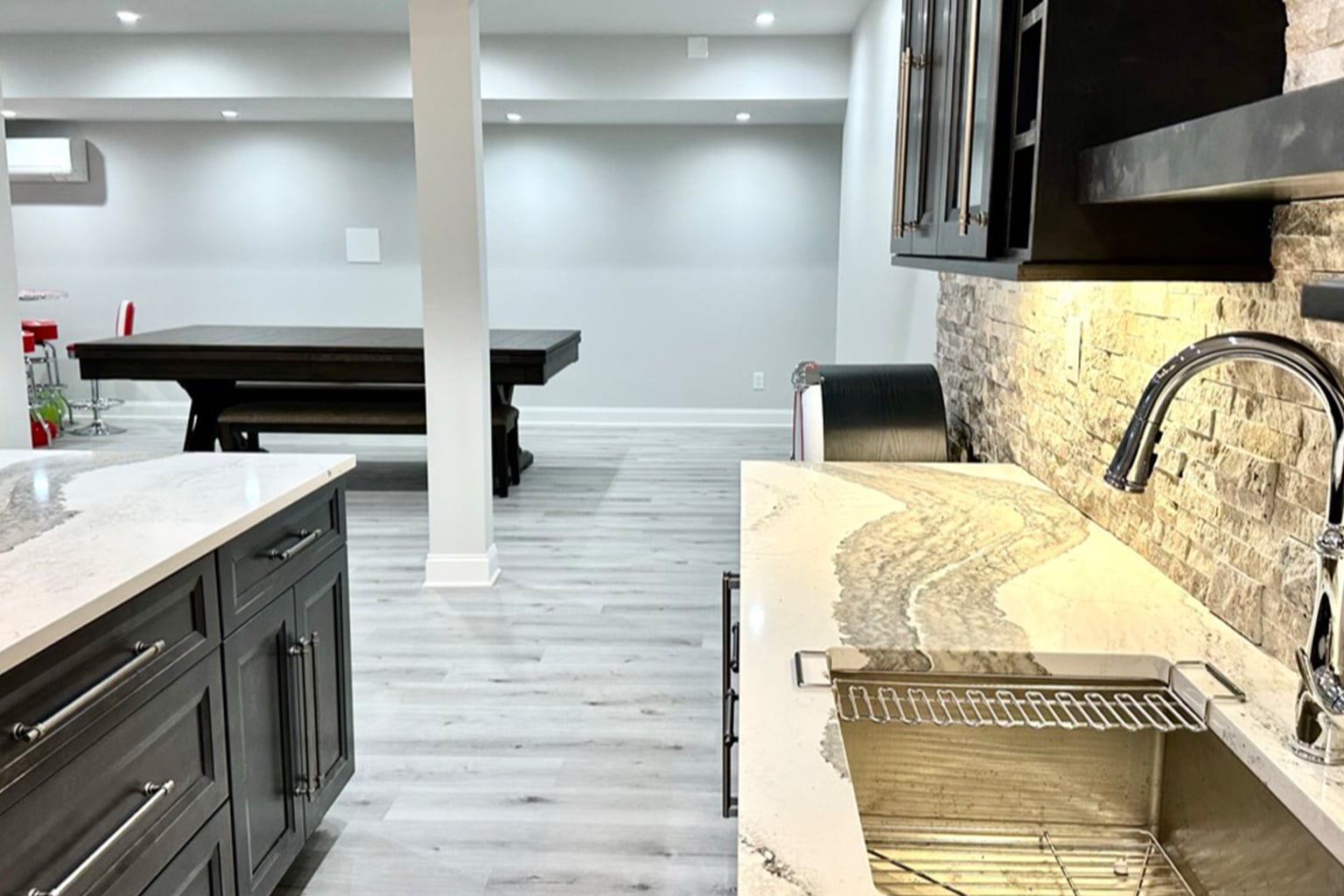
When finishing a basement, any moisture intrusion is hidden behind the finished walls and floors. That means there needs to be appropriate moisture handling, whether it’s sealing, a moisture barrier, better external drainage, or a combination of all of the above. After all, if it’s not done right, you’ll end up with water in the walls, and that’s a recipe for disaster.
Insulating the Space
Basements are frequently uninsulated and, while they can be pleasantly cool in the summer, they’re downright cold in the winter. Properly finishing a basement means taking that into account with insulation at a minimum.
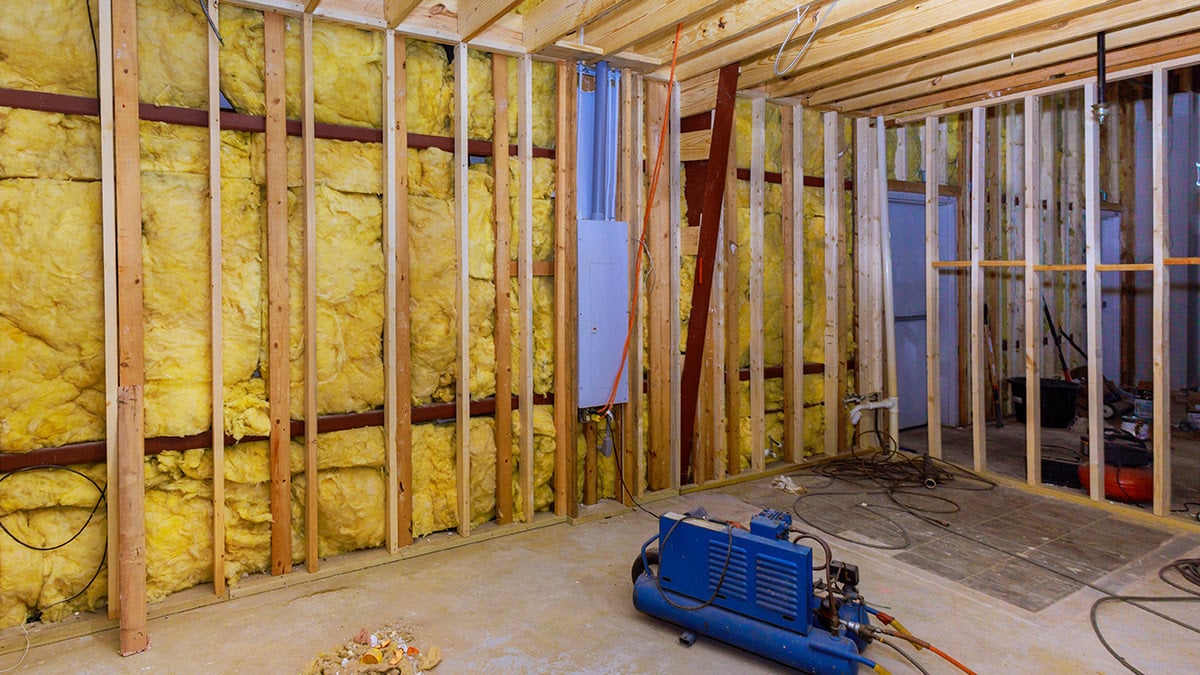
Some extensive finished basement projects can even install under-floor heating to keep the space pleasantly warm all year. Those systems cost more, of course, but the utility of the space can be that much higher.
Natural and Artificial Lighting
Lighting is key with a finished basement. Unless you have a walkout basement, you aren’t going to be getting a lot of natural light from even garden-level windows, and fully underground basements have no natural light at all.
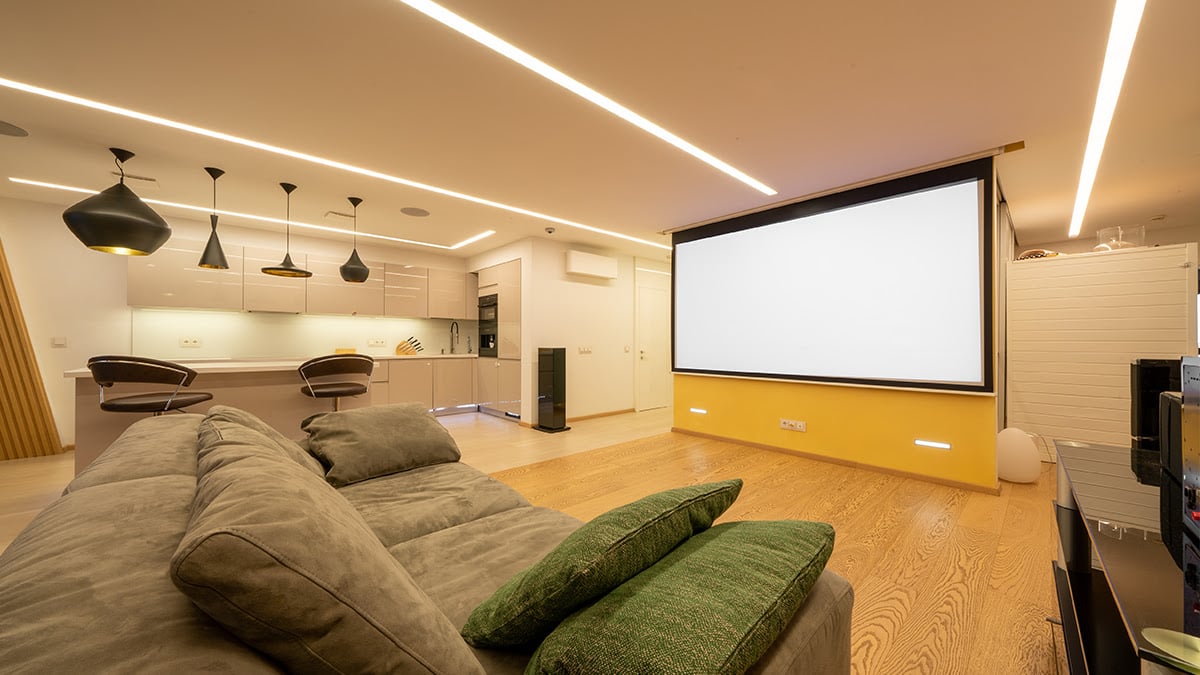
That means appropriate lighting design to bring light to the space is absolutely essential. Without it, even a well-finished basement can feel claustrophobic. With good lighting, the space will feel more open and inviting.
Utility Access
Part of designing a finished basement is deciding what you want to use the space for. Are you planning to keep or move facilities like laundry, and appliances like furnaces and water heaters, down into the space? Do you want more access for power? Do you want new plumbing to run utilities for a washroom or bathroom? All of these will require specific considerations.
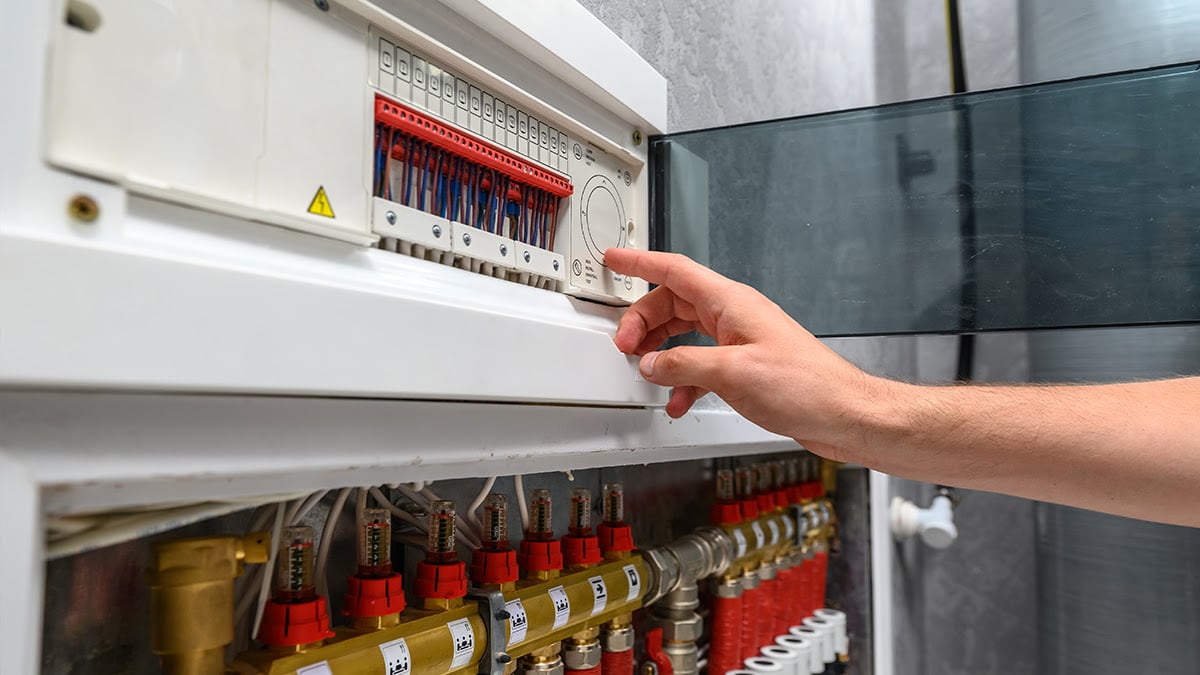
There’s a good chance your basement also serves as access for things like your breaker box and your water line shutoff. You’ll need a basement design that still maintains access to these, so a good home remodeling company like Magnolia will want to do a survey of the existing space to help you come up with an effective design.
Costs, Value, and Return on Investment
When finances are a core part of your decision-making process, it’s important to know the reality of the situation. So, let’s talk about it! There are three main questions to answer here.
- How much does it cost to finish a basement?
- How much of a return on investment can you expect from a finished basement?
- How much does a finished basement increase the value of your home?
If you think the second two are the same question, that’s why we’re writing this section. There’s a small but important difference.
First, let’s look at the cost. How much does it cost to finish a basement in New Jersey, on average?
The specific costs can vary a lot, and it depends on the scope of the work that needs to be done. If your basement is partially finished already, with good waterproofing, and you don’t need to reroute utilities or do any major construction tasks, it will be a lot cheaper than if you wanted to change plumbing, electricity, and do a dig-out. It can also depend on the size of the basement; smaller basements cost less in materials and labor than larger basements.
Small, relatively simple basement remodeling projects can run somewhere in the $25,000 to $35,000 range. Larger basements or extensive remodeling projects can cost $40,000 to $60,000. Basements with a dig-out can cost that much just for the dig-out, so double those costs.
These numbers are all just averages, however. If you’re interested in discussing your goals and having your basement evaluated, we offer free estimates for basement remodels and other projects.
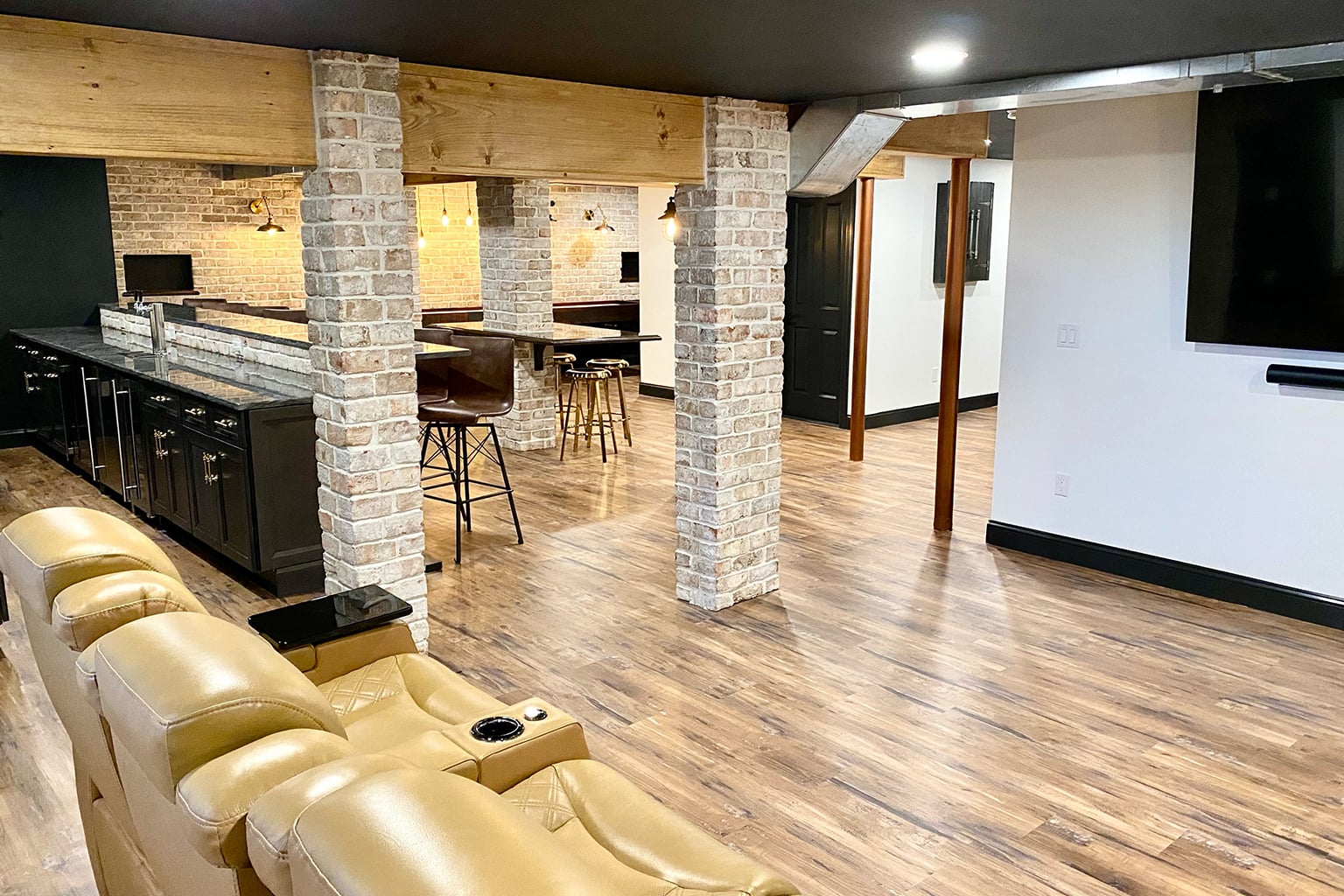
Second, let’s talk about return on investment. Generally speaking, we see around a 70% ROI for a basement remodel. So, for every $1,000 you spend on the remodel, you can expect to get around $700 back in home value.
To give some context, kitchen remodels tend to have an ROI around 80%, and sometimes a little higher if you’re frugal with it. Bathroom remodels also have a 75-80% ROIs, with certain features like double vanities or soaking tubs offering higher returns.
On the flip side, things like decks have lower ROIs, like 60-65% (though their initial costs are also lower, making them more affordable projects.) Curb appeal improvements and landscaping have a similar 70% ROI.
Occasionally, some stand-out renovations can have immensely positive ROIs, though it can heavily depend on the trends in the local market. Uncovering and refinishing a hardwood floor, for example, has a near-150% ROI nationally, but specific markets might find it to be much lower. Some smaller projects, like improving insulation and energy efficiency, can have 100% ROI, but the actual numbers are lower.
In terms of pure value, a basement remodel that finishes the basement is going to increase your home’s value, but that increase isn’t going to be more than the money you put into it in most cases. Spending $40,000 on a finished basement can see your home’s overall value increase by $28,000, to pull some numbers out of a hat.
The true value of a basement remodel is the value you get out of enjoying it. It may not be cost-effective as a remodel project just before selling the home, but if you plan to live in and get use out of the space, you get a lot more value out of it long-term.
- You get the value of enjoying more finished space in your home.
- You get the value of energy efficiency and cost savings from the finished space.
- You get the appreciation in home value with a higher base value to grow.
- If trends swing your way, the overall increase in value can spike.
Even setting aside the matter of numbers, the mental and emotional value of having more usable space in your home can be endless.
Considering a Basement Finishing Remodel? Contact the Experts
The process of a basement finishing remodel begins with planning. Consider what you want to use the space for, and what changes and improvements you would want with the space. You can bring your ideas to us, and we’ll look over the space and offer our thoughts, concerns, and details worth discussing.
From there, we can work with you to develop specific plans, help you pick out finishings and other design details, and then get it all done for you. We’ll work with you every step of the way, so you’re sure to get a basement you love.

Interested? Reach out for a free quote, and let’s get that basement beautiful, functional, and valuable.