Siding isn’t just part of the appearance and curb appeal of your home: it’s a key part of energy efficiency. There are many different styles and materials for siding, and the choice is yours. But what is the best choice here in New Jersey?
One of the top choices is vinyl siding. Vinyl siding is cheap, easy to install, and durable. It comes in a million different designs and colors, and generally maintains its appearance for 20-40 years. It’s low maintenance, too, usually only requiring some light cleaning from time to time.
If you’re interested in vinyl siding, there’s one big choice you have to make: do you want normal vinyl siding, or insulated vinyl siding?
What is Insulated Vinyl Siding?
Since you likely already know what normal vinyl siding is like, what makes insulated vinyl siding different?
Standard vinyl siding is usually fairly thin, made from interlocking pieces that have pockets of air behind them. Since the material is thin, it’s easy for the heat or cold of the outside environment to pass through to the sub-surface below the siding. Your normal house wrap and insulation keep your home at a comfortable temperature inside, but the temperature from the outside will have an impact over the course of the day.
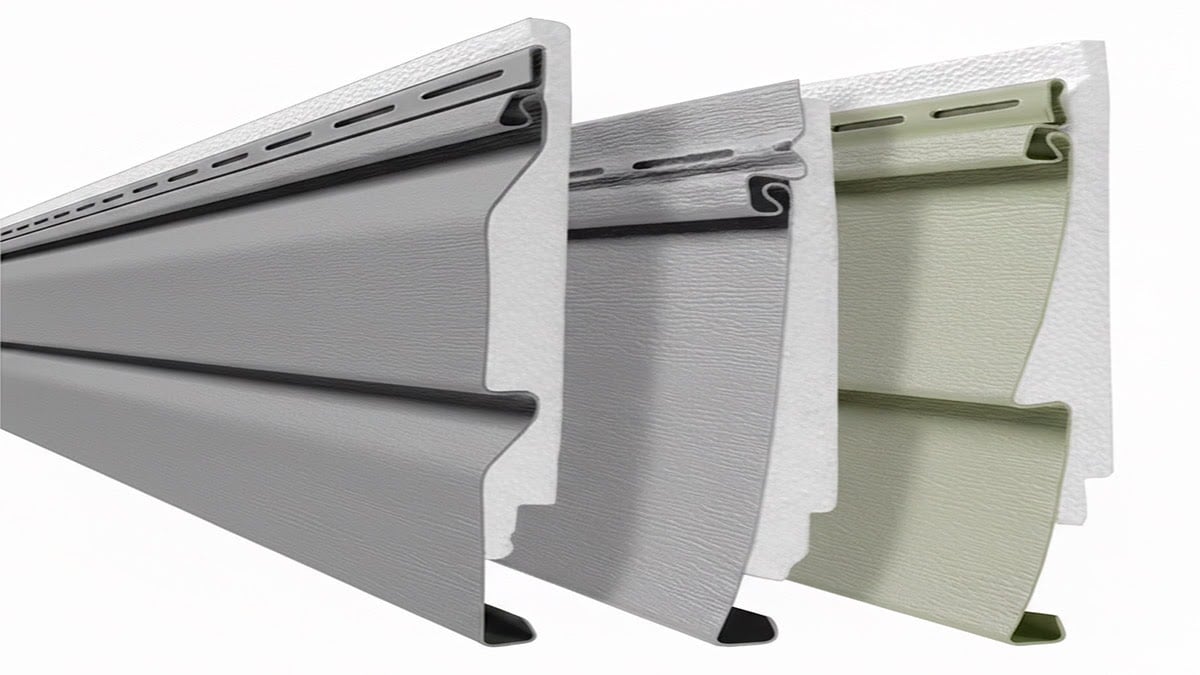
Insulated vinyl siding adds a layer of foam insulation in that cavity, behind the PVC exterior of the siding. This added layer of insulation acts like a whole additional coating of insulation on the outside of your home. This added insulation helps protect the interior of your home from temperature changes outside.
The appearance, externally, of the siding is no different. Once it’s in place, no one would be able to tell whether your siding is insulated or not. The benefits are all internal.
R-Values Explained
A brief aside, let’s talk about R-value. R-value is the measurement of resistance to heat transfer. A higher R-value means more resistance to heat transfer. It’s usually measured on a per-inch of thickness in the material.
While there’s a lot of complex math behind R-value, you don’t need to know all of it to understand it: a higher number is better, but too much is unnecessary. A home in Florida doesn’t need the same R-value insulation as a home in New Jersey, and we here don’t need the same as a home in Alaska would.
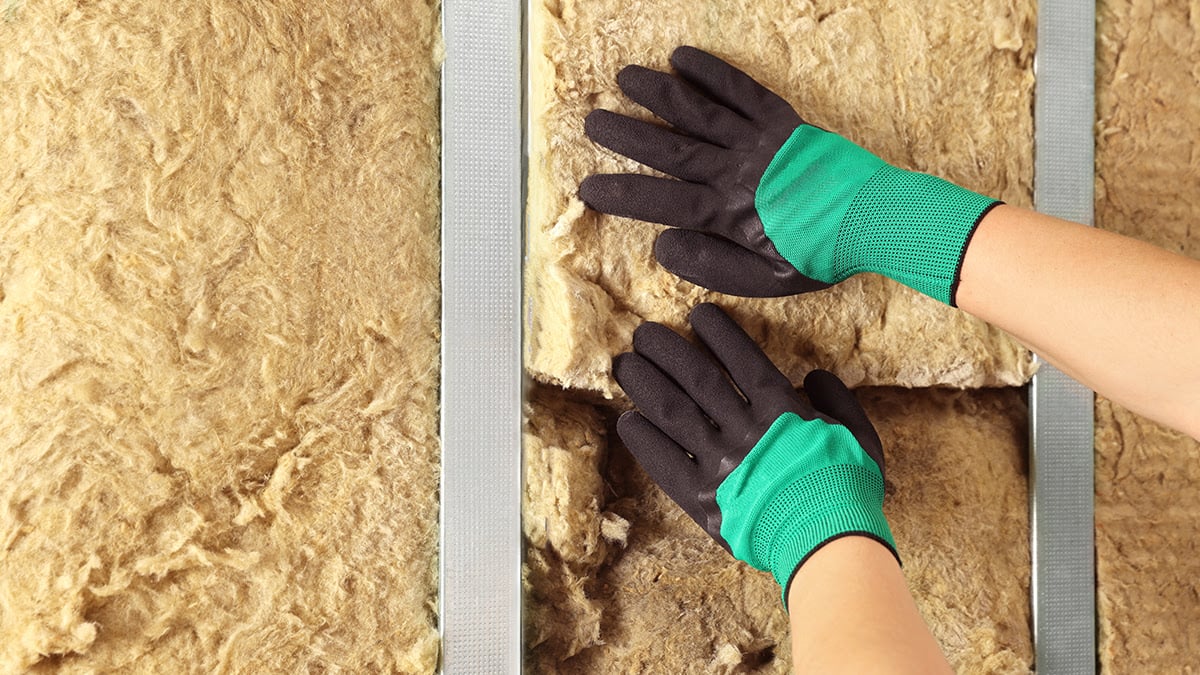
Different regions have different recommended insulation values based on their climate zone. Energy Star puts New Jersey mostly in zone 4A, with the northern part of the state in zone 5A. Zone matters for attic, floor, and crawlspace insulation values; for walls, every zone recommends between R13-R15 (for 2×4 walls) or R19-R21 (for 2×6 walls).
Those recommendations are for an average amount of comfort, but they’re not necessarily the ideal. Bumping up your home’s R-value a few points can make you more comfortable and save you money on your heating and cooling bills, since your home’s interior will better retain temperature compared to the exterior.
To put things into perspective, non-insulated vinyl siding offers an R-value of less than 1, around 0.6. Insulated vinyl siding, depending on the manufacturer and style, tends to range between 2 and 4. Adding 2-4 to your home’s R-value can be a very tangible change.
Insulated vinyl siding on its own won’t replace in-wall insulation, but it can be a great supplement, especially if you have an old, poorly-insulated addition or room that tends to have more exposure to the elements.
What Are the Benefits of Insulated Vinyl Siding?
If your home is due for new siding, adding insulated vinyl siding can be a significant improvement, so let’s talk about the specific benefits you might expect from it.
It makes your home more energy-efficient. Energy efficiency is a measurement of how much energy is used and how much is wasted. If you’re heating your home in the winter, but your windows are wide open, you’re wasting a ton of energy, right? The better the insulation in your home, the more heat it retains, and the less energy it takes to maintain that warmth.
Likewise, in the heat of the summer, better insulation helps keep the heat of the outside air outside and maintains the cool air you chill down with your air conditioning. Your AC will run less often and work less hard to maintain that cooler temperature, since you won’t lose as much chill to the outside.
It increases the perception of comfort in your home. You might not consciously recognize it, but a poorly-insulated home can simply feel uncomfortable. The walls can be colder to the touch in winter or hotter in the summer. It can feel drafty, even if there aren’t directly cracks through to the outside, since air movement inside over cold walls puts a chill in the air. Even the inconsistency in temperature between different rooms can stand out.
A fresh wrapping on the outside of your home with insulated vinyl siding helps maintain that comfort and consistency throughout the home.
It saves you money in the long run. This is directly related to energy efficiency. The better your home maintains temperature, the less frequently your heating or cooling appliances need to run to maintain the temperature themselves. That’s a direct reduction in energy costs. Who wouldn’t want a lower energy bill?
So far, we’ve mostly just talked about temperature, but there are some other benefits to insulated vinyl siding as well.
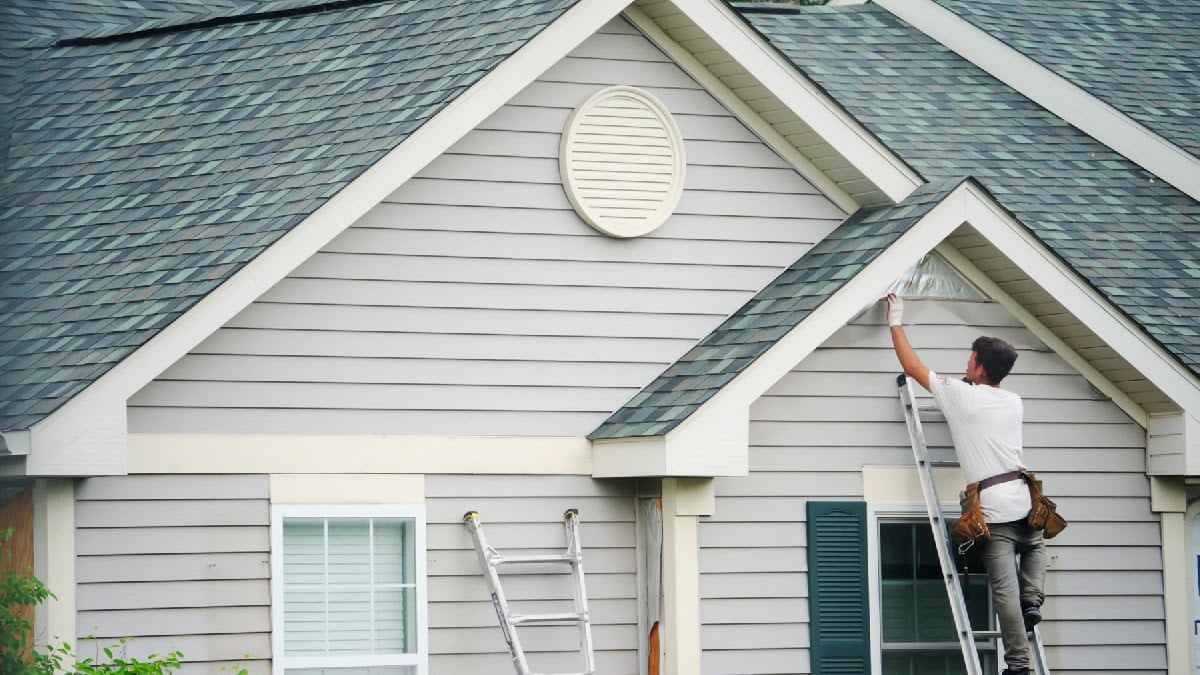
It’s not just a temperature barrier; it’s a noise barrier. For those of you who live on busy streets or near construction sites, industrial zones, or anywhere noise is common (even just noisy neighbors), you know how sound can penetrate into the home as well. Whether it’s the droning rumble of heavy machinery or the pulsing bass of a neighbor’s stereo, it can be quite disruptive.
Insulation isn’t just keeping temperature in or out; it helps minimize the transmission of sound. Insulated vinyl siding can tangibly reduce road noise, environmental noise, and other audio stress. It might not cut it completely, but it can dampen it, which can be a huge improvement in the comfort inside your home.
It’s more durable. While normal vinyl siding is fairly durable, it has a few key weaknesses. Extreme heat can warp and even melt it. Extreme cold can make it brittle, and it can crack, especially with temperature differentials between a cold area and an area in direct sunlight. It’s also not very resilient against impact, such as tree limbs or hail, or a stray neighbor kid’s missed baseball.
The layer of insulation behind insulated vinyl siding makes it more rigid, gives it more substance to absorb stress, and makes it more resistant to cracking and breaking. Sure, extreme conditions can still damage it, but we’re not getting 120-degree days in the summer, or -40 in the winter. The neighbor’s baseball can still happen, of course, but hail will have a harder time damaging the siding as well.
It helps with pest control. Standard vinyl siding offers a lot of pockets where pests like insects or rodents can get in, make their little tunnels, and eventually intrude into the home. With insulated vinyl siding, more of that space is taken up, and there are fewer gaps where pests can get in, so you have better pest resistance.
Additionally, insulated vinyl siding is often treated with a pet-safe chemical that kills termites, so if termites are trying to get through your insulation to the wood in your home’s frame, they’ll fail before they get through.
It adds more value to your home. With any home renovation project, you’re going to spend money and get some amount of that money “back” in the form of increased home values. This is the return on investment for the improvement.
New vinyl siding tends to have an ROI of around 80% on average. This is true of both normal and insulated vinyl siding. So, since (spoilers) insulated vinyl siding is more expensive than normal vinyl siding, the raw value it adds to your home is higher. Add to that your lower energy bills, and you can get an even bigger boost to the energy-conscious buyer down the line.
The Drawbacks of Insulated Vinyl Siding
So far, it sounds like insulated vinyl siding is all upside, so why isn’t it the standard? Well, it has a couple of drawbacks.
Insulated vinyl siding is more expensive. It just makes sense; one uses an entire second material over the other, so of course it’s going to be more expensive. But how much more?
Traditional, non-insulated vinyl siding typically runs around $4 to $12 per square foot. It’s one of the cheaper options for siding available, which is part of why it’s so popular.
Insulated vinyl siding is a little bit more expensive, typically running around $7 to $13 per square foot. The costs are potentially comparable, and they’re still lower than many other kinds of cladding, but it’s going to run you a little more in materials costs.
To put those numbers into real terms, give us a call. We can take a look at the space that needs to be re-clad on your home, and give you an estimate right there, so you can explore pricing options in real terms for your home.
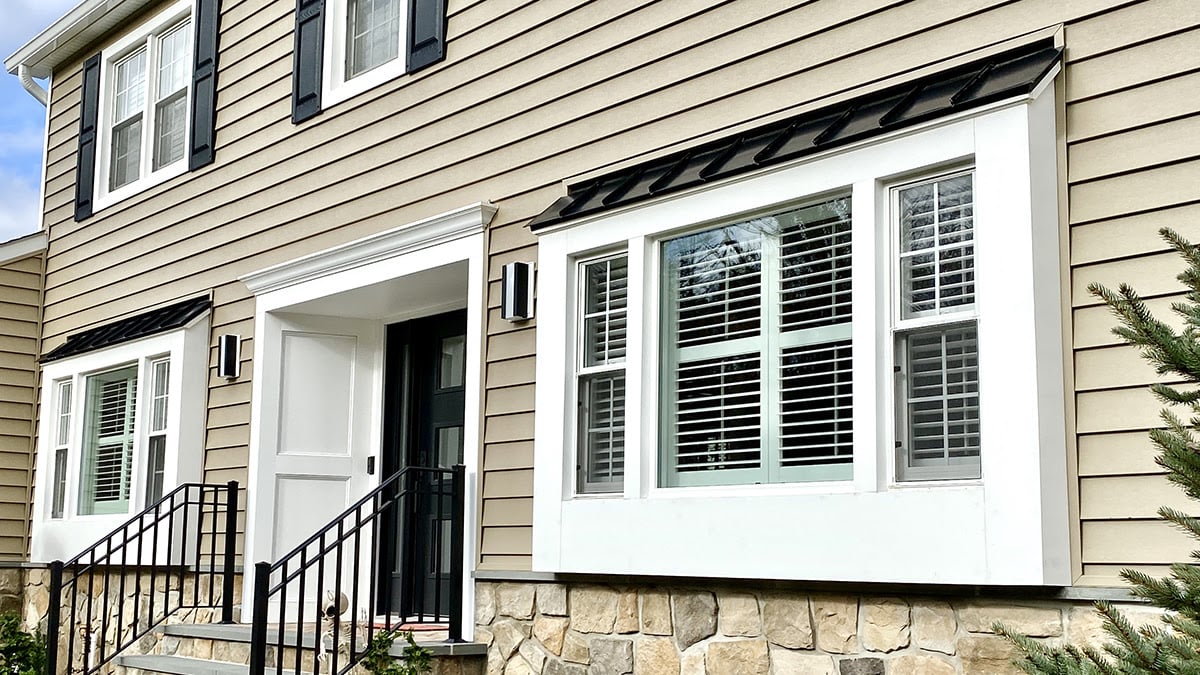
It can potentially have thermal expansion issues. Depending on how the insulation is adhered to the back of the vinyl, there can be issues with the different rates of thermal expansion and contraction between the vinyl and the insulation layers.
This is honestly more of a problem with older designs or cheaper manufactures of insulated vinyl siding. That kind of siding is fine if you live in an area with a stable climate, but it can be a problem in a place like New Jersey, where temperatures can swing quite a bit over the course of a day.
Here’s the thing: it’s not like this is a problem we don’t know about. At Magnolia Home Remodeling, we’re very experienced in installing pretty much every kind of siding imaginable here in NJ. We’ve seen how well they hold up over time, and we only ever recommend siding that can withstand our state’s elements just fine.
Installation can be slightly trickier. Since insulated vinyl siding is a little thicker than normal vinyl siding, there are a few differences in how it’s installed. We may need to do some preparation around doors, windows, and architectural elements. We’ll need to use tools like table saws rather than just hand snips to cut the siding to length.
All in all, it’s very slightly slower and more complicated to install, which can extend how long it takes to complete your project (by a day or two, at most) and potentially increase labor costs. Don’t worry; we’re up-front and transparent about all of that if you choose to work with us.
Is Insulated Vinyl Right for Your New Jersey Home?
While there are a ton of benefits and relatively few drawbacks, we’re not going to claim that insulated vinyl is 100% always the best option. Instead, it depends on your home, your needs, and your budget.
Consider insulated vinyl siding if:
- Your home is older and has noticeable draftiness in the winter.
- If your home has thin walls with relatively little or old insulation.
- If you want a higher-end siding replacement at a more budget cost.
- If you plan to live in your home for years to come, and the energy efficiency is a long-term benefit to you.
On the other hand, consider traditional vinyl siding if:
- Your home is well-insulated already and just needs new siding for appearance purposes.
- You’re in need of replacement siding but are operating on a tight budget where every dollar counts.
- You want a curb appeal refresh before a home sale and aren’t in a position to benefit long-term.
And, of course, there are other kinds of siding made of materials like composite, fiber cement, and wood that are all available as well. That’s a topic for another day, though!
So, if your home is in need of new siding, and you’re considering vinyl, drop us a line. We offer free estimates, an extensive product catalog to help you pick the siding that fits your home the best, and even financing options to make sure it fits within your budget. We want to work with you to get the home you want the most.