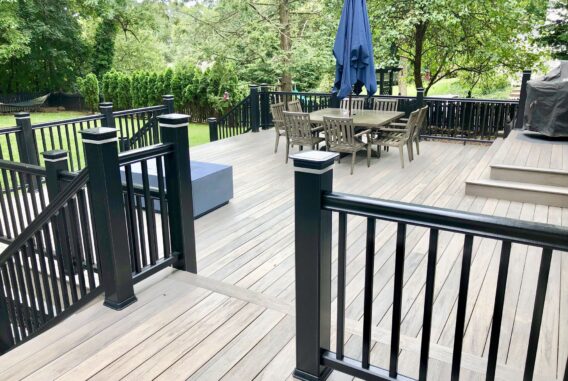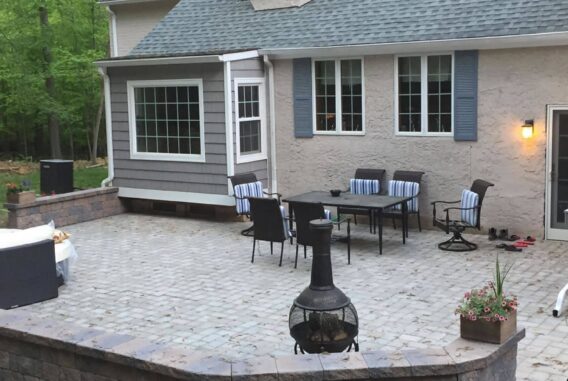
Adding, expanding, or replacing a deck is an easy way to spruce up a home, whether you’re trying to boost curb appeal before a sale or just want a nice new place to spend summer evenings and host family gatherings.
Before you pull the trigger, though, there’s a choice to make.
Do you go with a wooden deck, or do you opt for a more modern composite material?
The choice is yours, but we’re here to help. There are pros and cons to both materials, and a lot comes down to your specific considerations, like budget, maintenance, and your intended use. Once you’ve read our rundown here and have a better idea of what you’re looking for, you can contact us for one-on-one discussions to pick what works for you.
What is a Composite Decking Material?
You know what wood is, but what is composite material? Your initial hunch might be a kind of plastic, but that’s not entirely correct. Plastic decking material exists, but it’s normally called synthetic or PVC instead of composite.
The word “composite” means “made up of various parts or elements.” Composite deck boards are made up of several different materials, mixed and pressed together to form the deck boards used to make your deck.
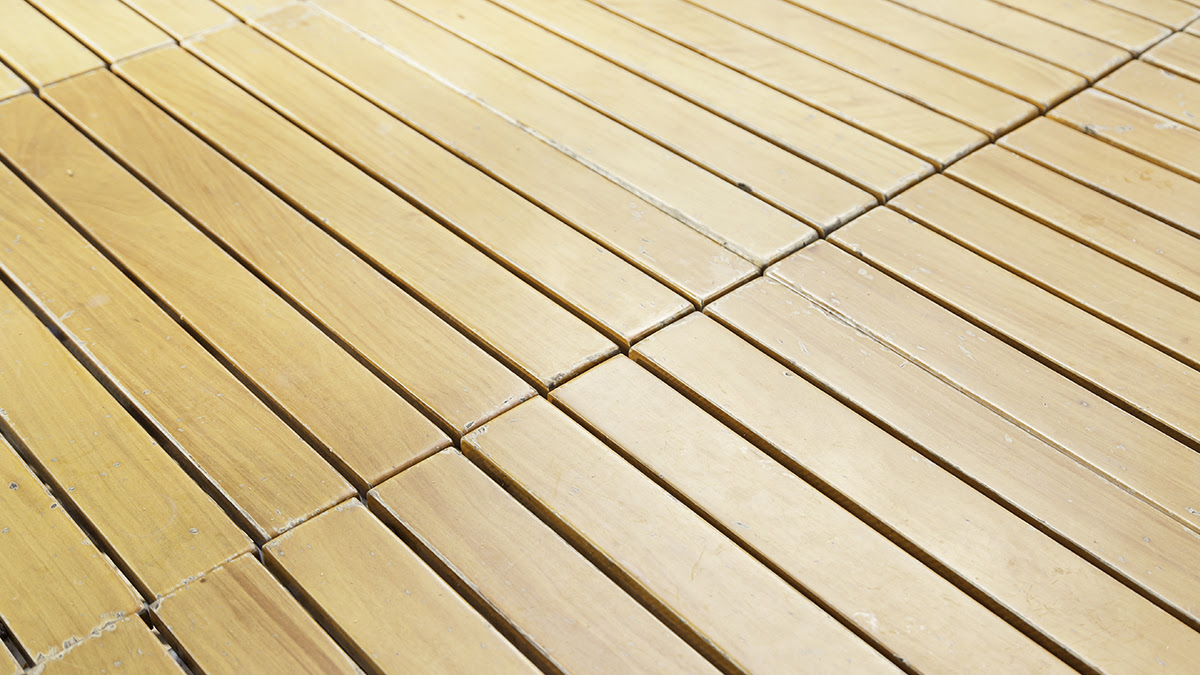
Composite decking is made of two materials, combined to form one, stronger whole. One is wood, which can come from a variety of different kinds of wood, and can be sawdust, woodchips, or wood fibers. These are bound and held together with the second material, a kind of plastic or mix of plastics. The materials are mixed in proportion and then put through a machine that presses them together under pressure and heat to melt the plastic and use it as a binder around the wood.
The plastic allows the deck boards to be uniform in shape and size, while the wood adds strength to the finished product.
The specific plastics being used and the mixture of plastic and wood are proprietary. Different brands, like Trex and TimberTech, have their own mixtures and processes, their own designs, and even different types of composite products throughout their product lines.
There are quite a few benefits, but also some drawbacks, to picking composite decking as your material of choice. Let’s compare composite and wood, and help you decide which is right for you.
Composite vs. Wood Decking: Cost
If budget is your primary concern, as it is for many, it makes sense to talk about it first.
The majority of the time, wood decking is going to be the cheapest option around. It’s cheap and readily available; after all, it literally grows on trees.
This assumes, though, that you’re aiming for basic pressure-treated lumber, which is generally going to be pine. Pine grows fast, grows straight, is easy to turn into boards, has good durability, and is lightly colored, so it can take stain well.
Premium woods, including hardwoods, are also available. They can be stronger and more durable, and have an elegant and unique look, but they’re also more expensive, rivaling some composite materials.
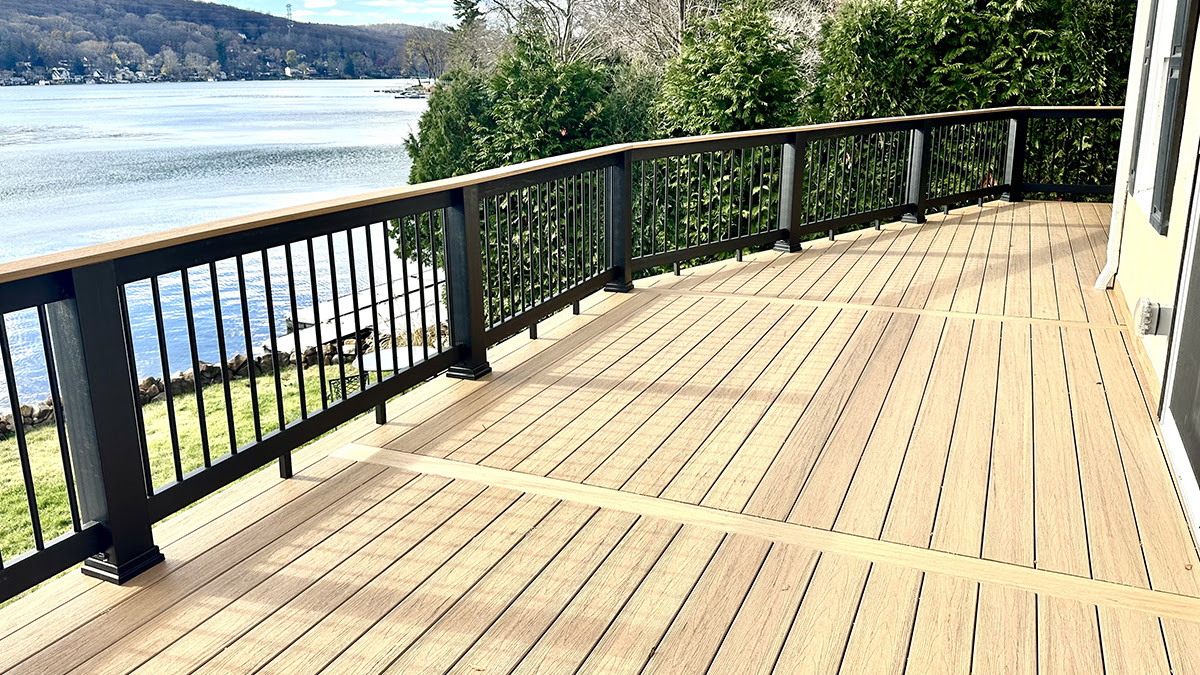
Composite materials for decking come from many different brands and compositions, but they’re all pretty similar in terms of material properties. Cost-wise, they’re almost always going to be more expensive than wood, ranging from 3x to 10x the price of basic pressure-treated lumber. Cheaper composites may be on par with more expensive woods, but that can also vary by availability.
Note that these are materials costs, which are just a small part of the overall cost of a deck. We’re not saying a composite deck will be 3-10x the price of a wood deck, by a long shot. The exact pricing and variance depend on the size and design of your deck, how long it will take to put in, and even what work needs to be done to install it. To discuss your project and get a free estimate, reach out to Magnolia Home Remodeling Group whenever you’re ready.
If your decision is made entirely based on budget alone, wood wins… by initial investment. But that’s not the only cost, is it?
Composite vs. Wood Decking: Maintenance
Decks need to be maintained, just like every other part of a house. Maintenance takes time, labor, and money for the supplies to do it.
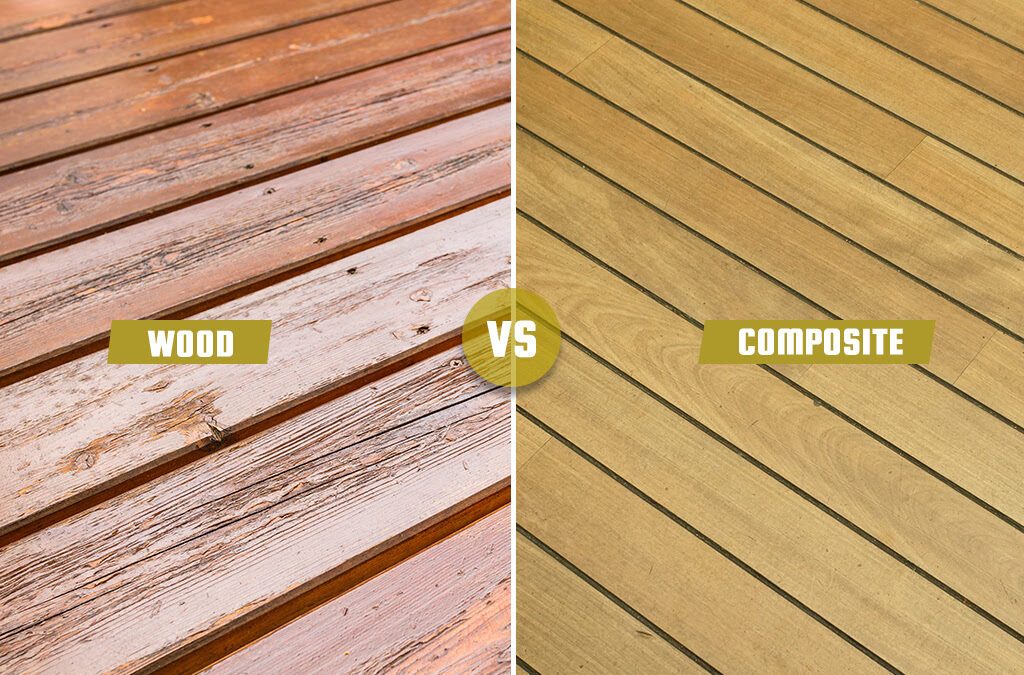
Wood can deteriorate over time, especially if it’s exposed to direct sunlight all day, open to the elements, and left exposed to other sources of damage. The color fades, the boards can warp, crack, and bow, and insects can get to it.
Maintenance of a wooden deck can involve routine basic cleaning, annual deep cleaning that can involve special cleaners or pressure washing, and added treatments and sealants every 2-3 years. To maintain color, stains and resurfacing can be added, but without them, the appearance of the deck will fade over time.
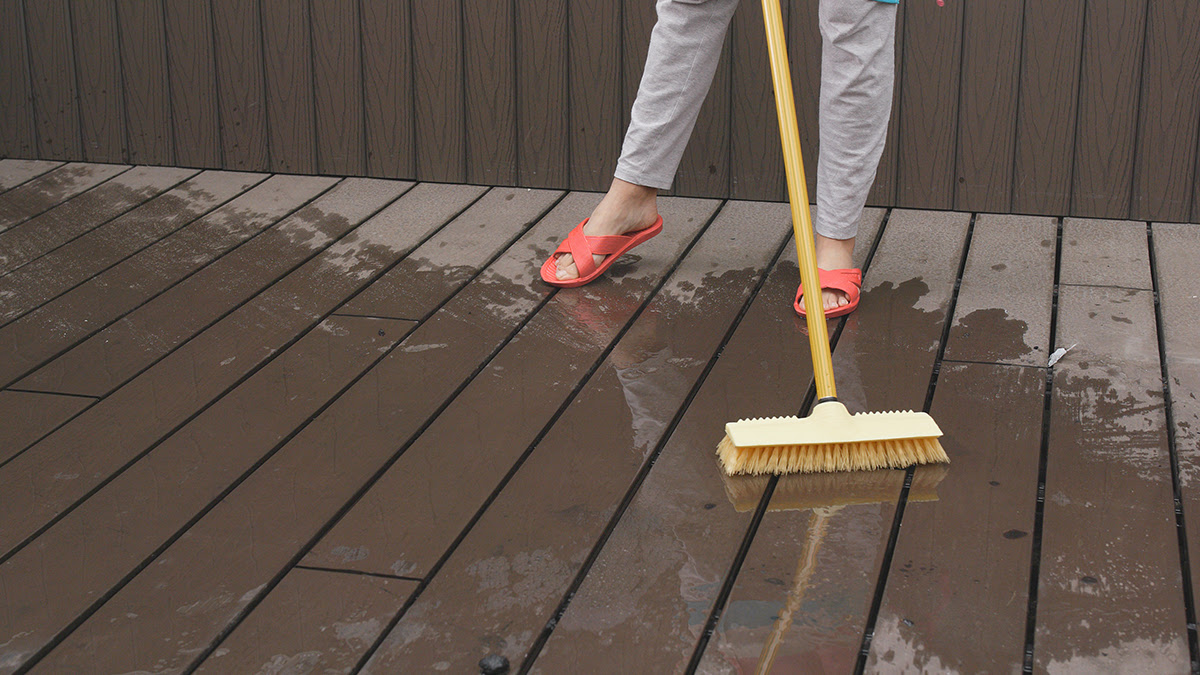
Composite, on the other hand, needs a fraction of the maintenance. Keeping it swept clear of debris, giving it a quick scrub-down with soap and water to remove anything with the potential to stain, and that’s about it. Some kinds of stains, molds, and other issues can use specific cleaning methods, but the bar is a lot lower. You’ll never need to buy a bucket of stain and sealant for a composite deck.
This does affect the cost of the deck over time. Wooden decks require more ongoing maintenance with more expensive materials than composite decks, which means that while the up-front cost of a wooden deck is lower, it can break even over time.
Composite vs. Wood Decking: Durability and Lifespan
How long a deck lasts depends in part on the maintenance you dedicate to it, but it also depends on the base material, the local weather, and more.
Wood, in general, can be very durable, or it can rot away in a matter of just a few years. Wood used for decking is pressure-treated to increase durability, resistance to rot and insects, and resistance to the elements. But it’s still wood, it’s still an organic material, and that will break down over time.
When maintained normally, a wooden deck can last 10-15 years. When left to deteriorate, it might not make it past five. A deck made of a more durable hardwood and aggressively maintained can last much longer, though that kind of maintenance is unlikely these days. In old homes around the world, you can find decks over 100 years old, but that doesn’t necessarily mean any individual board is older than 20.
Just because the wood lasts doesn’t mean the deck is beautiful or usable, though. If the boards warp and splinter, the color fades to gray, and it accumulates stains, it ends up unpleasant to use or even look at. Just because it’s technically still there doesn’t mean it’s living up to its potential.
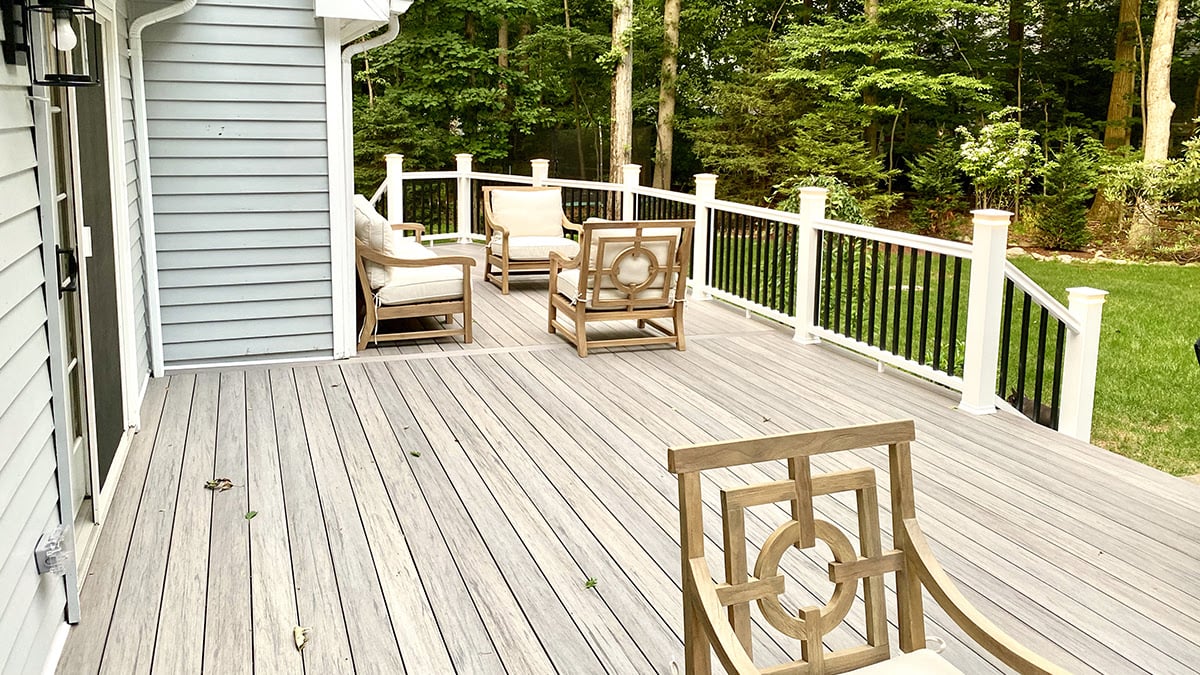
Composite, meanwhile, is broadly much more durable. It depends somewhat on the specific conditions, maintenance, and even the kind of composite, but most composites have a baseline lifespan of 20-30 years. Many popular brands come with a 25-year warranty because they’re meant to be long-term materials.
Composite also maintains its look and shape throughout that time. While the colors can fade slightly, they’re much more resistant to sun-bleaching and stains. They won’t warp, splinter, or break outside of extreme conditions.
Not all composite is created equal, though. Some composite materials, particularly some of the earlier capped composite designs, end up delaminating or degrading faster than expected. Some decks made with those materials have only lasted 10-15 years, instead.
The composite materials we use at Magnolia have stood the test of time, but if you’re interested in trying something new and untested, be aware that there can be unforeseen problems.
Composite vs. Wood Decking: Usability
What do you intend to do with your deck?
Wood and composite materials both have certain qualities that can make a deck less useful for certain purposes.
If you like to spend time on your deck in socks or barefoot, you might have issues with both materials, though in different ways. Wood, as it deteriorates over time, increases the risk of splinters. Composite remains smooth, but it will get significantly hotter in the sun, and can burn your feet on hot summer days.
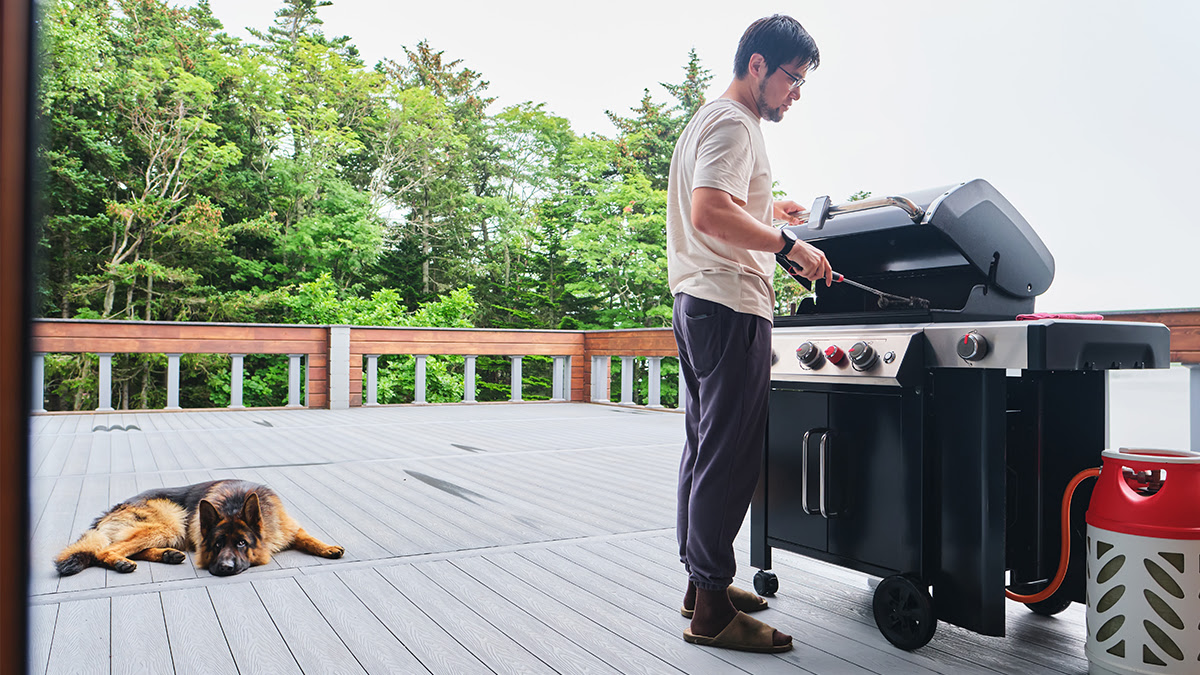
Grilling is another. Grilling on a wooden deck is broadly fine, as long as your hot grill isn’t right up against a railing. You need to be careful, obviously, but that’s true with any grilling. Composite materials are much more susceptible to heat, though, and can warp; even hot grease dripping from a grill can leave melted drip marks in a composite deck board.
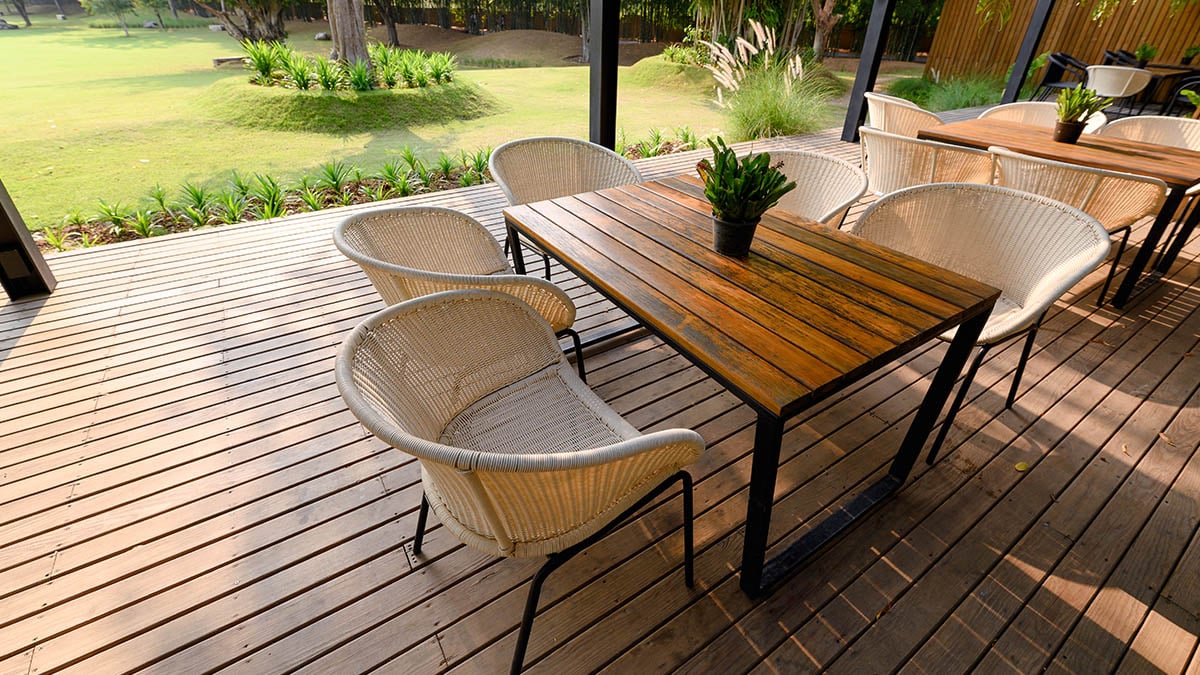
Even something like just having deck furniture can vary. Wooden decks can be scratched and abraded or have marks left in them by heavy furniture, but those marks can be repaired quite easily. Composite is more likely to be scratched and harder to fix in a way that maintains its appearance.
Wood is also stronger over longer spans than composite. While design makes up for this, a wider spacing on joists for composite decks can leave a bit of flex in the boards, which has a certain feel to it that not everyone likes. They’re not likely to break out from under you, certainly, but the motion can be distracting or unpleasant to some.
Are these edge cases? Maybe. Can they matter for some people? For sure. Feel free to let us know what you want to do with your deck, so we can help advise you on the best materials.
Composite vs. Wood Decking: Aesthetics and Design
While a lot of composite deck boards are made to look like wooden boards, there’s only so much they can do to look natural. Wood is natural; it weathers, it ages, it changes, and it has the patterns and signs of growth that any organic material will have. Composite can mimic those patterns, but they’ll be static, artificial, and potentially even repetitive.
The appearance of the deck boards themselves is just one factor, though.
Wooden boards can be slightly inconsistent. You might not notice board to board, but over the size of a full deck, slight variations can lead to different gaps and imperfections. Maybe this is appealing to you, or maybe not. Composite boards are manufactured with precision, so the consistency will be there all the way through.
Wooden decks are generally constructed with relatively simple framing, deck screws, and some finishing. Visible screws can be an eyesore for some people, and some composite decks offer hidden fastener construction. It’s more expensive and labor-intensive, but the end result is a seamless deck that looks loose but is solid as a rock.
Composite decks can also be customized with certain aesthetic choices that, while technically possible with wood, are much, much more specialized. Want a flowing, curving design with waves in the edges and railings? Composite can be heated and bent to follow that curve. Wood, technically, can as well, but you’ll basically never see it done.
Which is Better for New Jersey Weather, Wood or Composite Decks?
Here in New Jersey, wood can take a real beating. Hot summers with bright sunlight can bleach the stain right out of wood. Rainy days can leave the wood absorbing moisture, making it more prone to rotting, especially if it’s not re-sealed regularly. Cold in the winter, especially when it freezes, can lead that moisture to expand, warping and cracking boards. We also have to worry about termites; though wood can be treated to be pest-resistant, it can still happen.
Composite is not susceptible to any of this. On the other hand, it can get extra slippery when it’s wet or when there’s snow and ice out, though textured composite can minimize this.

So, the question remains: which is the right material for your deck?
Wood tends to come out ahead if you’re looking for a lower-cost deck option, something relatively durable, natural, and strong, and you either don’t mind the regular maintenance or you don’t necessarily plan to stay in your home long-term.
Composite wins out in terms of durability and longevity, though it can have some usability hassles in certain conditions. A deck that lasts with minimal effort is going to be a composite deck.
Now that you know more about your options, we can talk about the specifics, from color to material to brand, and help you decide on a design as well. Just drop Magnolia Home Remodeling a line for a quote, discussion, or more information.