Plenty of families face this exact situation when mom or dad can’t take care of the stairs anymore or when the shower turns into a hazard instead of just being a part of normal life. It’s the house where the kids grew up, had their birthdays and came together for holidays year after year. Now, even basic activities like a trip to the bathroom or a trip upstairs to bed put them in danger and cause lots of worry. An assisted living facility could be a smart idea. But it would also mean they lose their independence and everything familiar. At the same time, if you don’t make the right changes to the house, it isn’t all that safe for them to stay either.
New Jersey creates some tough challenges for older adults who want to stay in their own homes. The state has thousands of multi-level colonials, split-levels with stairs in all of the wrong places and older homes with cramped bathrooms that were designed decades ago when homeowners didn’t give much thought to accessibility. What felt comfortable and charming years ago can become a genuine safety issue as we get older. On top of all this, New Jersey’s senior population is growing faster than just about anywhere else in the Northeast, and it means thousands of families are working through this exact problem as we speak.
Every year, millions of older adults land in the emergency room because of falls, and lots of these accidents happen right in their own homes – usually when they get in or out of the shower or when they move between floors. You’re helping them hang onto their independence and their dignity, and it means they can continue to live the life that they’ve built in their community for all these years!
Let’s talk about how these home modifications help you to stay independent and comfortable longer!
Simple Home Safety Changes for You
Most home injuries actually happen in the bathroom, and occupational therapists will usually tell you to work on that room first when it comes time to add safety features. Bathroom safety upgrades can be installed without having to tear into your walls or deal with any big renovation project.
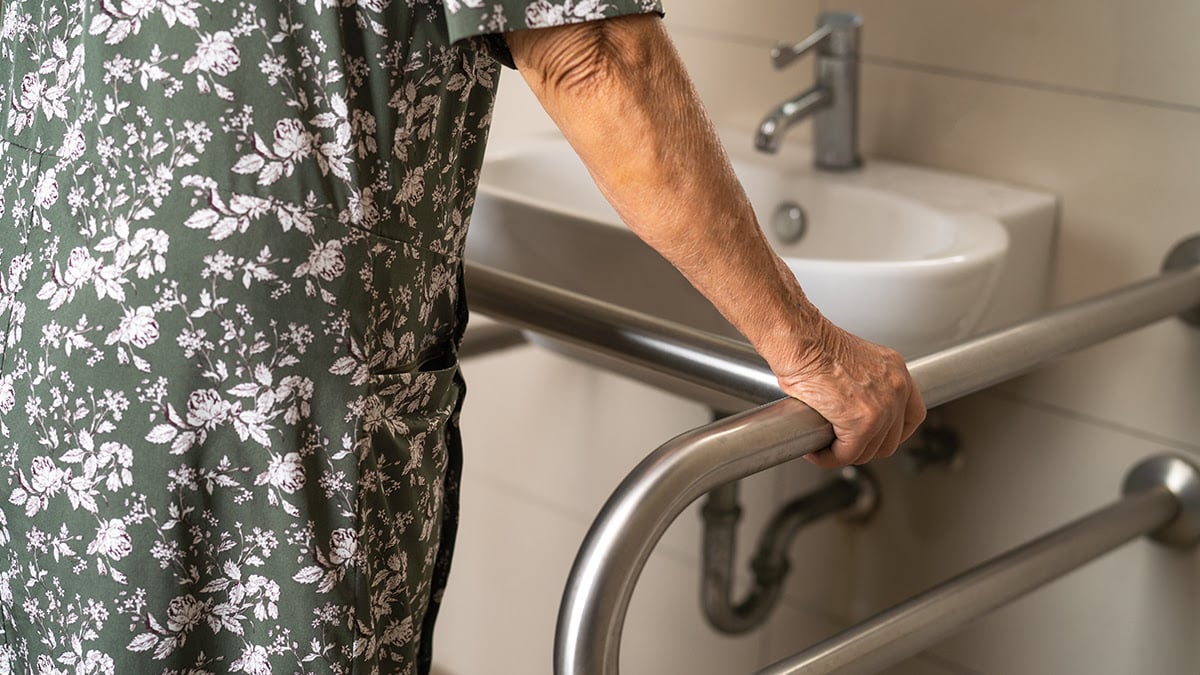
Grab bars are one of the smartest additions you can make to a bathroom, and homeowners usually install them near the toilet and inside the shower. They give you something sturdy to hold onto, and it makes it much safer as you sit down or stand back up. Walk-in tubs have become quite popular over the last few years because they get rid of the need to step over the high edge of a standard bathtub. Lever-style faucets are much easier to use than the traditional twist-style knobs. The main benefit is that they don’t need much grip strength at all to use. Hand strength decreases with age and makes this a helpful upgrade.
Your kitchen could use a few updates, too. Lever faucets are just as helpful in there as they are in the bathroom – they’re easier to use with wet hands and no twisting needed. Another easy fix is to remove any throw rugs that you have around the house. Throw rugs seem harmless enough, and plenty of homeowners use them without giving it much thought. They actually cause a massive number of falls each year, though, and that usually happens when the edges curl up, or they slide around on hard floors.
All these upgrades work to stop problems before they can even start, and it’s a whole lot better than trying to take care of them after something’s already gone wrong. Each one solves a challenge that you’re going to run into every day. They help you keep your independence and dramatically lower your chance of injury at the same time.
Home Changes That Help You Move
Grab bars and better lighting are simple additions that help a lot of homeowners stay in their homes as they get older. Those kinds of small fixes can help early on. As mobility gets more limited and everyday tasks get harder to manage, you’ll need to start thinking about bigger renovations that address the layout and accessibility of the entire space.
Most doorways in older homes are right around 30 inches wide. That standard width turns into a real obstacle when you have to move a wheelchair or walker through them. Widening those doorways to 36 inches will get you the clearance you actually need to get through comfortably and without any struggle or trouble. You’ll have to modify the entire door frame and then patch and repair the wall material around it.
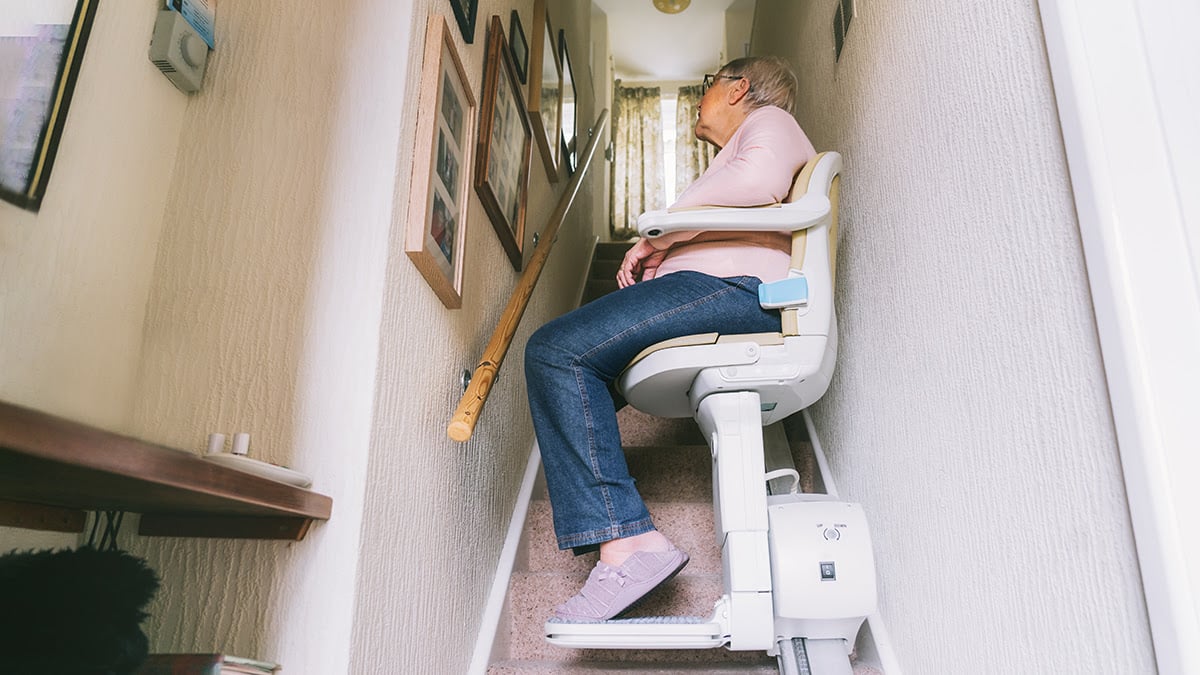
New Jersey has plenty of split-level homes and colonials with multiple staircases, and those stairs can become a challenge for anyone who struggles with mobility. Stairlifts could be a solid option – they mount directly to your existing staircase and allow you to ride up and down as you’re seated safely. A straight staircase is usually pretty simple to install. Curved staircases or split-level designs are a different story, though, and these are going to need a custom-built system to fit the particular layout of your home.
Residential elevators are one more option for multi-story homes, and they’re especially ideal for wheelchair accessibility. The units can fit a wheelchair comfortably, and they allow you to access every floor in your home without needing any help from anyone else.
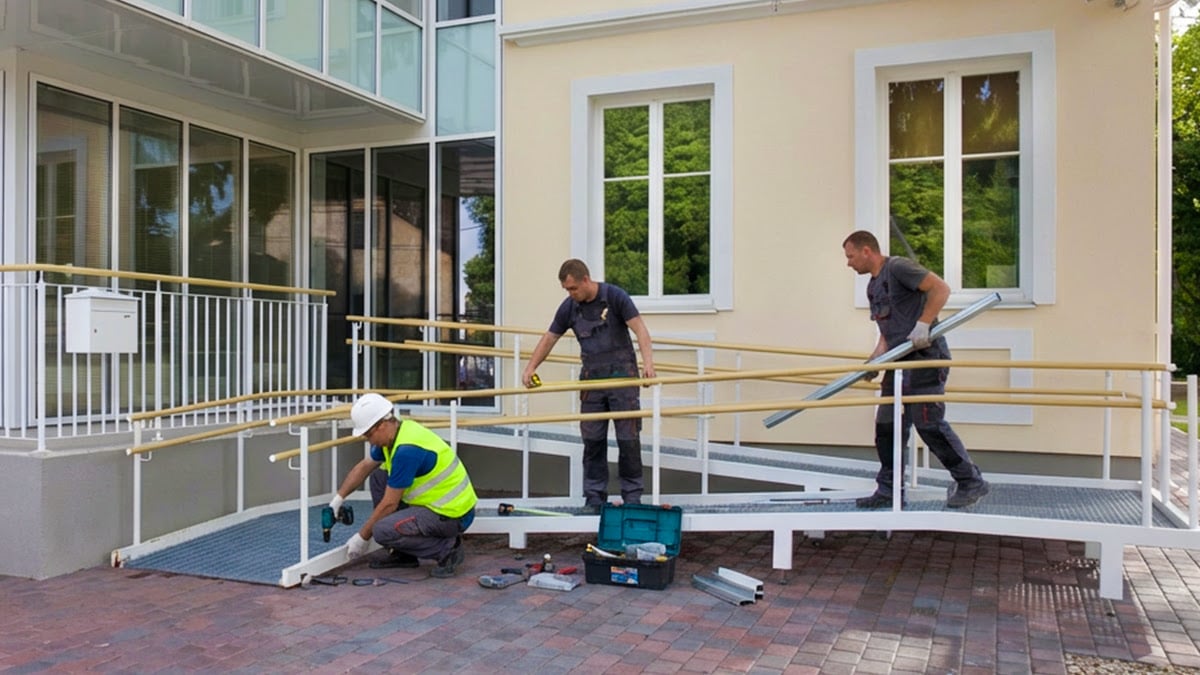
Interior access matters, and that’s just one part of accessibility. You also need to be able to get in and out of the house safely, and the entryway itself needs to be accessible, too. With a zero-step entry, you won’t have to climb any stairs just to get through the front door. Ramps are another popular option for some homeowners. They have to be built at the correct slope, or they can become unsafe to use. The standard ratio for ramp construction is 1 inch of rise for every 12 inches of length.
Winters in New Jersey can complicate outdoor modifications a bit. A zero-step entry paired with a covered entrance is going to take care of most of the snow and ice buildup. Heated mats or a solid drainage system will make sure that the entryway doesn’t become an ice rink every time the temperature drops.
Projects like doorway widening and elevator installation are going to need permits, and you’ll want a professional contractor to take care of them correctly. The cost is going to be higher than the easier safety upgrades you could take care of on your own. Renovations like these can make a difference in a home for anyone who has serious mobility limitations, though. The investment makes plenty of sense when the alternative could be having to move out of a home you’ve lived in for years.
New Jersey Home Permits and Building Codes
Home modifications in New Jersey can be a little hard to figure out because the process isn’t the same for every project. What you’ll have to do depends on what type of work you’re planning. Some changes to your home are going to need official permits from your local building department. But plenty of other modifications move forward without any paperwork or approval process at all.
Permanent ramps are one of the bigger installations that are going to need a permit in most areas. Any electrical work also falls under this umbrella – we’re talking about work like adding new outlets or upgrading your main panel so it can support a higher electrical load. Bathrooms are another common project that needs permitting, and that’s especially true if you’re planning to move plumbing lines around or make any big changes to the existing layout.
Basic installations like grab bars won’t need a permit at all. Temporary ramps (the kind that you can remove whenever needed) are also fine to install on your own. Since neither of these needs any official approval, you can start right away without having to wait weeks for the paperwork to go through.
Every home in New Jersey needs to follow something called the Uniform Construction Code, and that’s what sets the minimum standard for what you can and can’t do statewide. Local townships are also allowed to add their own standards on top of the state regulations, and that means you could be working with multiple layers of local standards depending on where you live.
The Americans with Disabilities Act gets mentioned pretty frequently once homeowners start to plan out an accessibility project. Private residential homes are actually exempt from ADA compliance completely. Even without any legal obligation, plenty of contractors will still reference those ADA standards during the design phase. It’s not because they have to – it’s because the standards themselves are built on decades of research and application, so they just work well when you’re trying to make a home more accessible.
One of the smartest moves you can make early on is to contact your local building department. The inspectors there will talk to you about what applies to your project and what doesn’t matter for what you’re doing. Questions like this are part of what they do every day. Bring your drawings or plans if you have them ready, or at a minimum, be able to describe what you’re trying to build in a simple way.
Some contractors will actually take care of the entire permit process for you, and they usually include it as part of their standard service. Other contractors are going to expect you to take care of the permits yourself, so you should have a conversation about who’s responsible for what before any work starts.
Ways to Pay for Home Modifications
New Jersey has a few different programs that could help pay for at least some of these modifications. One program worth looking at is the Home Improvement Program, and the state runs it through the Department of Community Affairs. This program exists to give homeowners some financial assistance so they can make their homes safe and accessible. To be eligible, you’ll need to fall within certain income limits (these vary, so it’s worth checking). Your local program administrator would be the best resource if you want to find out what the income limits are and how the application process actually works.
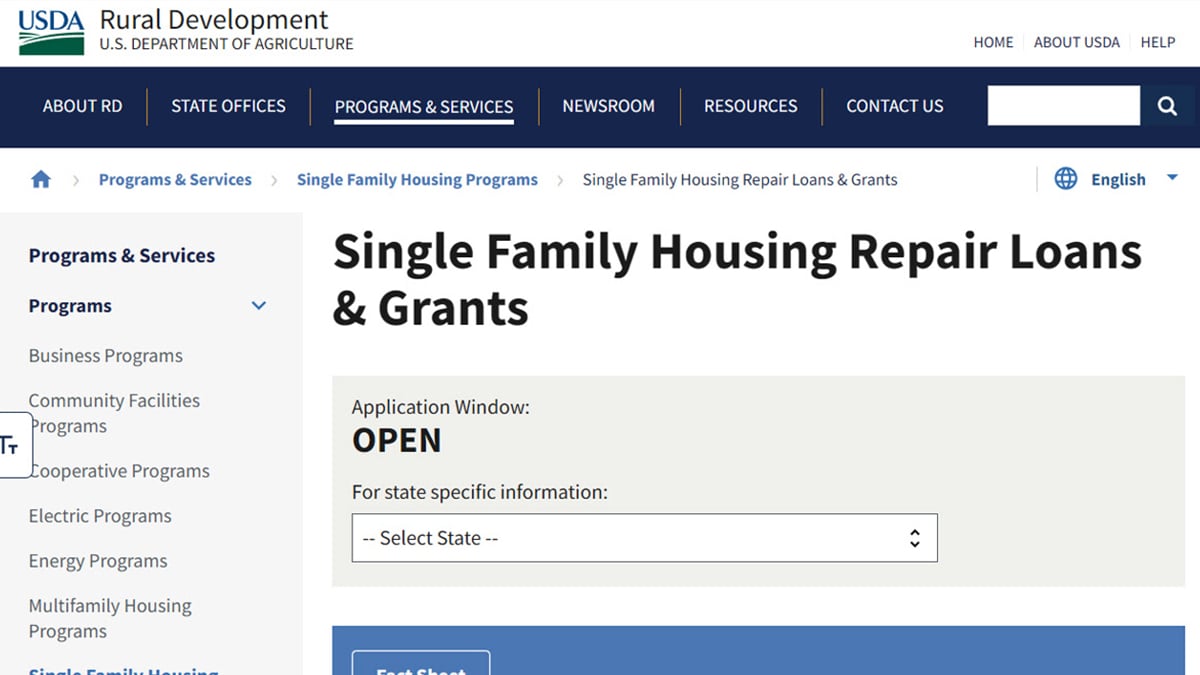
For homeowners in rural New Jersey, the USDA Rural Development program has grants available that can help pay for home repairs and modifications. Just remember – the USDA has a fairly strict definition of what counts as “rural,” and not all properties will qualify. Before you start the application process, make sure to check that your location actually qualifies.
Veterans who need financial help with home modifications can look into the VA’s Special Adapted Housing grant program, and the support available is actually quite generous. As of 2025, the program gives you as much as $109,986 in grant funding to cover necessary modifications. To be eligible for the program, you’ll need a service-connected disability that meets the VA’s criteria.
Grants aren’t your only option either. A lot of homeowners use their home equity to cover the cost of these projects. A home equity loan lets you borrow against the value that you’ve built up in your property over the years, and you’ll pay it back in monthly payments just like any other loan. Reverse mortgages work a little differently, though – they’re designed for homeowners who are 62 or older, and they let you tap into your equity without having to make any monthly payments at all. The loan gets paid back after you sell the home or after you pass away.
A basic grab bar installation will run you a few hundred dollars – nothing too crazy. Walk-in shower conversions are more of an investment and usually cost between $5,000 and $15,000. Stair lifts will cost you anywhere from $3,000 to $10,000, and the final price depends on how your stairs are laid out. For a full bathroom renovation that accommodates wheelchair use, you should plan on at least $20,000, maybe more.
Contact Our Team Today to Start Your Project
Staying in the home where you’ve made a life for yourself gets a lot easier with a few upgrades now. It’ll help you stay safer and more independent, and those two priorities matter just as much to your family as they do to you. The best part is that you don’t have to take care of everything all at once, and you don’t need to spend a fortune to get started. Grab bars and better lighting are easy first steps that help right away, and you can always add more modifications as your needs change over time.
A home assessment from a Certified Aging in Place Specialist gives you a plan that fits your budget, your schedule and the needs of your home. What you get is that sense of relief – you’ll know that your home is set up so you stay comfortable and safe for as long as you need it to. A space that’s designed around what you need makes a difference – it builds confidence in ways that are hard to quantify.
Your family is going to feel a lot more at ease when they know that you’re safe, and you’ll be able to move through your home without worrying if you can make it through each doorway or manage every turn without help.

Magnolia Home Remodeling Group has been working with families right here in New Jersey for over 30 years, and in that time, we’ve learned that the best homes are the ones that grow and adapt alongside the families who live in them. Maybe you’re looking to add bathroom safety features for an aging parent, or you want to convert a space into a main-floor bedroom so the stairs aren’t a problem anymore. Whatever your situation is, we’d love to talk through the options with you. Check out our project gallery to get a sense of what’s possible, or download our free catalog if you want some inspiration to flip through. When you’re ready, just ask for a no-obligation estimate – we’d be happy to work with you to create a home that supports your family for as long as you want to stay there.