Kitchen Cabinet Refacing vs Full Replacement for NJ Homes
Aug 06, 2026

Every day, when you come home from work, the kitchen looms. You need to prepare dinner, you need to put away the groceries, you need to dig out snacks for the kids. Every day, it's the same thing. The same cabinets, the same pantry, the same old wood or dark paint, the same scratches and dings and stains.
You desperately want a kitchen refresh, but money is tight. You can't justify a whole renovation project, you can't spring for new appliances or that kitchen bump-out, but you know you want more than just a fresh coat of paint or a stick-on backsplash.
What are your options? Well, there's a lot you can do. The fresh coat of paint is one thing, of course. You can also refresh the flooring, changing old linoleum to fresh vinyl or tile. You can replace your countertops with a new material, and improve your lighting.
One of the best refreshes you can do, though, is updating your cabinetry.
We love cabinetry refreshes here at Magnolia Home Remodeling. They're a relatively inexpensive remodel option compared to the outsized impact they have on the look and feel of your kitchen. They can optimize your usable space, brighten up the room, and subtly rearrange elements of the kitchen without the scale of a full remodel project. High impact, low expense; what's not to love?
The big question, though, is whether you should reface your existing cabinetry, or opt for full replacement of the cabinets with something all new.
We'll tell you now: there's not one perfect answer to this question. The answer for you will depend on what you like and don't like about your current kitchen, what cosmetic and functional options you want with your cabinets, and your budget.
If you want our expert opinion, all you need to do is reach out. If you're in our service area in northern and central New Jersey, give us a call or reach out with our contact form, and we'll schedule a consultation. This completely free, no-obligation consultation includes a detailed discussion with you about your project, along with a quote so you know what your options are.
For a more general discussion of these options, read on. Either way, we'll help you decide which avenue you should take for your kitchen project.
It's fairly obvious how replacing kitchen cabinets works, but what about refacing?
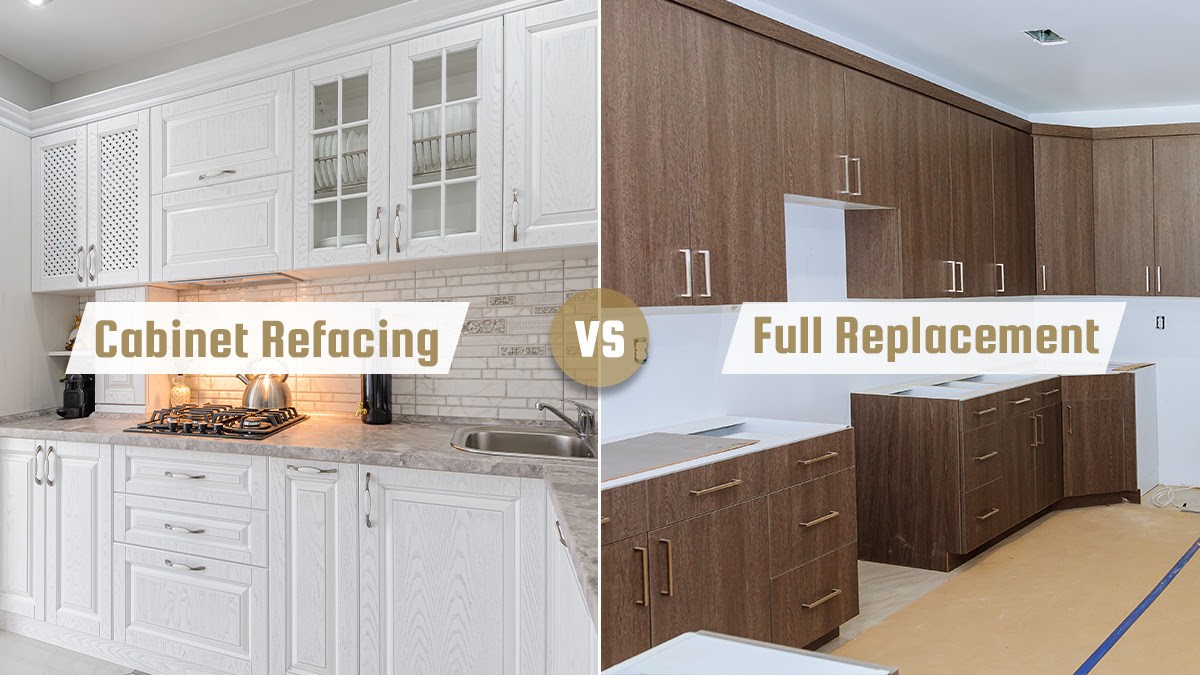
Cabinet refacing is more or less just what it sounds like. The boxes of the cabinets are kept just the way they are, except for a fresh coat of paint or stain. Everything else can change; the position of the shelving, the doors and drawer faces, the hardware, the color, and more.
It's a pretty simple process, all told. The old doors and faces are removed, including old hinges and hardware. The cabinet frames and boxes are cleaned and prepped for any resurfacing that needs to be done. Maybe old paint is scraped off, or maybe not, if it doesn't need it. It could be sanded to take fresh stain, or not; it all depends on what aesthetic choices you make.
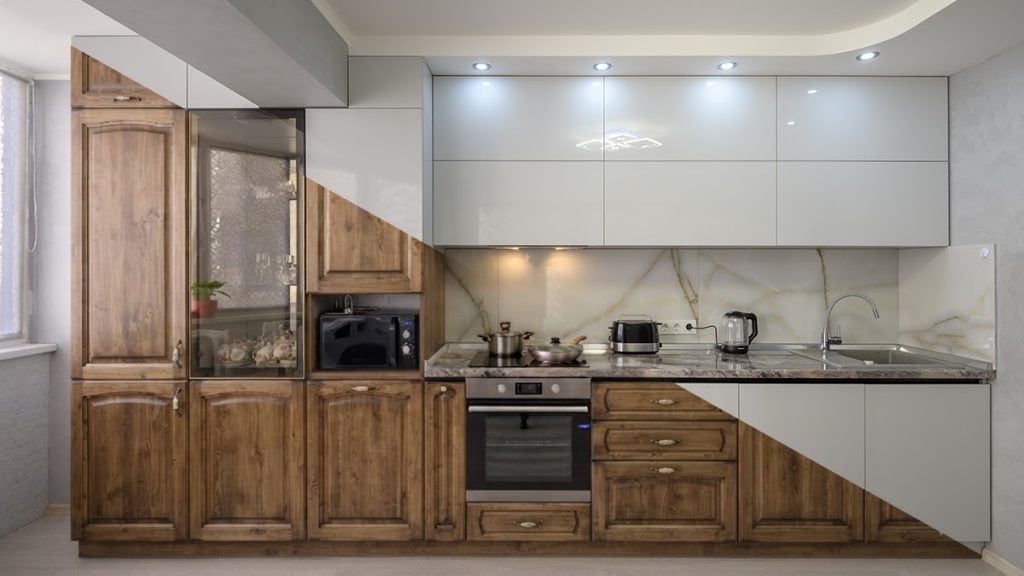
If you're keeping your old doors, but repainting or refinishing them, this can be done easily in a workspace outdoors or in a well-ventilated area. Like the boxes and frame surfaces, the doors can be stripped, sanded, and refinished. Or, they can be replaced entirely if you want a different style of cabinet door. We've seen people go from classic wooden doors to smooth wood, or even glass windowed doors, allowing you to see inside the cabinets before opening them.
Hardware is then easily replaced. New hinges, with or without springs, new drawer pulls and cupboard handles- it's just a matter of some screws, really.
If there are any holes, dings, scratches, or other bits of damage on old cabinet elements that you're keeping, these can often be repaired in the process. Old screw holes can be filled, scratches can be sanded out and refinished, and chips can be built out. If any one particular cabinet is beyond repair, it can be replaced while maintaining the rest of the cabinetry in place.
Replacing kitchen cabinets is more of a project than refacing. Since you're demoing and removing the old cabinets, then installing new cabinets, there's more labor and more disruption inherent to the process.
The big draw to this option is the ability to change up your kitchen layout. You might not be able to move countertops, but you can adjust the awkwardly spaced cabinets, fill gaps you don't need, or make space for new features.
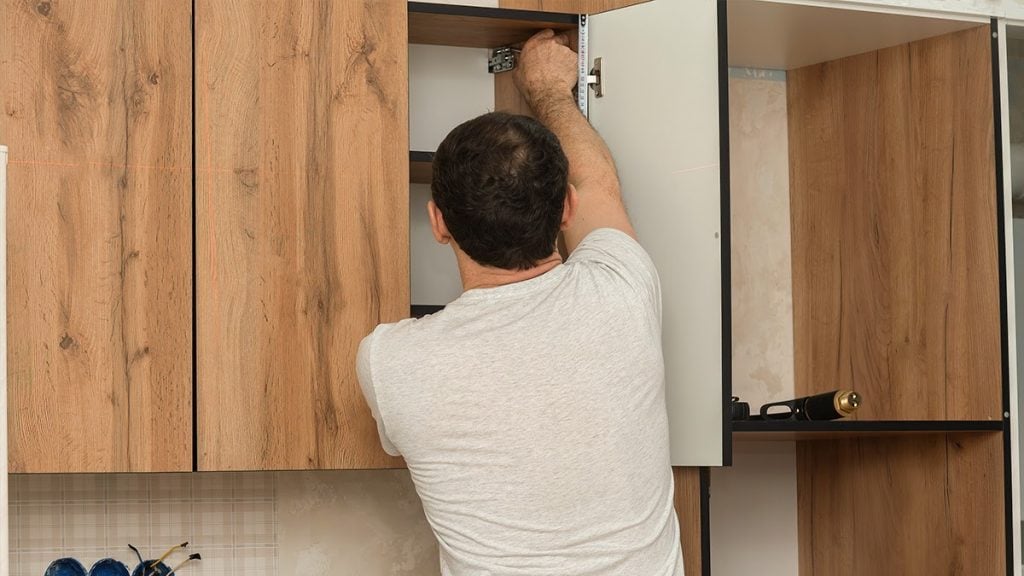
Some of the problems we've seen and addressed with cabinet replacements include:
There are tons of possible ideas you can add with all-new cabinetry. All of that also includes a completely new aesthetic; you can go from sleek and modern cabinetry to more rustic-styled wood or vice versa, with and without hardware, whatever you like.
Another common improvement here in New Jersey is some custom cabinetry. New Jersey kitchens, especially in older homes, were often made before modern cabinet standards were solidified. They tend to have awkward sizes and spaces, where off-the-shelf cabinets don't quite fit.
Custom cabinetry solves this by designing cabinets to fit the space, rather than trying to fit stock cabinets in a space and making poor use of it. You'd be amazed at the kinds of things that can be done with a little ingenuity and attention to detail.
When it comes down to the choice between refacing and replacement, there's usually one major deciding factor that leads you in one particular direction. The trick is, that deciding factor may be different for different people and different kitchens. So, we find it valuable to compare both options along a variety of different categories, to examine the pros and cons directly.
Here's the short version before we dig into each factor:
| Refacing | Replacement | |
|---|---|---|
| Cost | Roughly half the cost of replacement | About double refacing, but still modest compared to a full remodel |
| Timeline | 3-5 days; small kitchens in a weekend | 2-4 weeks depending on scope |
| What changes | Doors, drawer faces, hardware, paint or stain, shelf positions | Layout, cabinet sizes, built-in features, full aesthetic overhaul |
| Best for | You like the layout but want a new look, or time and budget are tight | You want layout changes, more usable space, or to fix outdated NJ kitchen designs |
First up is the budget. Since budget is often the deciding factor for home improvement projects, it's something at the forefront of everyone's minds.
Unfortunately, we can't give specific numbers here, since the precise costs of either project will depend on a lot of different factors. Things like glass doors cost more than shaker cabinet doors, custom cabinetry costs more than stock cupboards, and so on.
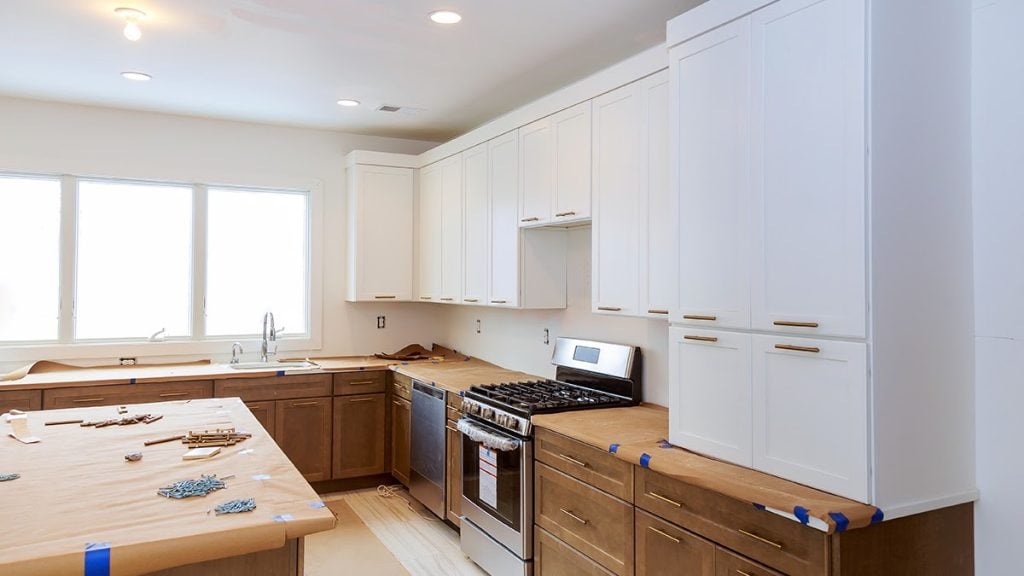
What we can say is that replacement is going to be the more expensive of the two options. It's pretty obvious why, right? Tearing out and replacing cabinets is definitely more work, requires more materials, and takes longer than taking off doors and replacing hardware. Even if you're picking top-end luxury cabinet hardware, you'd have to do something silly like try to get 14k gold drawer pulls to top the costs there.
That said, neither option is going to be particularly costly on the grand scale of home remodels. Refreshing your cabinets is a high-impact, low-expense project in almost all cases; it's just that refacing is going to cost around half of what replacement costs, on average.
This is another factor that can be impactful, depending on your needs.
Refacing cabinets is actually a fairly quick project, all things considered. Unless you have a very large and complex kitchen, refacing probably only takes 3-5 days. Smaller kitchens can even be done in a weekend, more or less. It's especially easy if you don't need deep repairs or major changes.
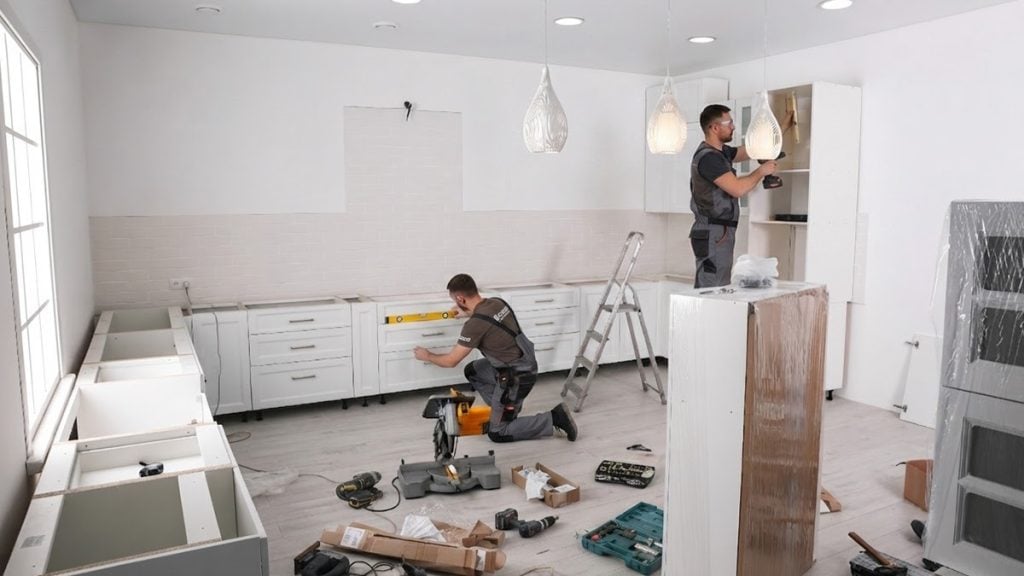
Replacement can take longer and tends to be more disruptive. Demolition doesn't take too long, but it is noisy and can be messy, and you'll lose most of the function of your kitchen throughout the duration of the project. Stacking up everything from your cupboards in another room while they're ripped out and replaced can also get in the way of other household activities.
The timeline for a full replacement is generally around 2-4 weeks, with variance depending on the scope of your project. Stock cupboards are faster and easier to install than custom cabinetry. It's a smaller project if your counters aren't affected, as well. The specific timeline is something we would discuss with you when we talk about your project, regardless.
Refacing cabinets is a pretty simple project. In fact, it's often one that people DIY! Even so, there's a little room for problems along the way. Sometimes, old cabinets are awkward sizes, and getting new doors is difficult. Sometimes you discover that the structure of a cabinet is more damaged than you thought, and you might need more extensive repairs. Most of the time, though, it can be as simple as a fresh coat of paint, new hardware, and a new aesthetic.
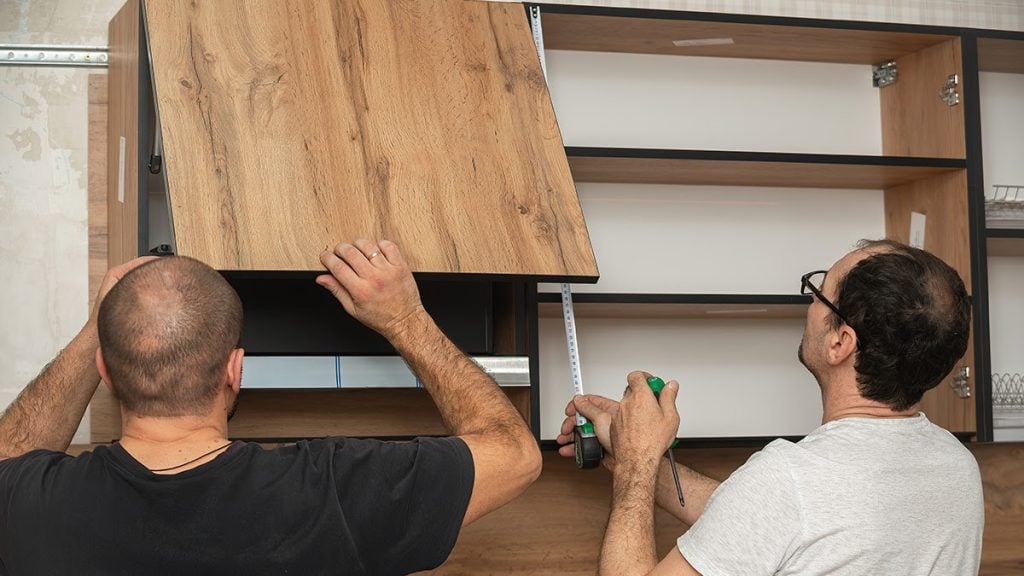
Replacing your cabinets is actually less likely to run into unexpected problems. Sometimes, your planned cabinets and hardware might be on backorder, and in rare cases you can find hidden damage behind the cabinets that needs fixing, but most of the time it's going to be within expectations.
The scope of your renovation project is limited by what you want to have done, and more importantly, what you want to avoid having to do.
With refacing, you're basically doing the bare minimum to update the look of your kitchen. You aren't changing any of the structure or rearranging any kitchen elements. At most, it can be a good excuse to rearrange what things are stored in what cupboards, since you have to pull everything out and put it back after the project is done anyway.
Replacing cabinets, meanwhile, gives you more opportunity to change things around, but you still generally want to minimize how many other elements of the kitchen you're changing. You might adjust cabinets and move where your fridge is, but that only works if outlets are available; you don't really want to dig around and run new electrical, for example.
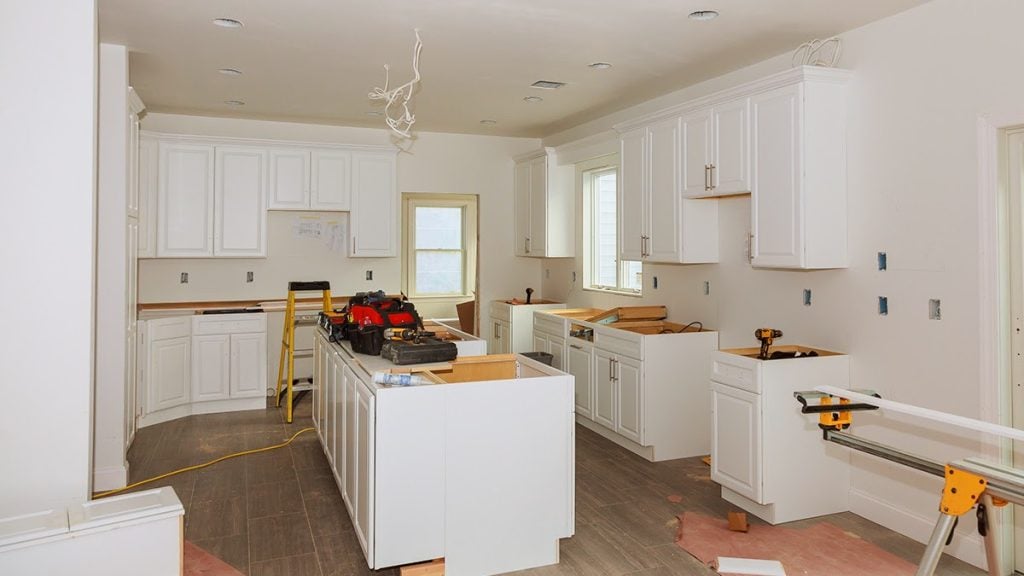
Similarly, you might not want to replace countertops or flooring during this project. Those are also good updates to make to a kitchen, but if your budget is limited and your cabinets are your pain point, it's better to leave the other surfaces as they are.
One thing that might need to be done, at least, is adjusting the walls and backsplashes in the kitchen. You may be exposing (or covering up) parts of your existing walls, so you'll need something adjusted to make it match when the project is done.
Obviously, you can do all that and more if you want, but then you're no longer talking about a cabinetry project, but a full kitchen remodel. We do those too, so don't hesitate if it's what you want!
When is refacing the better choice, and when is replacement the right option?
Generally speaking, refacing is the best option if you like the layout and functionality of your current cabinets, but you don't like the aesthetics. It's also a good choice if you have a very limited amount of time or money for the project, such as needing to get it done over a long weekend.
Sometimes, you might buy a home where the counters were recently replaced, but the cabinets were not. You don't want to replace new counters, but you don't like the aesthetics; a refacing can be the perfect solution.
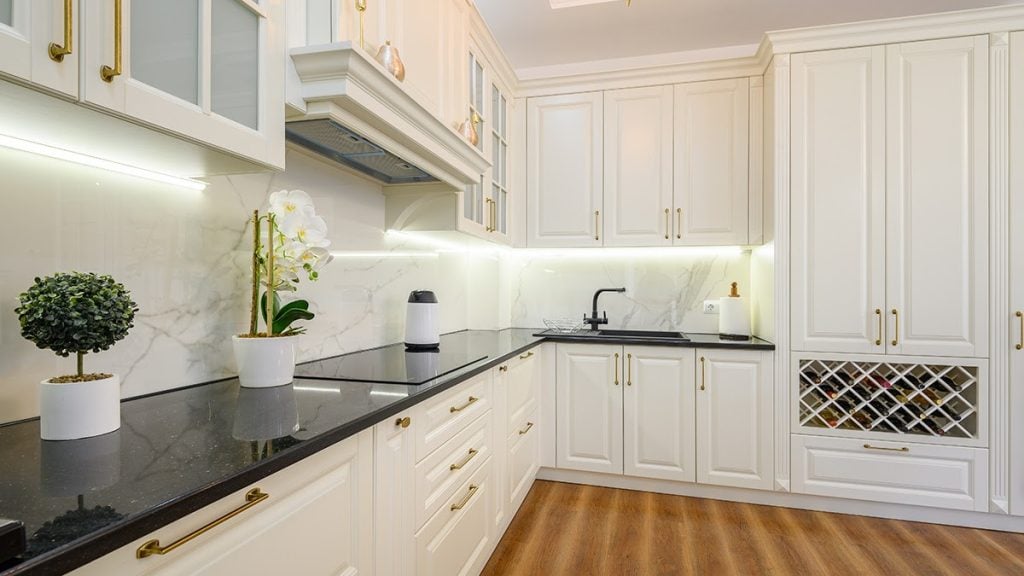
Replacing is the better choice if you really don't like the current layout or design of your cabinets. It's also the ideal choice if your kitchen is quite old and suffers from design choices made before modern appliances were common. Low soffits, short cabinets, and bad corners are all common here in NJ, and a replacement project can address all of these issues and give you a lot more usable space.
Regardless of the scale of your kitchen renovation project, we here at Magnolia have done it all. We have 30+ years of experience remodeling kitchens all over northern and central New Jersey, and we'd love to add yours to the list of completed projects and satisfied customers. All you need to do to get the project started is reach out to chat!
What is the difference between cabinet refacing and cabinet replacement?
Refacing keeps your existing cabinet boxes and updates the doors, faces, hardware, paint, or stain. Replacement removes the old cabinets entirely and installs brand-new ones. Refacing is quicker and cheaper, focusing on aesthetics, while replacement lets you change your kitchen's layout, cabinet sizes, and functionality for a more significant transformation.
Which option is more affordable, refacing or replacing cabinets?
Refacing is the more affordable choice, typically costing around half of what a full replacement runs on average. Both are relatively low-expense, high-impact projects compared to full kitchen remodels. Exact costs depend on factors like door style, materials, and whether you choose stock or custom cabinetry.
How long does each cabinet project take to complete?
Refacing is quick, usually taking 3-5 days, with smaller kitchens sometimes finished in a weekend. Replacement takes longer and is more disruptive, generally around 2-4 weeks depending on scope. Custom cabinetry and projects affecting your countertops will add time compared to installing stock cupboards.
When should I choose refacing over replacement?
Choose refacing when you like your cabinets' layout and functionality but dislike the aesthetics, or when time and budget are limited. It's ideal if your counters were recently replaced but your cabinets weren't. Choose replacement if you dislike the current layout, or your older kitchen has awkward sizes, low soffits, or bad corners.
Can cabinet damage be repaired during a refacing project?
Yes. Holes, dings, scratches, and chips on cabinet elements you're keeping can often be repaired during refacing. Old screw holes get filled, scratches sanded and refinished, and chips built out. If a single cabinet is beyond repair, it can be replaced while keeping the rest of your cabinetry in place.