A home addition is one of the biggest projects you can take on. There’s extra space, better functionality and a solid bump to your home’s value – everything seems great until the paperwork starts. As you fill out permit applications and talk to building officials, setbacks will come into play right away. These setbacks control whether your dream design will fit on your property. A lot of homeowners only find out about setbacks after they’ve already spent weeks planning with contractors and locked in a particular layout.
Your property deed shows the boundaries. But what’s on paper doesn’t always match up with what’s out there in your yard. That fence line you’ve been going by as a reference point? It doesn’t line up with the legal boundary a lot of the time. The deck that the previous owner built a few years ago could be sitting partially on your neighbor’s land and you might not even know it.
Skip the survey and you’ll save a few hundred dollars right at the start – that makes it tempting to pass on it. That same call could end up costing you tens of thousands of dollars later. Any work that violates setbacks or encroaches on easements might need to be torn down and moved completely. Each building department in New Jersey has its own set of standards on when you need a survey for your project. Lenders have their own standards too, layered on top of the municipal regulations and most homeowners don’t figure this out until they’re already halfway through the permit process. Get the specifics for your situation before any of the work begins.
You’ll have to know when a survey is actually required for your addition.
What Your Survey Shows for Additions
A property survey is a map that shows where your lot boundaries are and where everything on your land is located. That includes your house, your garage, any sheds you have, decks, patios – it all gets measured and marked in relation to those boundary lines.
These measurements on paper are pretty important because they tell you what you can and can’t do when you build. Every town and municipality has setback standards and specify how close you’re allowed to build to your property lines. If you don’t have a recent survey in front of you, there’s no way to know for sure how much usable space you actually have to work with.
Your builder needs this survey before they can start, and your architect needs it too before they can draw up any plans for your addition. The survey will also show you where underground utilities are running – the gas lines, water pipes, sewer connections – all of the utilities you’ll have to work around when you dig. It’ll mark any easements on your property as well and are sections where utility companies or maybe even your neighbors have some legal right to access it.

A newer survey is going to give you way more detail compared to whatever old property documents you have sitting in a drawer somewhere. Records get outdated over time, especially if the previous owners made changes and never bothered to update the paperwork. A fresh survey means you start with information that you trust.
A survey also maps the drainage patterns – how water moves across your property when it rains. This matters a lot because when you add onto your home, you might accidentally redirect water flow and create drainage issues.
When everyone on your entire team has access to the same survey, they all work from the same baseline picture of what your property can handle and what restrictions apply. This helps you make better decisions about your addition early on, before you’ve spent thousands of dollars on architectural plans and engineering work.
Local Township Rules for Your Building Project
Each township in New Jersey has its own regulations for how close you can build to your property lines, and they differ quite a bit from one town to the next. Some want you to leave more space between your house and the edge of your lot, and others are more flexible with that distance.
Once you submit the plans for an addition, your building department needs to check that everything meets the setbacks for your neighborhood. For that, they’ll usually ask to see a property survey – the kind that maps out where your lot lines fall and where your existing house sits on the property. If you don’t have a survey on hand, you can’t show that your addition will stay within the legal boundaries.
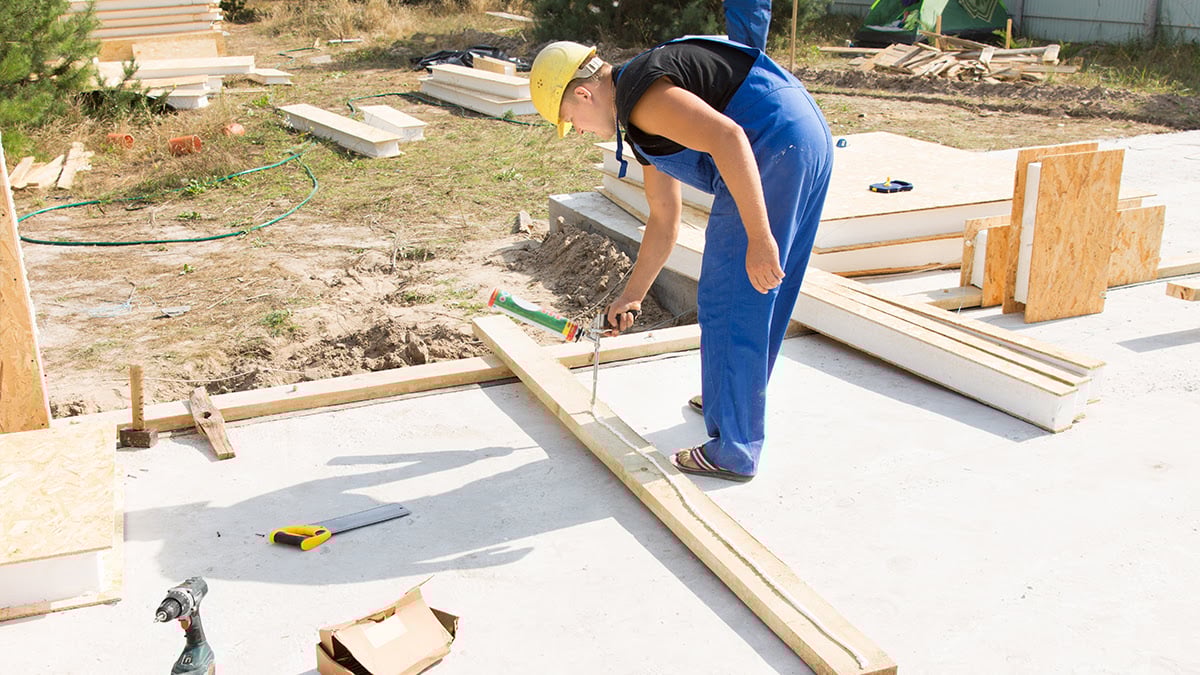
Most New Jersey towns are going to need a survey from you when you plan an addition, and it matters even more if you plan to build near the edges of your lot. Beyond the setback check, the survey also helps your building department calculate something called impervious coverage.
Impervious coverage refers to how much of your property is covered by your house, garage, driveway, patio or any other hard surface that keeps rainwater from soaking into the ground. Each township caps how much of your lot can be covered like this, and if your addition would put you over that percentage, you could be looking at a denial of your permit application.
Before you get too far into the planning process, I’d recommend you call your local building department to find out what they need and if they’ll need a survey right away. What they ask for can be different in a town just a few miles away, so it pays to check early.
Why Banks Ask for Addition Surveys
Most lenders will ask for a property survey before they approve financing for a home addition. This helps them confirm where the property lines fall and verify that any new construction stays within the boundaries.
Lenders all have different policies for surveys. One might need them only for bigger projects, while another wants paperwork regardless of project size.
Insurers care about surveys for a lot of the same reasons. An addition that ends up too close to a property line or sits in a setback area can complicate coverage quite a bit. Most of them will want to review the paperwork before they update a policy to include the new square footage.
Homeowner’s insurance are going to need an update even when you pay cash for an addition. Every insurance company handles this process a bit differently. A quick phone call to them can spell out what paperwork and information you’ll need.
Local people who know the area well can explain how policies change from place to place and which businesses are involved.
The Cost of Skipping a Survey
A property survey is one of those expenses that seems easy enough to skip when you’re planning a home addition, and yes, it’s going to cost you some money up front. What a survey does is to show you the exact boundaries of your property – it’s important because building codes specify how close to the property line you’re allowed to build. Get it wrong and you might end up in a position where you have to redesign your addition halfway through the project – or worse, tear down the sections that cross over into territory that doesn’t belong to you.
Disputes with your neighbors over boundaries can turn into long legal battles in no time. The attorney fees here add up fast and that’s money you could have put toward finishing your addition instead of fixing a mistake that never needed to happen.

Delays during the construction can drain your budget just as fast. When a building inspector discovers a boundary problem once work has already started, everything stops. Your contractor may continue to charge you for their time even though the crew is sitting idle. Getting a survey done before you break ground lets you avoid these expensive interruptions.
Properties can also have easements and restrictions that you might not know about just from walking around your yard. Utility companies may have legal access to parts of your land. Build over one of these areas and you could wind up having to modify or remove part of your addition to restore their access.
Most surveys are completed within a week or two. Still it’s way less painful to wait a couple of weeks than to untangle the problems that come up once the construction is already in progress.
When You Can Skip the Survey
Many projects don’t require a brand new property survey. New Jersey towns all have different ways that they handle this, so your first step should be to check with your local building department to find out what actually applies to your situation.
Interior renovations usually get a pass on the survey. Renovating or adding square footage inside your existing walls (when your home’s footprint stays the same) means most towns won’t ask you for a new survey. Everything stays within the structure that already exists.
Smaller outdoor additions can also be exempt from a survey. A deck or patio that falls below your area’s size thresholds could be fine without one. Just Remember – these size limits aren’t universal – they change based on where you live.

Your existing survey might still work just fine. Most building departments will accept an existing one from a previous transaction or project as-is, assuming your property hasn’t been changed since then. How old of a survey they’ll accept varies by your town’s policies.
Additions that stay well away from the property boundaries sometimes qualify for a simpler process. When your project is far enough from all property lines and neighboring homes, some towns will let you submit just a basic plot plan instead of a full survey.
Pre-existing non-conforming status can affect older homes in different ways. When a house was built before zoning laws were finalized, chances are that it doesn’t comply with modern setback standards or other regulations. Any additions to homes with this designation usually go through extra review and follow a separate set of standards.
Getting it in writing matters more than anything else for survey exemptions. When your building department tells you that a survey isn’t necessary for your project, make sure to get their confirmation in writing. Verbal confirmation alone won’t be enough if problems come up later.
Contact Our Team Today to Start Your Project
Surveys also give you some protection down the line. Boundary disputes with neighbors can pop up years after construction, and when a future buyer’s lender orders a survey during the closing process, you’ll already have professional proof that your addition was positioned correctly. Given the amount of money and effort that goes into an addition to your home, that verification makes sense. A contractor who already knows New Jersey’s permit process helps quite a bit.

Magnolia Home Remodeling Group has guided homeowners through these projects for over 30 years. Our team manages the full process – the surveys, the permits, the construction and the final inspection. For a home addition, contact our family-owned company for a free estimate.
Check out our project gallery to see what’s possible, download our catalog or call us to talk about your situation.
We’ll help you create an addition that works with your property, satisfies all of the local codes and has the extra space that you need. Get in touch today!