Quartz vs Granite Countertops for NJ Kitchens
Jun 17, 2026

Is it time to replace your countertops?
Maybe they're old and starting to look a little damaged and worn down. Maybe you just don't like the old laminate. Maybe you're opening up your current space and changing the layout to better suit your dream kitchen, so you'll need new counters regardless.
Whatever the reason may be, picking the right material for your new countertops is a very important choice. Counters are one of the most visible and heavily used parts of your kitchen, so they need to look great, withstand a lot of abuse, and fit the overall aesthetic of your remodel project.
At Magnolia, we've been remodeling kitchens in the New Jersey area for over 30 years. We've seen the trends, we've seen how these materials hold up, and we know how they work. If you want our expert opinion on your remodeling project, just reach out, and we can talk and get you a free estimate for what you want done.
Key Takeaways
While we're going to focus on comparing quartz and granite countertop options, it's worth looking at what else you could pick, since stone isn't the only option.
First up is quartzite. You might think quartzite and quartz are the same, but they're different materials entirely. Quartz countertops are an engineered material, while quartzite is a natural stone. It's growing in popularity because it has all of the durability of granite, but has colors and patterns more like marble.
Speaking of marble, it's a classic material, but it has actually fallen somewhat out of favor in recent years. Marble is actually a surprisingly soft and porous material, so it can etch and stain without proper maintenance. They're elegant and timeless, but also higher maintenance than many other materials.
You've also likely heard of Corian, or solid surface countertops. Corian is a synthetic material made of acrylic resin and powdered stone, for a very stain-resistant but otherwise soft countertop. Unlike stone countertops, Corian can be dented by heavy dishes, scratched by knives, and even heat-damaged. It's easier to repair (it can be sanded and buffed), but it's easier to damage than other materials.
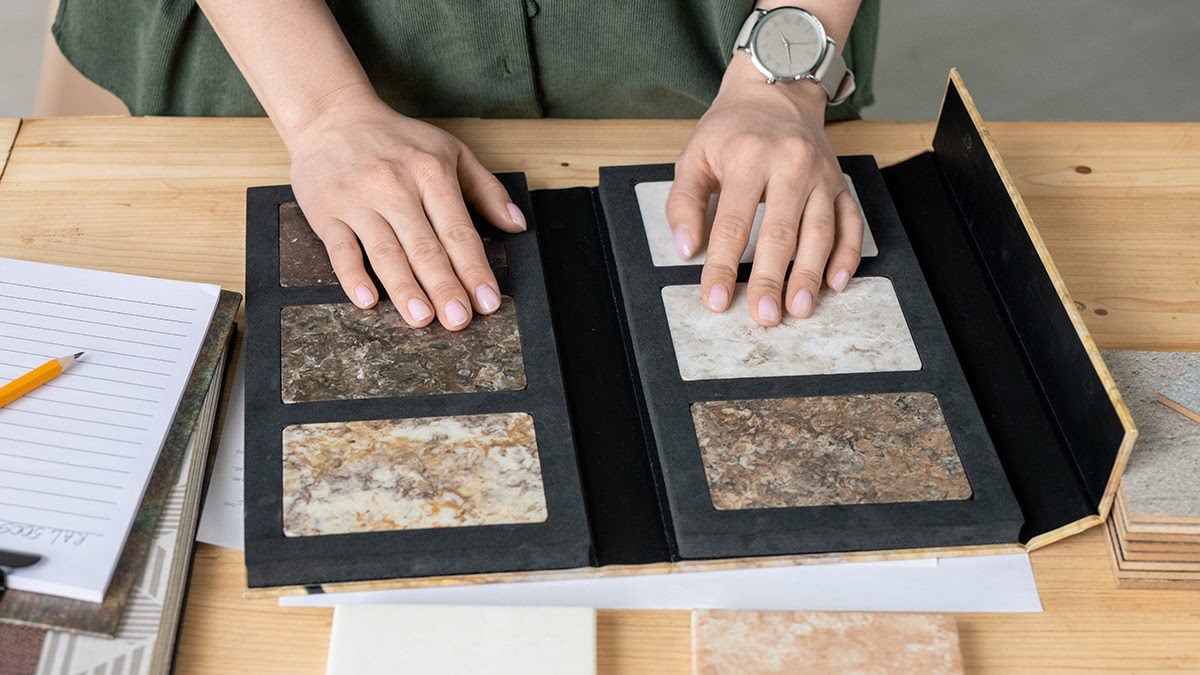
There's also concrete to consider. You might not think of your countertops being made of the same material as your driveway, but they can be! Concrete can be formed into any shape or design you want, can be styled and colored to fit your goals, and is polished to a shine. It does require ongoing maintenance to keep it sealed, however.
There's also wood as an option. Wood countertops and especially butcher block are very popular for certain aesthetic styles, especially where warmth is appealing. It's definitely one of the highest maintenance options, however.
To round things out, stainless steel is also growing in popularity for certain kinds of kitchens. Stainless steel is more common in commercial kitchens, and for good reason: it's incredibly durable, easy to clean, and resilient to most damage. Some people find it too cold and industrial, though.
There are other materials too, such as other metals, variations on stones, and even glass for the adventurous, but if we spend all our time talking about the options, we'll never get to the main course.
It's not an exaggeration to say that granite countertops are possibly the most popular countertop material over the last several decades.
Granite is a natural stone formed deep underground, made from cooling magma. It's coarse-grained, which is what gives it the unique speckled appearance you likely recognize from counters all throughout your life. Predominantly feldspar, it also has elements of quartz and other bits of different minerals to form the full stone.
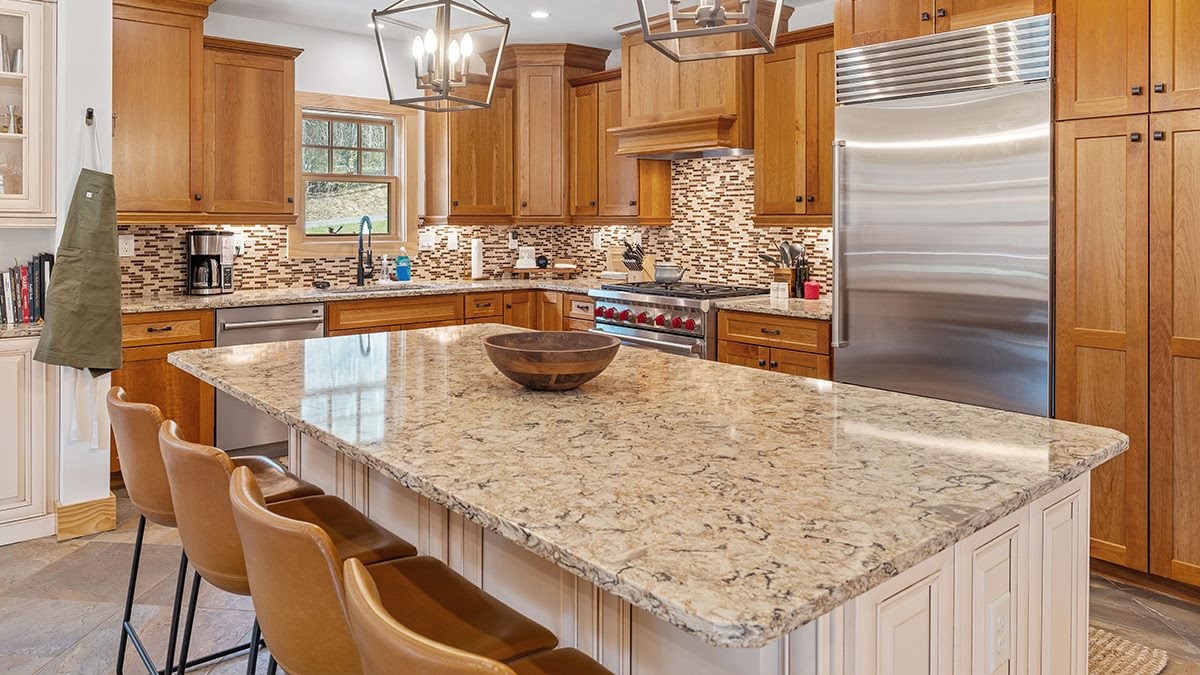
As a natural stone, granite is quarried, slabbed, cut, and finished, rather than formed or molded. Every slab of granite is a one-of-a-kind piece, with no two carrying the same identical pattern or chemical composition.
Granite's biggest benefit is sheer durability. There are kitchens in New Jersey with granite counters that are 30, 50, even 70+ years old. It's a fairly hard stone and resists scratches, abrasions, and other damage. It's also very heat-resistant, so putting a hot pan right down on it won't hurt it. You shouldn't, but you could, and we all know accidents happen in a busy kitchen.
Granite is also considered a low-maintenance counter material. It's not the lowest, but it's better than something like marble or wood.
Since granite is a common and popular material, it's fairly accessible. We won't call it inexpensive, since materials like laminate and Corian are cheaper, but it's not as expensive as something like marble or stainless steel.
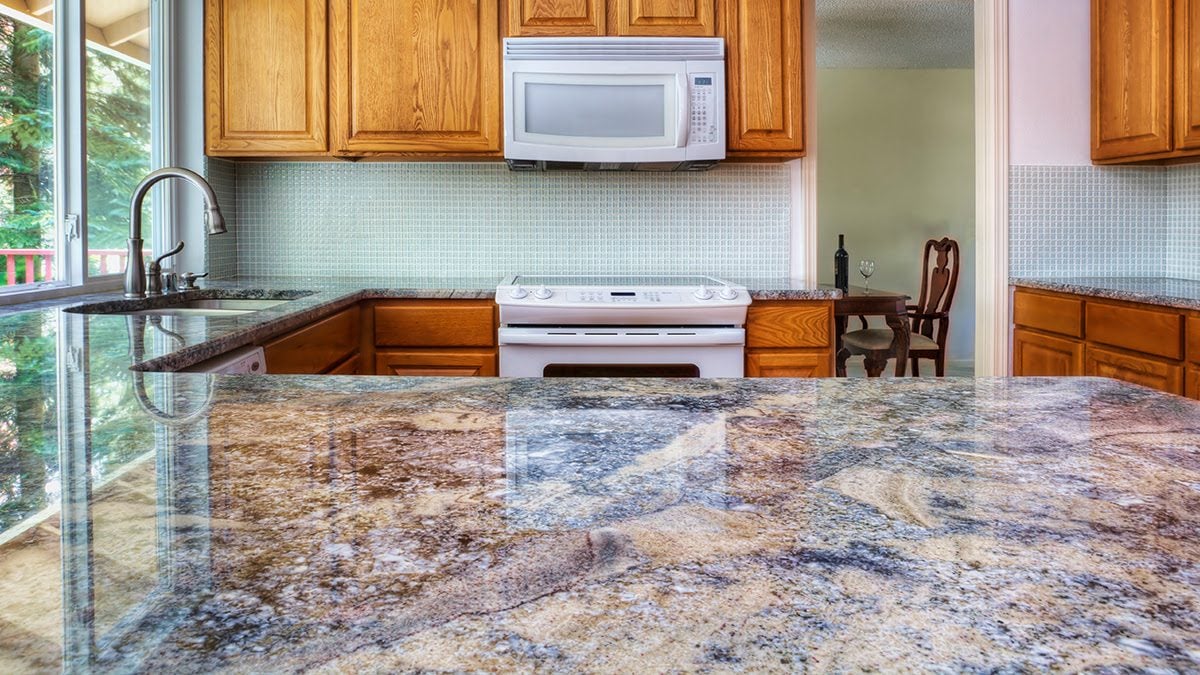
Being a thick slab of natural stone, granite holds temperature well, which can also be a useful feature if you're big into baking and need a cold surface to work on. Other materials don't stay cold as well.
Granite is also a great material for outdoor use. Want to set up a summertime patio with an outdoor bar? Granite is a perfect choice. It resists the weather perfectly. The only hassle is that it will need to be sealed more frequently.
Does granite sound like the ideal choice for your new kitchen countertops? We're happy to work with you to install them, so contact us for a free estimate on what your kitchen remodel needs.
What about the flip side? Granite isn't a perfect material for every kitchen, since if it were, we wouldn't be having this discussion in the first place.
The biggest drawback is the maintenance. Yes, granite is low maintenance, but it's not no maintenance. Granite is a porous material, which means liquids will absorb into it if it's left in its natural state. That's fine if it's water, but if you spill a bit of wine, get a splash of oil on the counter, or another colored liquid is left to sit, it absorbs right into the stone.
Once that color is in the stone, it's very, very difficult (if not impossible) to remove. This is the biggest reason granite countertops end up torn out and removed; if they aren't properly re-sealed, they can end up splotchy and stained, and that just looks bad.
Sealing isn't a difficult task. It takes a few minutes to apply and a day to cure, and needs to be done about once a year on average.
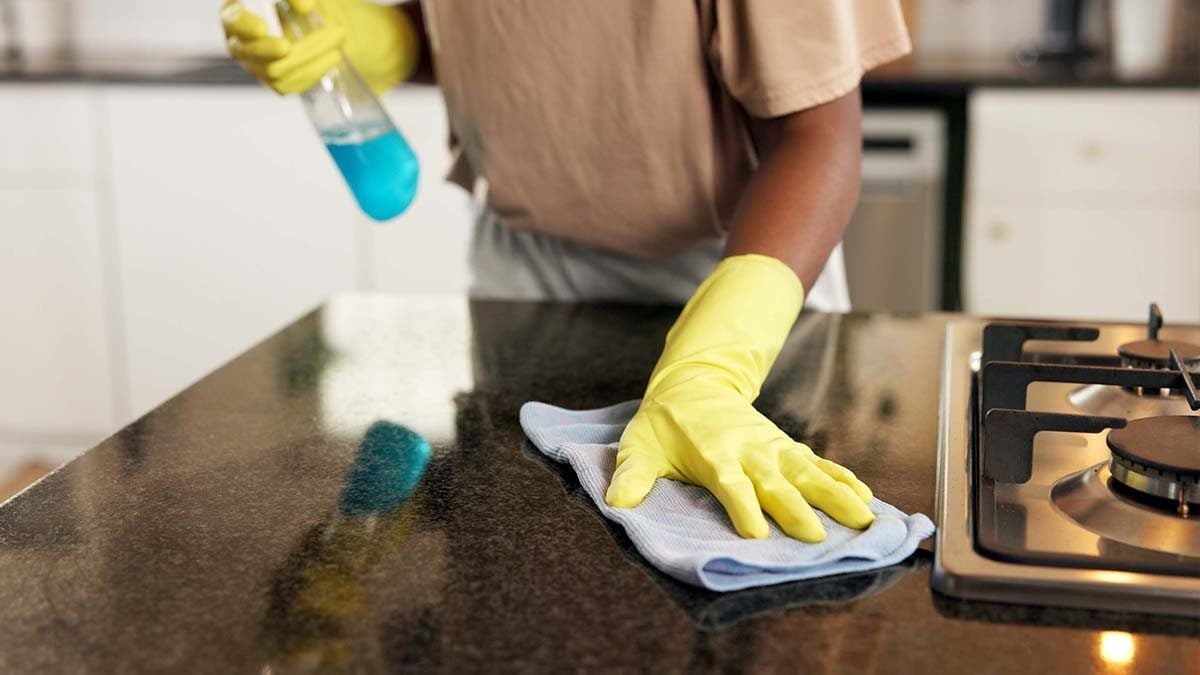
Granite is readily available, but if you want a specialty cut or color for your slab, it can be harder to source and require a longer lead time. Since it's not artificially created, it has to be found in nature, and sometimes the right color in the right size isn't easy to find.
Similarly, since granite needs to be cut to shape, custom counters might not be doable with just one slab. Especially for large, complex, or L-shaped counters, it's usually better to use multiple pieces. In some cases, for large areas, it's simply too heavy to do all at once! But that does mean there will be a seam somewhere in the counter, which might be visible depending on installation.
If you're concerned about the environmental impact of your countertop choice, granite is a natural stone, but it does require mining and long-distance shipping in many cases. That said, some manufacturers emphasize sustainability and even recycle old countertops or other sources of granite.
Quartz, the material, is natural. It's the second most abundant mineral on the planet, and it comes in a million different forms. Agates, amethysts, tiger's eye, and many other stones are all varieties of quartz.
Quartz countertops are not natural. They're made of natural quartz, ground and crushed, and then mixed with a polymer resin and potentially some colorants to form an engineered stone product. The end result is something similar to granite or marble, but more customizable, easier to obtain since it doesn't need to be quarried, and just as durable.
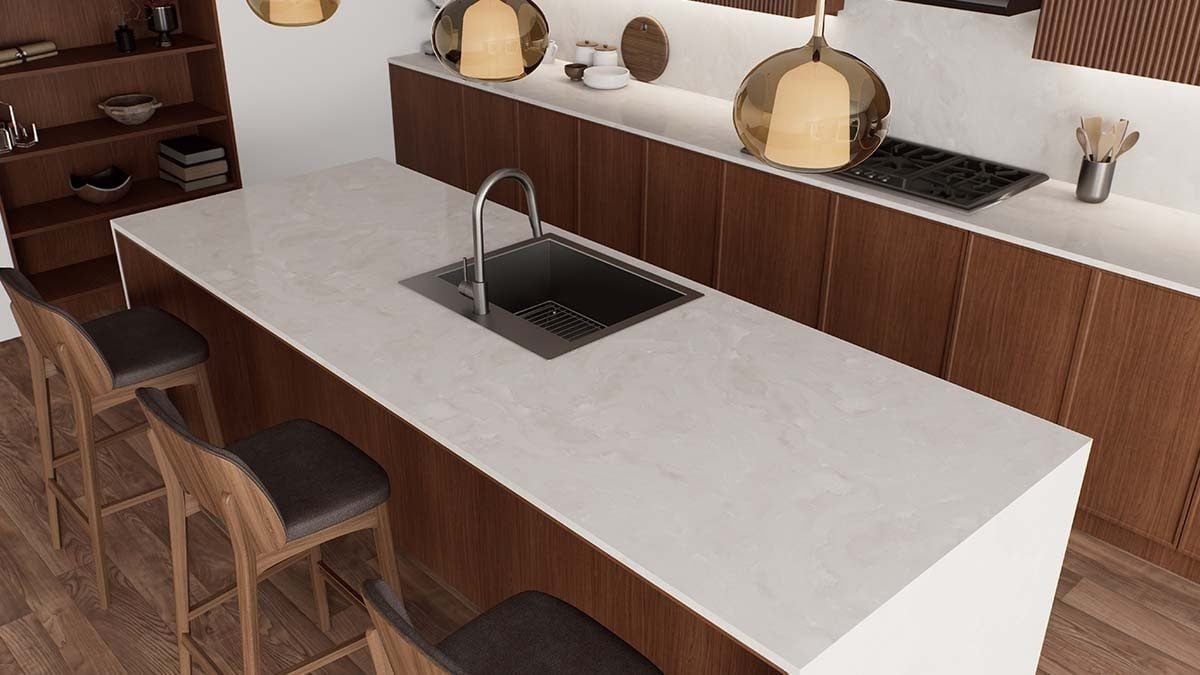
This method of creating quartz countertops is actually only around 60-70 years old. The method for making them was patented by an Italian inventor named Marcello Toncelli.
While quartz may seem like a perfect material at first glance, it has some significant quirks that are worth knowing before you make the decision.
First, the benefits. Quartz is still a very durable material. It's resistant to impact, to scratches, and to stains. Since it's a material suspended in resin, it's already effectively sealed and doesn't need ongoing sealing the way granite does.
The low maintenance is a big selling point for quartz counters, in fact. It doesn't require any special maintenance, just a soapy wash-down whenever you would normally wash your counters.
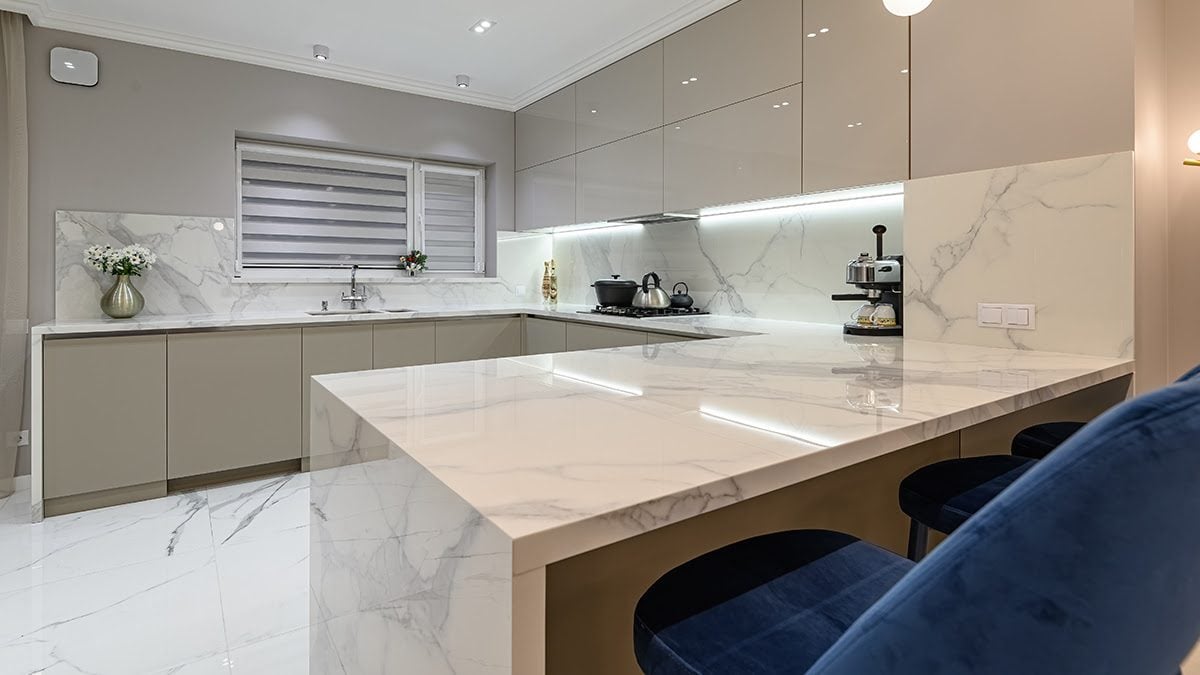
Quartz countertops also come with a high level of consistency in design and pattern. Since it's an engineered product, everything from the color mixture to the veining can be controlled. This also means that, while countertops still often need seams between slabs, the seams are virtually invisible with quartz.
Quartz does have a few distinct drawbacks that are definitely worth knowing. For example, when going through durability, you may have noticed we didn't mention heat. Quartz can actually scorch, discolor, or even crack when exposed to high enough heat. Putting a warm plate on the counter won't hurt it, but setting a pan fresh from the oven on it certainly will.
Quartz can also be damaged by UV light over time. This isn't usually a problem indoors, especially if you have new windows with UV-resistant glass, but it means it shouldn't be used in places where it will be exposed to a lot of UV light. The UV can turn the resin yellow over time, and can fade other colors added to the mix.
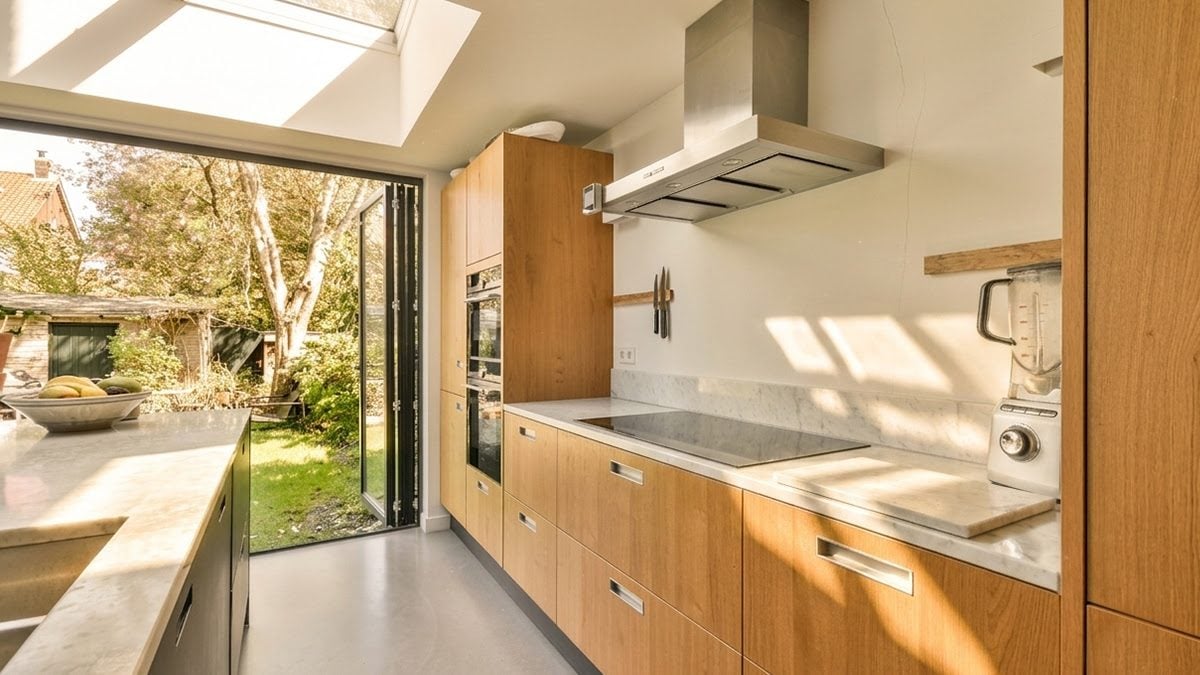
In terms of sustainability, quartz is tricky. On one hand, quartz is readily available as a material, so the carbon footprint of shipping is much lower. On the other hand, working with quartz dust is a significant hazard for workers, and resin is a synthetic polymer. If those are concerns to you, granite may be the better choice.
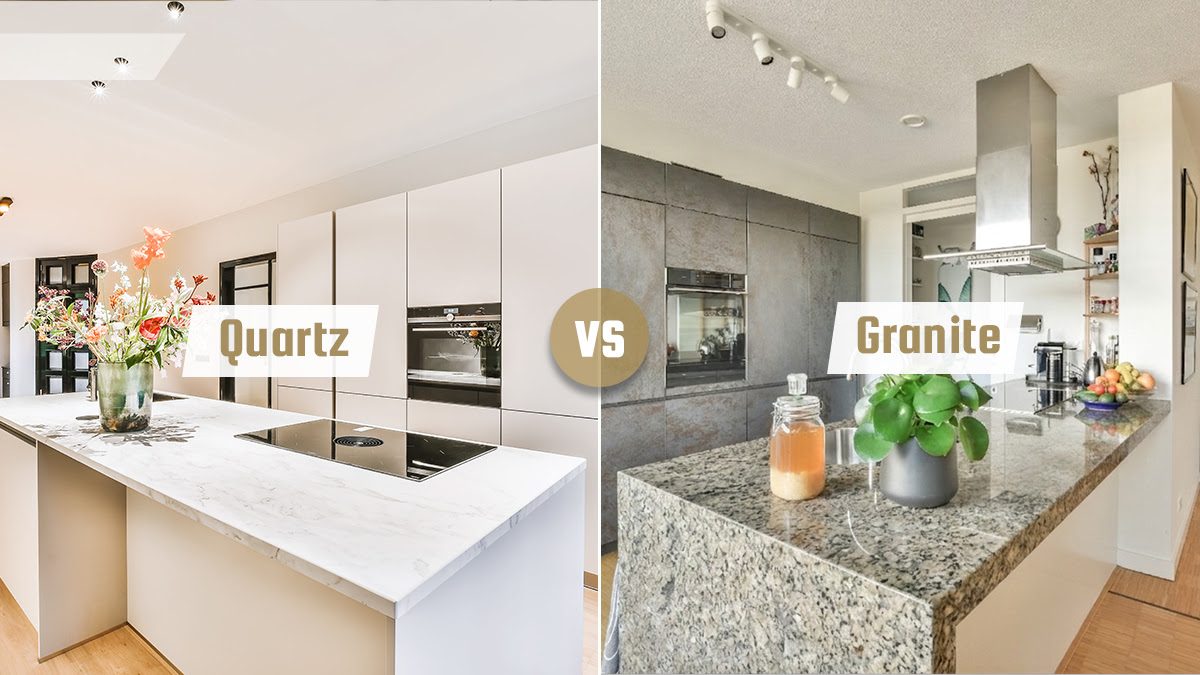
How do quartz and granite compare for your needs? A lot can depend on specific considerations for your home.
Where and for what purposes will you be using the counter? Kitchen counters often benefit from granite, and granite is the only choice for outdoor counters. General-purpose counters, like a mid-room bar, island, or bathroom counters, can all benefit from quartz instead.
If your counters will be exposed to heat, whether it's hot pans, a slow cooker, or as a work surface, granite takes the lead. If you're more concerned about edge-on impacts, granite can chip along the edge, while quartz tends to be more resilient.
In terms of maintenance, quartz wins simply because you have very little to do. Granite only needs an annual re-sealing, but even that is more than quartz, which just needs to be wiped down, and it's good to go.
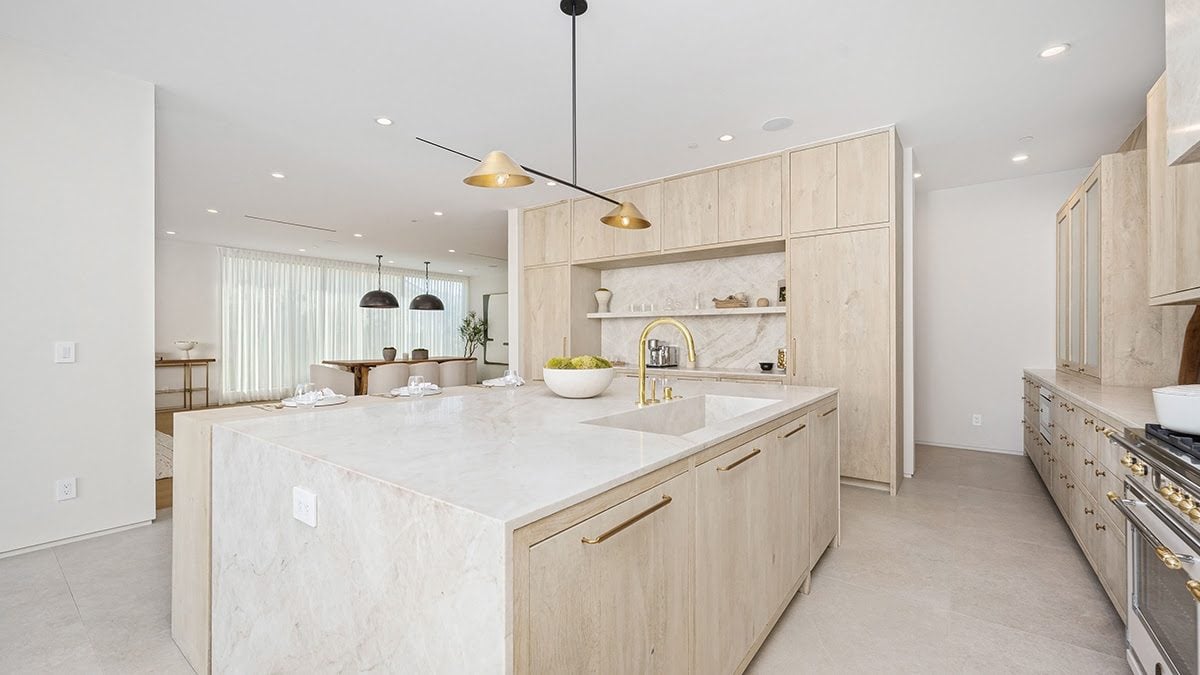
Both materials have similar price ranges and similar lifespans, so for once, cost isn't likely a deciding factor in this particular material showdown. If you're concerned about finances and you're considering going with a cheaper material instead, be cautious; while those materials are cheaper now, they'll need replacing much sooner, and often need more maintenance along the way. Instead, consider financing your countertops to get something that can stand the test of time.
So, is it time to pull the trigger on your new countertops? Here in New Jersey, if you live in the north or central regions of the state (from Sussex to Middlesex and from Warren to Bergen), you're square in our service area. All you need to do to get started is reach out. You can call us, fill out our contact form, or request a free estimate here online. We'll talk about your project, give you information on the potential costs and timelines, and can help you get the ball rolling right away.
What's the difference between quartz and quartzite countertops?
Despite the similar names, they're entirely different materials. Quartz is an engineered product made from crushed natural quartz mixed with polymer resin and colorants. Quartzite is a natural stone, quarried and cut like granite. Quartzite offers granite-level durability with marble-like colors and patterns, making it increasingly popular.
Does granite require ongoing maintenance?
Yes, but it's minimal. Granite is porous, so liquids like wine or oil can absorb and stain it if left unsealed. To prevent this, granite needs re-sealing about once a year. Sealing only takes a few minutes to apply and a day to cure, keeping your counters protected and looking great.
Is quartz heat-resistant?
Not entirely. Quartz can scorch, discolor, or even crack when exposed to high heat. A warm plate won't hurt it, but setting a pan fresh from the oven on it will cause damage. If your counter regularly meets hot pans, granite is the better, more heat-resistant choice.
Which is better for outdoor countertops, quartz or granite?
Granite is the clear winner for outdoor use. It resists weather beautifully, making it perfect for summertime patios and outdoor bars. The only trade-off is needing more frequent sealing. Quartz, on the other hand, can yellow and fade when exposed to UV light over time, so it's best kept indoors.
Do you serve my area in New Jersey?
If you live in the north or central regions of New Jersey, from Sussex to Middlesex and Warren to Bergen, you're right in our service area. We've remodeled kitchens here for over 30 years. Just call us, fill out our contact form, or request a free estimate online to get started.