Most people, when they’re considering a home renovation project, want to know about the financials. The budget is extremely important, as either a scope of what can be done or a limiter on the extent of a project.
The flip side of the financials is the value a renovation adds to a home. This can range from “making the home usable at all” (such as long-overdue electrical work that brings the home up to code) to “cosmetic additions that suit your tastes” (and no one else’s).
Obviously, the range that a remodel adds to a home depends on a lot of different factors. The value a remodel adds is called the return on investment, so let’s talk about what that means, how to calculate it, and how the numbers shake out for a new dormer in New Jersey.
Are you considering adding a dormer to your home? In Northern and Central New Jersey, we’re your go-to experts; at Magnolia Home Remodeling, we’ve been in the business for 30+ years, and we’ve installed all kinds of dormers in all kinds of homes. To see what we can do for your home, check out our portfolio, or reach out for an estimate on your project.
Key Takeaways
- Renovation ROI is the percentage of a project’s cost that gets added to your home’s value.
- Adding a dormer in New Jersey costs roughly $1,500 to $65,000, depending on type and size.
- Dormers in NJ typically return 60-80% of their cost back into your home’s value.
- Adding dormers during a roof replacement saves money and stacks two home-value boosts together.
- Choose dormers that match your home’s architecture, since mismatched designs can actually reduce curb appeal.
Understanding Renovation Return on Investment
First, let’s start with the basics: what is return on investment, and how is it usually calculated with home renovations?
A home renovation’s return on investment is simple on the surface, but it has more hidden depth than you might expect.
The simple version is that a renovation’s ROI is a percentage of the cost of the renovation that is added onto the value of your home.
Say you have a home worth $250,000. You do a mid-range kitchen remodel, which typically has around a 70% return on investment. All told, the cost of your renovation is $25,000.
70% of the cost of the renovation is $17,500. Thus, you could expect that your home’s value would now be $267,500.
All of these numbers are basically made up for this example, of course. Your specific costs, your home’s value, and your renovation ROI all can vary due to a lot of different considerations, some of which we’ll get to later on in this post.
That’s the simple version, but what makes it more complex?
One consideration is the utility value versus the monetary value. That $17,500 estimation might be what the kitchen is worth, more or less, to an interested buyer. But if you’re doing the renovation for you and for your use in the home, can you really put a price tag on that?
You’re making your home more uniquely yours, tailoring it to your needs and preferences. You’re alleviating stressors and solving problems you experience, and that might be worth far more than just the monetary return.
Another consideration is that the value of a renovation is only realized when you sell your home. It’s one thing if you’re doing the renovation with the intention of selling in the next few years, but it’s quite another if you plan to live in your home for a long time to come.
If property values in your area are rising, the value of a renovation can increase along with the value of your home, possibly to an outsized degree. On the other hand, if property values are stagnant or falling, you’re best served by selling shortly after the renovation is complete, lest you lose out on some of that value.
The same goes for the cost of renovations. As materials and labor get more expensive, the cost of a renovation goes up, which influences how much of the ROI for the renovation sticks around.
Fortunately, for the general purposes of an article like today’s, we don’t need to worry about all the nuances.
Dormer Added Value: The Simple Answer
So, now that you know more or less how to calculate what the return on investment is for a renovation, we can talk about what the return is for dormers added to your New Jersey home. All we need is two pieces of information.
- How much does it cost to add a dormer to a New Jersey home?
- What is the average return on investment for a dormer in NJ?
So, what’s the answer?
| Dormer Type | Typical Cost per Sq Ft | Primary Purpose | Adds Usable Floor Space? |
|---|---|---|---|
| False Dormer | $65 – $100 | Curb appeal and roofline only; no interior access | No |
| Prefab / Shed Dormer | $65 – $100 | Affordable added light and modest space | Some |
| Window / Light Dormer | Lower end | Natural light and visibility; minimal floor space | Little to none |
| Architectural / Pedimented Dormer | $150 – $250 | Maximum usable space and a statement roofline | Yes |
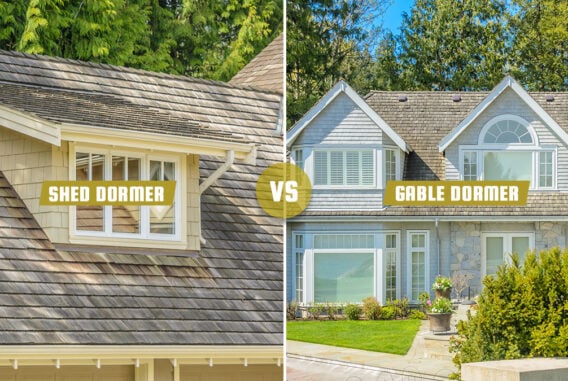
First, the cost. Adding a dormer can be pricey, though it’s far from the most costly renovation you can do. On the low end, a false dormer, a prefab dormer, or a simple shed dormer can be in the $65 to $100 per square foot range. On the higher end, architectural dormers, pedimented dormers, and other more elaborate dormers can run you $150 to $250 per square foot.
Which leads us to the next question: how big are dormer additions? Small-sized dormers might be as small as 24 square feet, while larger dormers can be 10x that amount.
This puts your cost range somewhere between $1,500 on the very low end, up to $65,000 on the high end, per dormer.
It’s not simply additive if you’re doing more than one dormer, necessarily. Installing multiple dormers at the same time saves you on some costs, so where one dormer might be $20,000, two dormers might be $35,000 instead of $40,000.
Again, all of these numbers are simple examples. The actual costs of your dormer renovation will be specific to your project details. For a more specific discussion of the costs to add a dormer to your home, reach out to our team for an estimate.
So, we have a rough idea of the cost of the dormers; now, what’s the ROI for dormers here in New Jersey?
While the specifics can vary depending on your neighborhood, the style of your home, and other factors, the general return on investment for dormers throughout NJ is generally somewhere in the 60-80% range.
That means those ultra-low-end dormers that only cost you $1,500 would add a bit over $1,000 to your home’s value. Meanwhile, those larger dormer projects that cost you $65,000 would add $45,500 to your home’s value.
All subject to the whims of the appraisers and the market, of course.
Assessing the Cost and Value Considerations
How do you determine where your dormer project will fall in terms of the value and cost for the project? Well, obviously, you can contact us for a quote, but you can also make some estimates based on the facts of your project. We’ve put together a handful of questions and discussions you can use to get an idea of what you might expect.
Is the dormer more decorative or functional?
Different kinds of dormers serve different purposes.
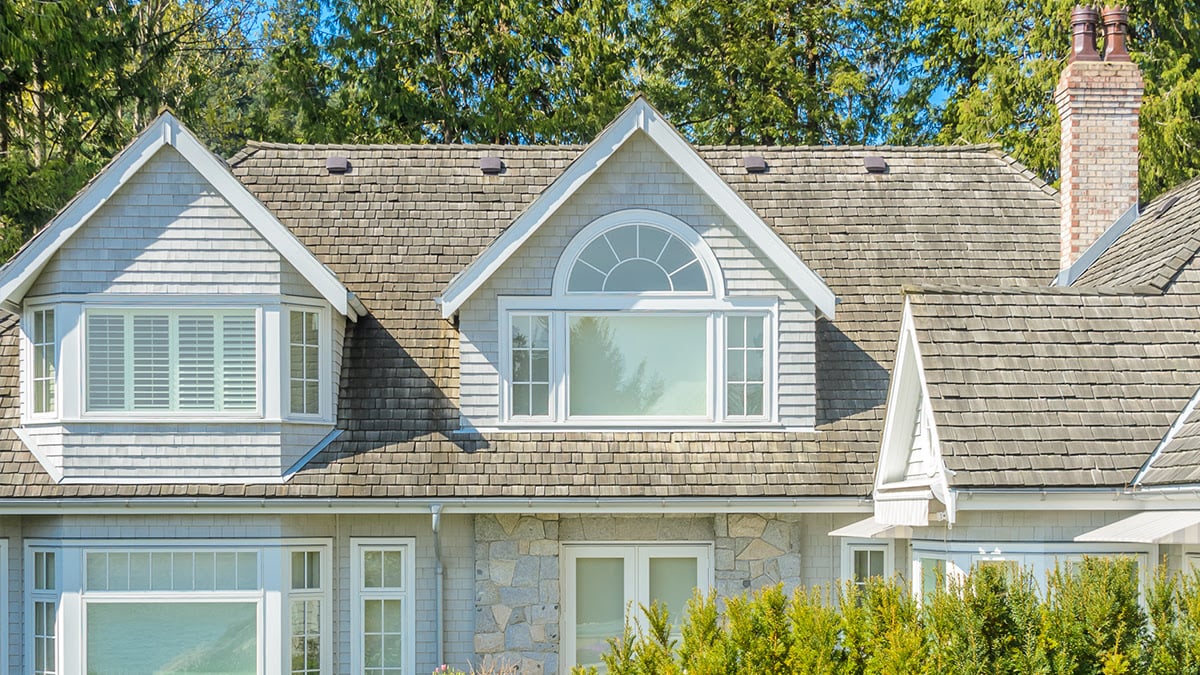
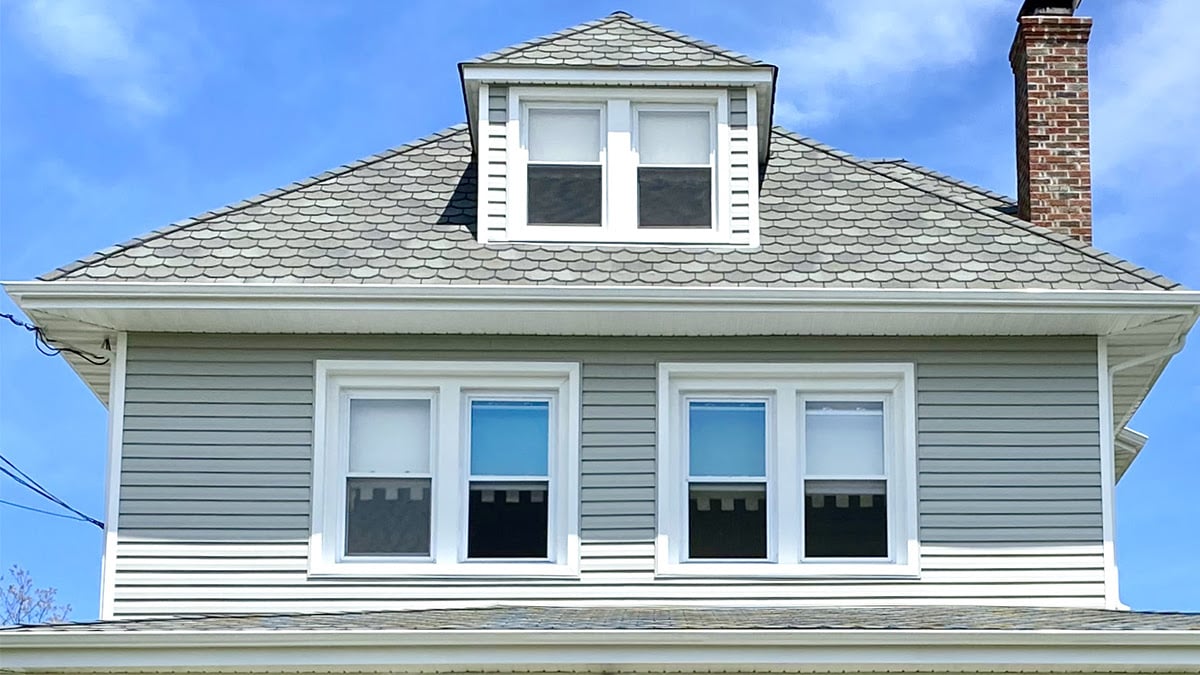
Some dormers are small, little more than enclosures with a window, offering a little bit of space for a small table or a plant stand, but not much usable floor space. They’re primarily there to add light or visibility from inside, and to add curb appeal with an accentuated roofline, but aren’t really making a room more functional by their presence.
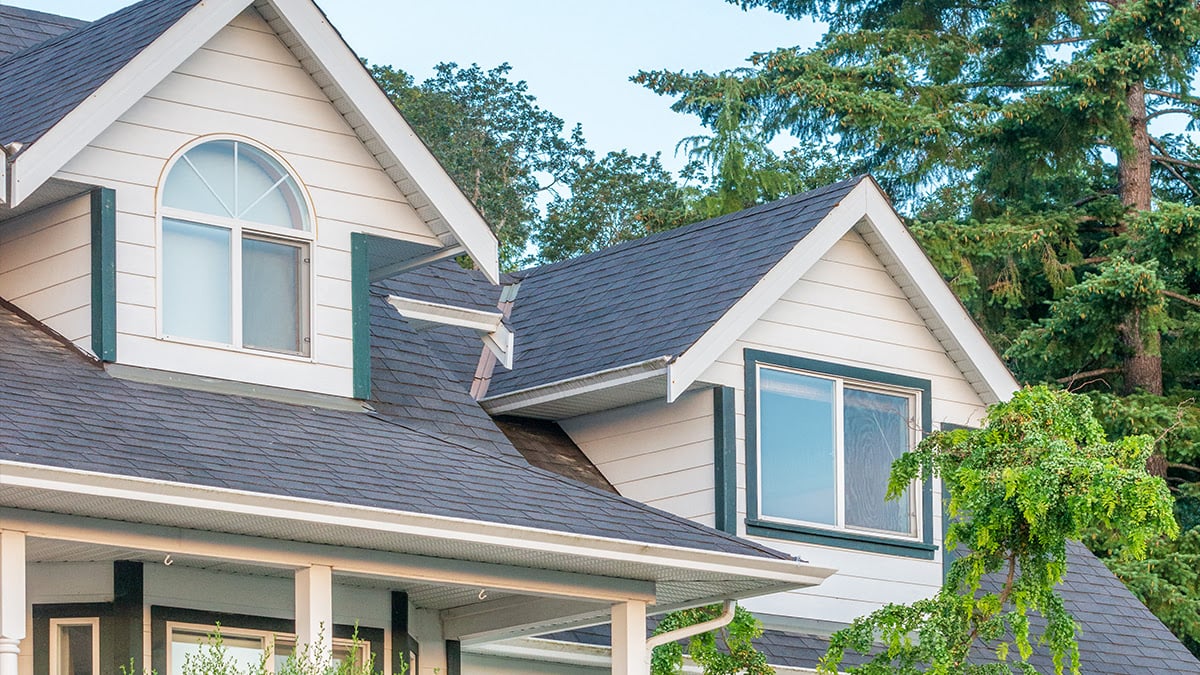
Other dormers are larger. If you’re making an attic bedroom, for example, you might design a broad dormer that allows a bed to be tucked up under the window without risking a head wound if you sit up at night. Other large dormers can add a significant amount of usable floor space to a room, turning a cramped and small space into a larger and more usable space.
There are also entirely fake dormers. These are built more or less directly onto the roof itself, and don’t have access from inside; they’re not usable space at all, and are only there for the exterior curb appeal and aesthetics of the roofline.
Are you more interested in space or light? Light-focused dormers tend to be on the cheaper end, while space-focused dormers require more work and more modification to the roof, and thus cost more to install.
Some people, when light is the main concern, choose to go with a simpler window dormer or even a skylight instead of a dormer. These are a lot easier to install, but they’re not providing anything in the way of functional floor space, just the lighting. There’s nothing wrong with those options; it all depends on what you want your room to have.
Does the dormer match the construction of the rest of the home?
We’ve all seen a home here and there where it looks like whoever built it didn’t really have a sense of scale or proportion. Money can buy a lot of bad taste. Certainly, if we’re consulting on a project, we’ll try to avoid letting that happen. But if that’s what you want, you’re free to make whatever modification to your home you want to make.
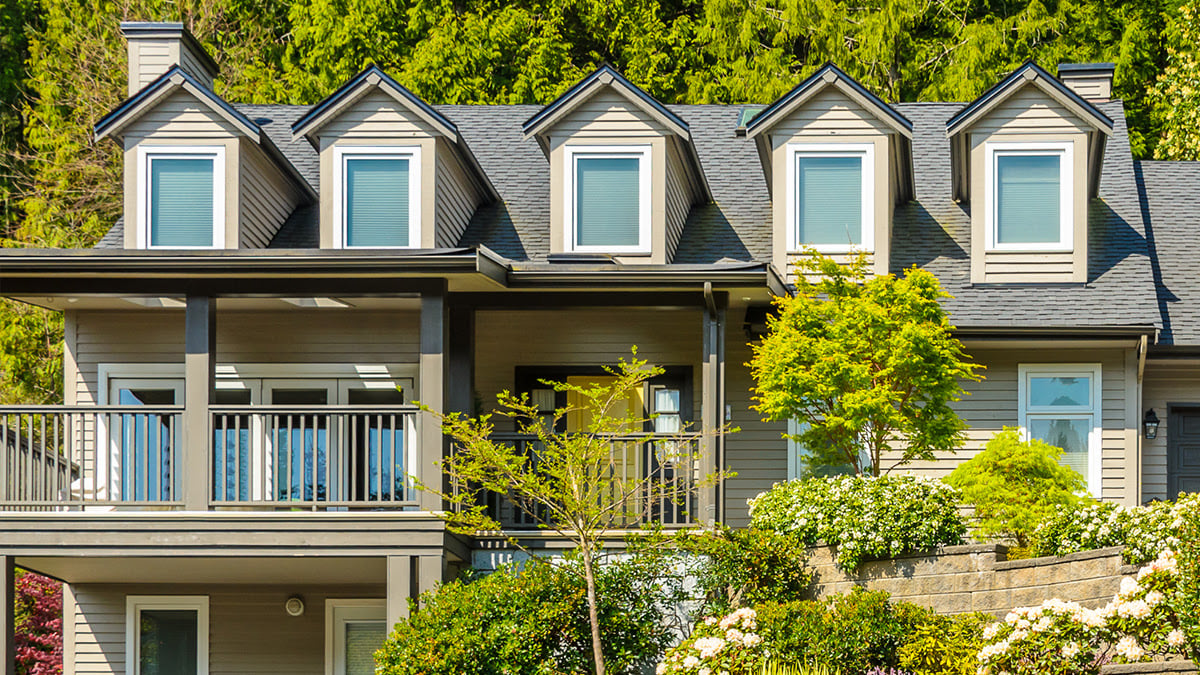
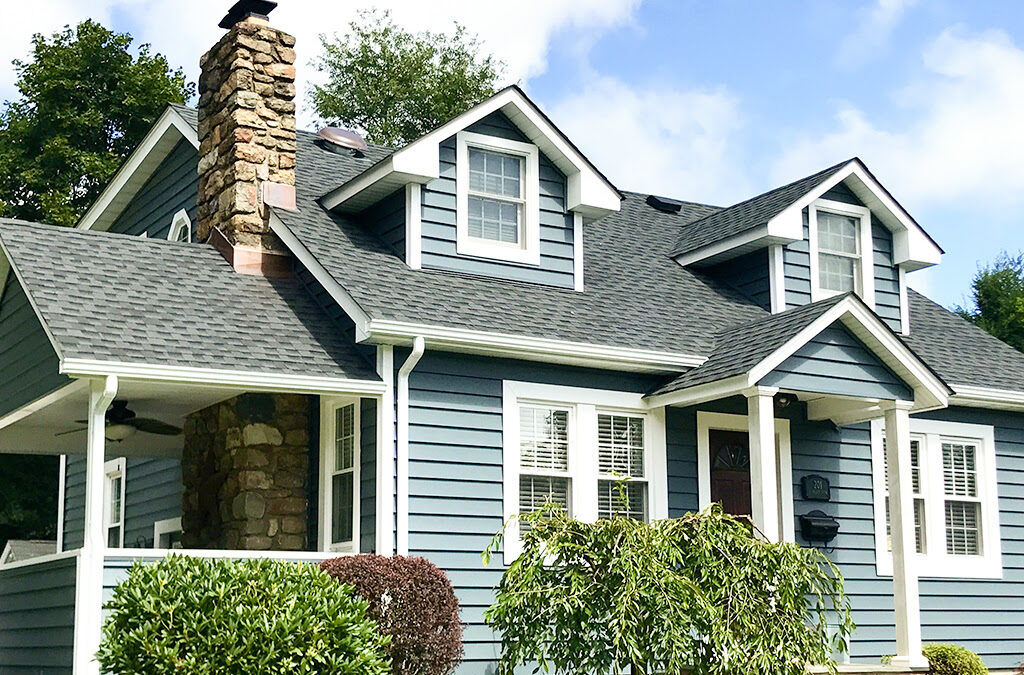
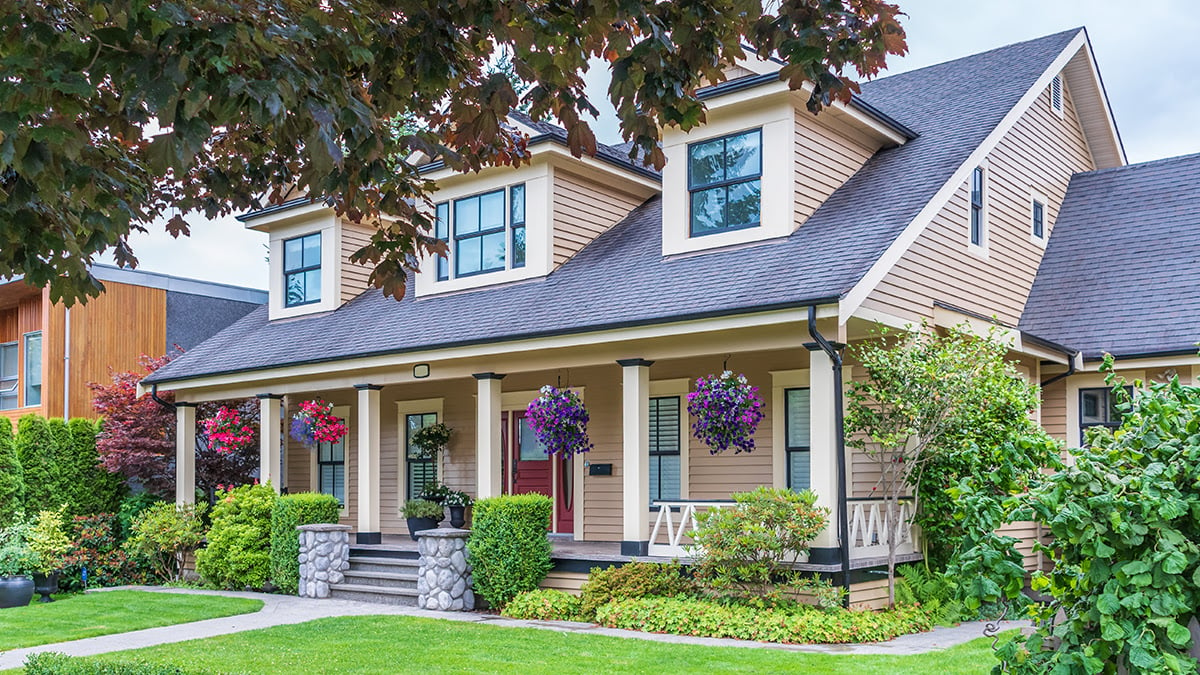
It’s not just about an aesthetic judgment, though. Whether or not you like it or even prefer it, if it’s out of style from the architectural style of your home, or if it doesn’t suit your home’s overall design, it can actually reduce the curb appeal of your home. Huge, ill-suited dormers stand out in a bad way. Asymmetrical dormers can look out of place on a symmetrical home. Complex domed, curved, or pedimented dormers can look strange on an otherwise simple and flat roofline.
Again, if you’re planning to live in your home indefinitely, and you want it that way, that’s fine. But, if you’re hoping to sell in a year or three, which might be why you’re asking about ROI in the first place, you want something other people will find attractive.
Are you already getting into the roof for other reasons?
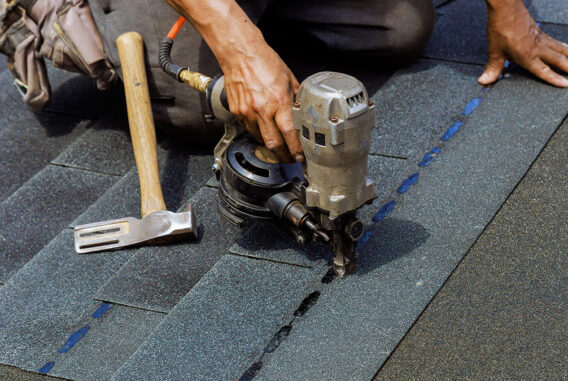
Any dormer other than a false dormer requires cutting into your roof, which is a big part of where the cost comes from.
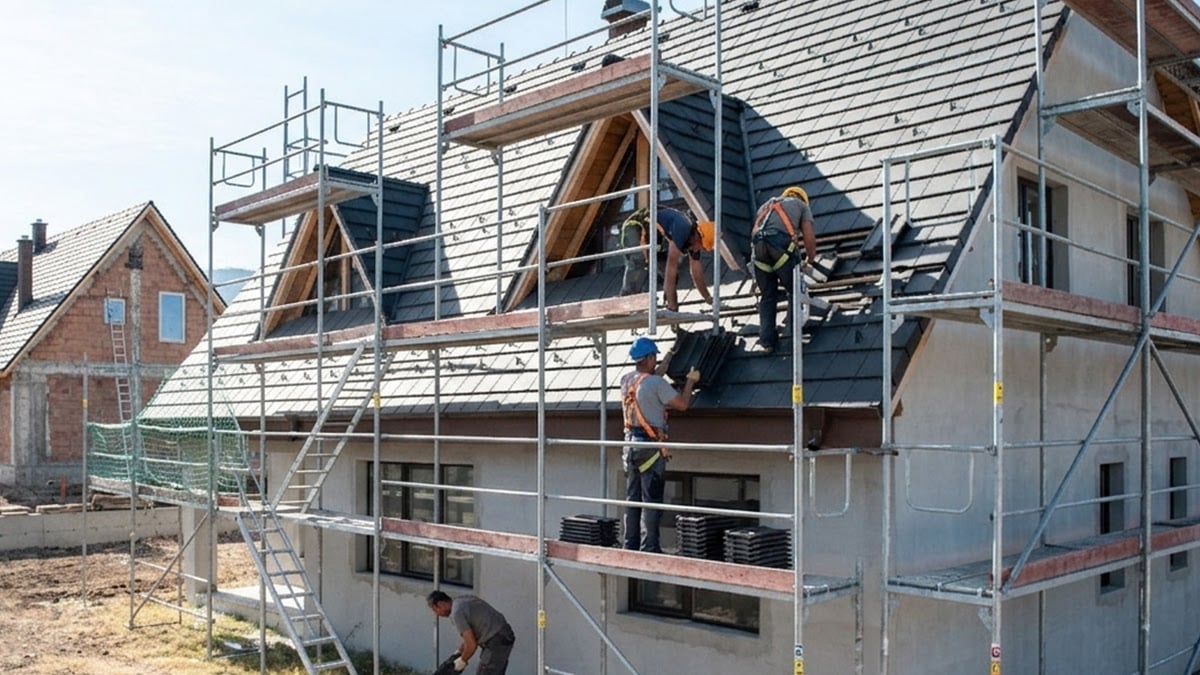
But, that means you can save some money, but get more value out of your dormers, if you’re already doing roof work. Replacing your shingles already means stripping off the old shingles and exposing the roof itself, which makes it easier to access and cut in. It also means there’s less of a chance of issues tying it all together, which is where a lot of water leaks and other issues crop up.
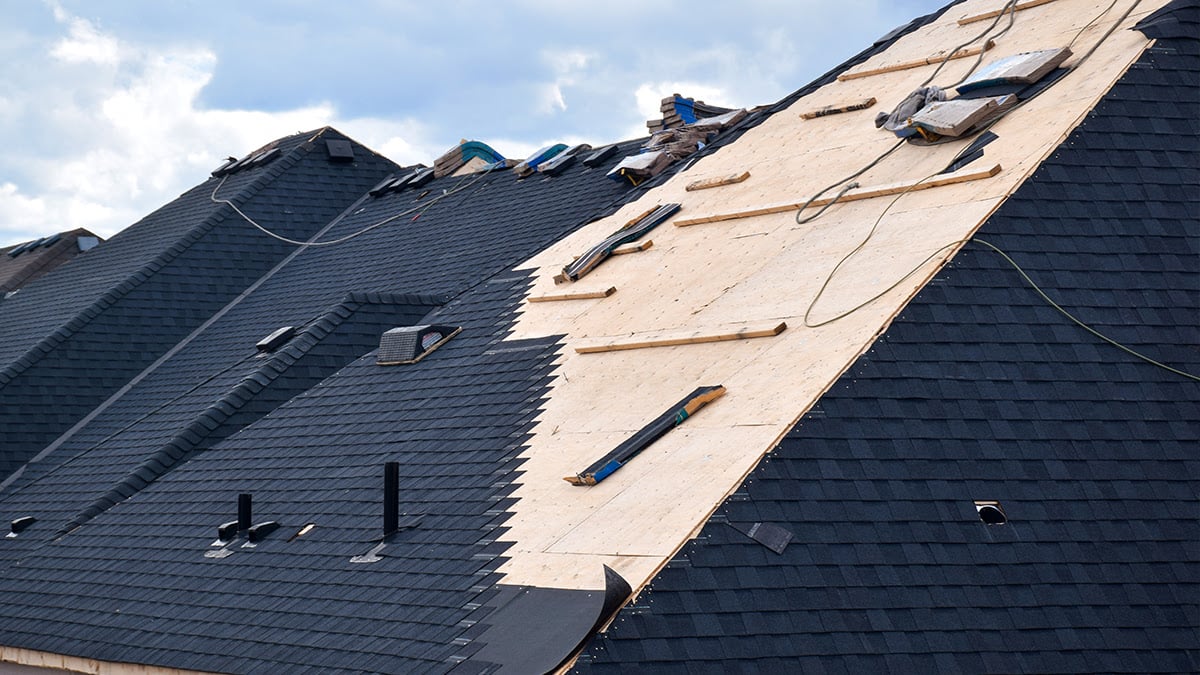
Plus, if you’re getting a new roof, you’re already getting a nice boost to your home value, so adding dormers at the same time gives you that much more of a boost.
Are you selling right away, or planning to live here indefinitely?
As we’ve already discussed, the realized value of the project can depend on when you plan to sell.
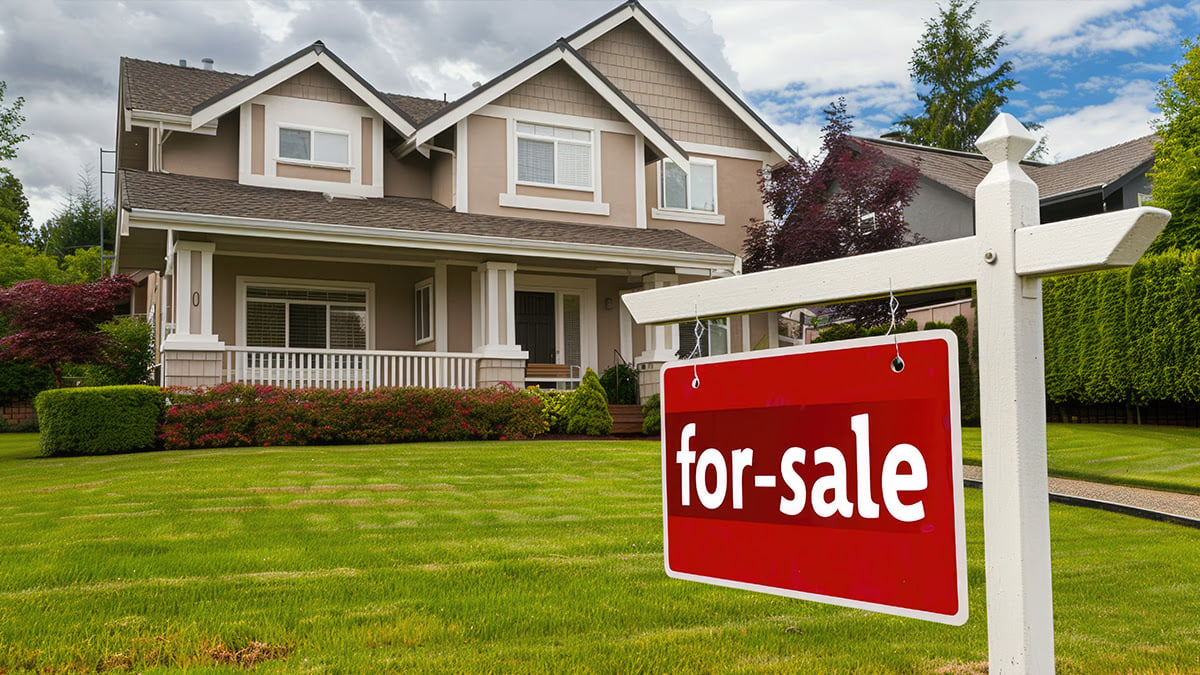
If you’re selling right away, you want more cost-effective, attractive, functional dormers that prove to be a benefit to buyers inside and out. On the other hand, if you’re keeping the home for years to come, you want something that suits your needs and functionality the most.
Unexpected issues can also crop up.
We always recommend having room in your budget for potential issues, since you never know what can crop up.
A larger dormer might end up requiring structural reinforcement, for example, and that can require more work and more expense. You might have more roof work than you expected if your initial plans uncover hidden water damage. Even delays in material shipments can cause problems.
These costs don’t carry over to your ROI, usually, so it’s best to avoid them as much as you can.
Getting the Dormers of Your Dreams in New Jersey
If you live in the northern areas of New Jersey, you’re probably in our service area, and that means we’re more than ready to get to work on your dormer project.
Whether you need financing to make your dormers a reality or you’re ready to go and just need to get the ball rolling, we’d love to be your choice for any New Jersey home remodel or renovation project. All you need to do is reach out to our team to talk about your project, get a free estimate, and figure out what kind of timeline we need to get started.
Frequently Asked Questions
How much does it cost to add a dormer to a New Jersey home?
Costs vary widely based on dormer type and size. Simple shed or prefab dormers run $65 to $100 per square foot, while elaborate architectural or pedimented dormers cost $150 to $250 per square foot. Overall, a single dormer can range from about $1,500 on the low end up to $65,000 on the high end. Installing multiple dormers at once can reduce per-unit costs.
What is the average return on investment for a dormer in NJ?
The general return on investment for dormers throughout New Jersey typically falls in the 60-80% range. That means a low-end $1,500 dormer might add a bit over $1,000 to your home’s value, while a larger $65,000 dormer could add around $45,500. Actual results depend on your neighborhood, home style, appraisers, and market conditions.
What is renovation return on investment and how is it calculated?
ROI is the percentage of a renovation’s cost that gets added to your home’s value. For example, a $25,000 kitchen remodel with a 70% ROI adds $17,500 in value. However, ROI is only fully realized when you sell, and utility value to you personally may exceed the monetary return entirely.
Should I add a dormer while doing other roof work?
Yes, it’s often smart. Any dormer other than a false dormer requires cutting into your roof, which drives much of the cost. If you’re already replacing shingles, the roof is exposed and easier to access, reducing labor and the risk of leaks. Adding dormers during a roof replacement also stacks two home-value boosts together.
Does the dormer’s style affect my home’s value?
Absolutely. A dormer that clashes with your home’s architecture can actually reduce curb appeal. Oversized, asymmetrical, or overly complex dormers can look out of place on a simpler home. If you plan to sell soon, choose a design others will find attractive. If you’re staying indefinitely, prioritize what best suits your needs.