Homeowners in New Jersey inevitably face the fact that our weather, atmosphere, and environment do a number on the materials used to build a home. Homeowners on the coast in particular find a number of challenges that damage siding over time, leading to what may even feel like premature replacements.
When it comes time to pick replacement siding, you have a lot of options. Two of the common choices are CertainTeed and Alside ASCEND®, popular cladding options that provide a range of perks for our coastal homes. Which is ideal for your home, and which should you pick? Let’s discuss the details and help you make a decision.
If you want to skip this post and get a personalized answer for your home, we’re fine with that too. Just drop us a line for a discussion and a free estimate. Otherwise, read on!
Why You Likely Need New Siding
Coastal homes in New Jersey face a lot of challenges.
For one thing, you have to consider the sun. The sun is a constant presence, and ultraviolet radiation damages materials over time. Colors fade, vinyl grows brittle and can crack or break, the surface can break down and harbor mildew, and more.
The sea air is also a challenge. Salty, moist air blowing in off the ocean is a huge problem. The humidity keeps things damp and fosters mold and mildew, and can lead to organic materials rotting. Meanwhile, the salt makes the moisture highly corrosive, which easily damages certain materials susceptible to it.
There’s also the chance of storms. Severe storms aren’t quite as common as they are in other places throughout the country, but all it takes is one bad storm to throw branches, hail, or debris into siding and damage it.
New Jersey is also right in a zone where the climate rides up and down all year. The peak heat of summer can be very hot for some materials, while the winters can get below freezing. Freeze-thaw cycles can do a number on any material, and siding takes a lot of abuse from it.
At the very least, all of this means your siding needs regular inspection and maintenance, no matter what material or manufacturer it is. Unfortunately, many people defer this maintenance, which leads to a build-up of damage or small problems that aren’t repaired until they become larger issues.
Signs You Need to Replace Your Siding
If your siding is getting old or you’re having problems with the exterior of your home, it may be time for new siding.
Some of the most obvious signs you should get it replaced include:
- Visible bubbles and blisters. When the surface of the siding is blistering, it’s a sign that moisture is getting into it. Not only is that bad for the siding, but it also means the siding isn’t a barrier to that moisture getting inside the home. While it’s just one of several lines of defense, it’s one that can become a huge issue down the line if it’s not solved quickly.
- Cracking or rotting. Many siding materials are long, thin, and straight. When those materials get old, they can expand and contract incorrectly, and crack or warp. Some materials, especially wood, can rot away as well.
- Excessive fading. Siding will inevitably fade in color over time, and even the most color-fast materials can be damaged or have dirt and debris accumulate on them. When a wash no longer restores the siding’s color, or when you need to repaint or re-stain the siding constantly, it might just be past its longevity.
- Interior damage. If your interior is having issues, from peeling wallpaper to bubbling paint, it can be a sign that your siding is not properly blocking out the elements. Both temperature and moisture are normally at least partially stopped by your siding, and when they’re let through, the interior suffers.
- Visible damage. Any sort of damage you can see is a sign that you at least need repairs, if not a replacement of your siding as a whole.
When it’s time to replace your siding, you want new cladding that can withstand the elements and the harsh coastal air. There are a lot of options and a lot of promises on the market, but which ones are best? We love both Alside’s ASCEND® siding and the siding from CertainTeed, so those are the two we’re comparing today.
What is Alside ASCEND®?
Alside is a company that makes a variety of elements used in home-building, including windows, patio doors, metal siding, decorative elements, and cladding. Their exterior cladding options include vinyl, steel, composite, and others.
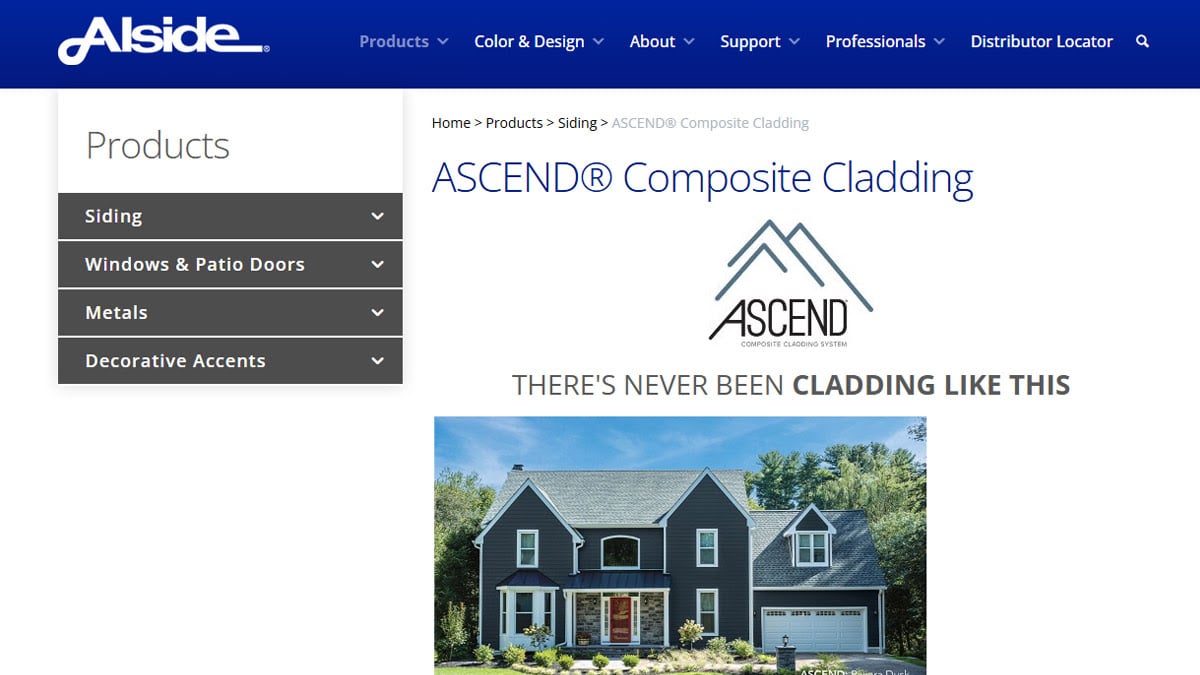
ASCEND® is a form of composite siding made out of a mixture of glass-reinforced polymer and graphite-infused polystyrene. The result is a tough, durable material with the look and texture of natural wood, but the durability of much stronger materials.
ASCEND® cladding comes in two styles: a standard 7″ board and a board-and-batten profile. It’s also available in 21 different color options.
The Pros and Cons of Alside ASCEND® Cladding
So, what are the pros and cons of ASCEND® siding from Alside? First, the pros.
Pro: It’s extremely durable and low maintenance. The composite material used in ASCEND® siding is more durable even than fiber cement or metal, especially in the kind of coastal atmosphere you’ll be exposed to along the New Jersey coastline. Other than some routine cleaning to keep up the shine and inspections to make sure nothing has damaged it, you don’t have to do much to keep on top of things.
Pro: It’s Class A fire-rated. Class A is the highest and most stringent level of fire resistance available for building materials. Most kinds of siding aren’t nearly as protective against possible fires, but ASCEND® is top of the line.
Pro: It’s very resistant to pests. Vinyl is a thin barrier that pests can get through pretty easily. Wood is a natural material that insects love to burrow through. Composite materials, and particularly Alside’s composite, are difficult for pests to get through and not attractive to them if they try.
Pro: It’s very easy to install. The materials that make up the composite are lightweight and easy to work with, and the installation system Alside developed is simple and self-levels. That means it’s faster and simpler to install, so your project will save on labor costs.
While all of that sounds very attractive, there has to be a downside, right? Well, maybe; here are the potential cons to Alside ASCEND® cladding.
Con: It’s a very new product. Alside only launched the ASCEND® product in 2020. No one knows how it will hold up 10, 20, 30 years down the line, since it hasn’t existed long enough to know. All signs point to very long durability, but we don’t know with 100% certainty how it will hold up. Fortunately, they offer a limited lifetime warranty, transferable to new owners if you buy or sell.
Con: It’s the more expensive of the two options we’re discussing today. ASCEND® siding typically ranges between $7 and $15 per square foot. It’s not the most expensive siding on the market ( Hardie is a little more expensive, and options like brick or natural stone are much more expensive), but it’s nearly double what you’ll expect from CertainTeed.
What is CertainTeed Siding?
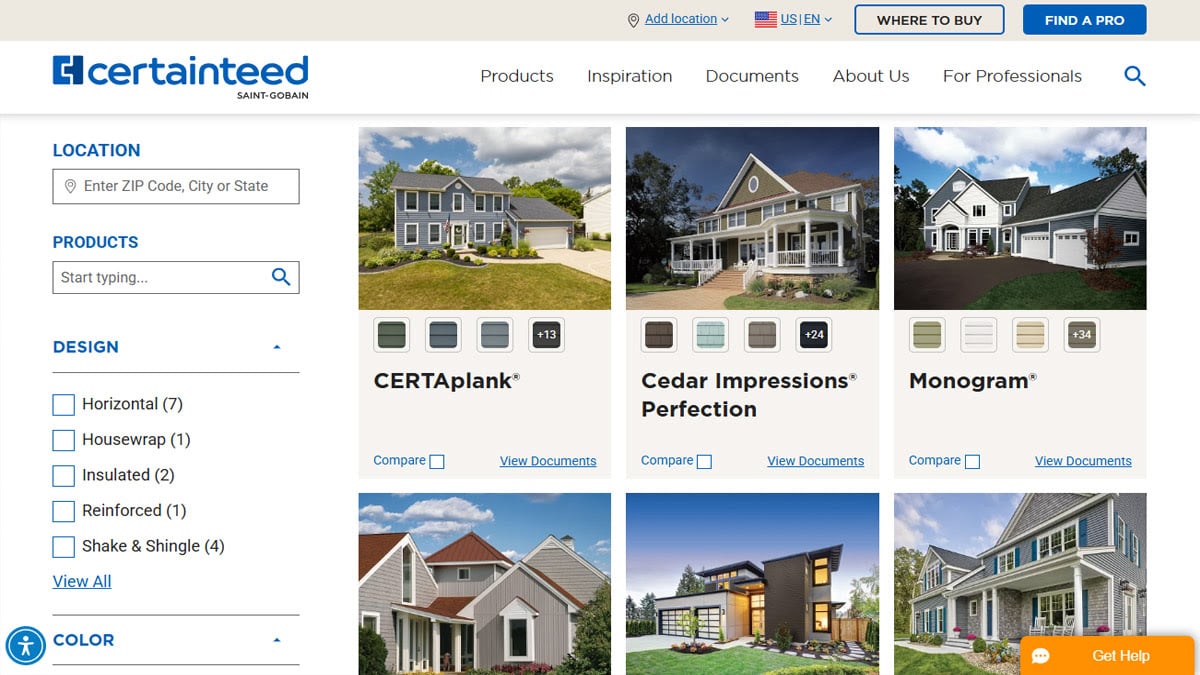
CertainTeed is a large brand with a broad catalog of home-building products, including roofing materials, trim, construction materials, interior finishings, and more. They offer dozens of different kinds of siding styles, with many different color options between them. From traditional vinyl siding to faux cedar or stone facades, their products can make a home stand out without the price commitment of those more intensive materials.
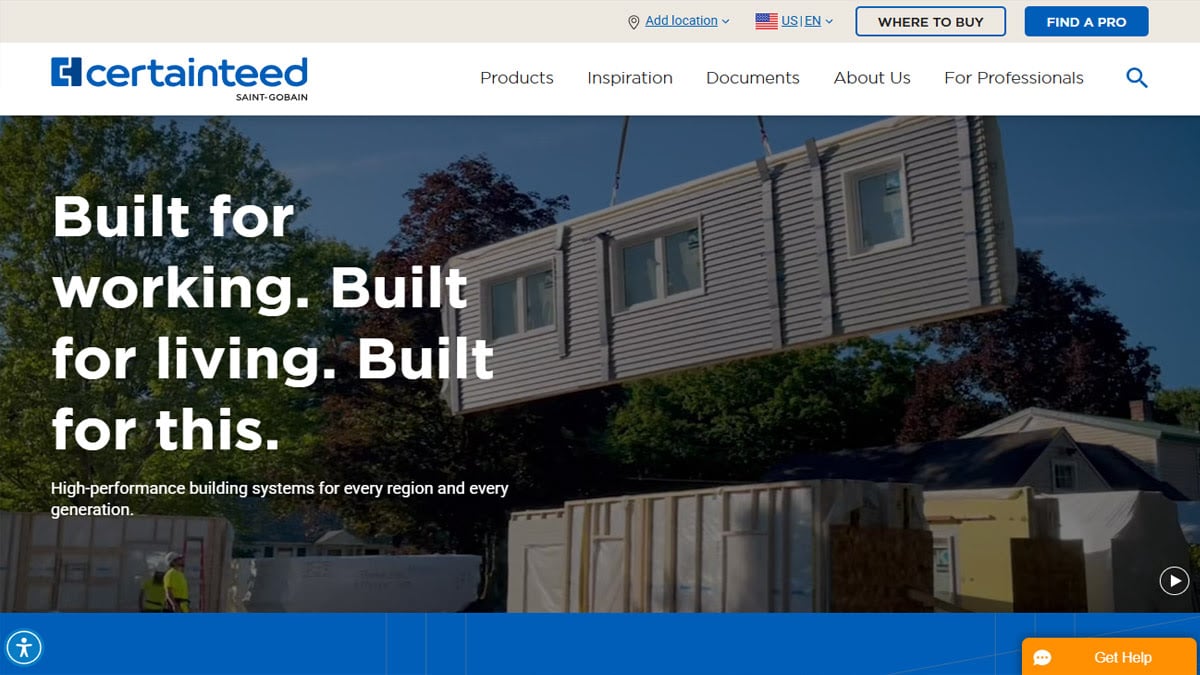
Pretty much all of CertainTeed’s siding catalog is various forms of vinyl, making them a common option across the country for a budget-friendly cladding that, nevertheless, can carry the appearance of higher-tier siding.
The Pros and Cons of CertainTeed Siding
While it might sound like we’re down on vinyl, that’s not the case. CertainTeed vinyl siding has a number of benefits over the competition.
Pro: It’s a very affordable siding option. While ASCEND® siding can run you $7 to $14 per square foot, CertainTeed siding ranges from $4 up to $12 per square foot on average. All of these prices are estimates and can depend on the specific siding, the local availability, and other factors, but on average, CertainTeed is one of the more budget-friendly options available to New Jersey homeowners.
Pro: It comes in a variety of styles. With CertainTeed, you’re getting vinyl, but it can look like vinyl, composite, cedar shakes, or even natural stone. You can get a premium look for a budget price, which is nothing to sneeze at.
Pro: It’s fairly durable and low maintenance. While vinyl isn’t the most durable of materials and won’t beat out composite, it’s still fairly resilient. The higher-end CertainTeed products are also thicker and provide more strength and resistance to damage, so they last longer, even if they’re more expensive.
Pro: It’s not susceptible to coastal damage. Vinyl is a good material for coastal homes here in New Jersey, because the salty air isn’t going to corrode or damage it, and it’s moisture-resistant by its nature. The biggest challenge of the coast is defeated by vinyl.
Those are some pretty solid benefits, but there are some drawbacks, inevitable with vinyl siding.
Con: It’s not going to be as durable as other materials. While vinyl is durable enough to last a couple of decades, you’re looking at a 20-year lifespan rather than 30-50 years like you might get out of composites. It’s also more susceptible to damage, the hot-and-cold cycles of summer and winter, and the UV damage from the sun.
Con: Darker colors have the potential to fade. While lighter colors can also fade over time, darker colors absorb more sunlight and are more likely to fade over time. It will be a long and slow process, but after a couple of decades, it can be quite noticeable.
Con: It might not have a premium feel. Vinyl siding, especially lower-end vinyl siding, can often look and feel cheap compared to higher-end materials. The upper-end CertainTeed products don’t have this problem, but if you’re on a tight budget and you’re aiming for the cheapest they have to offer, it’s worth considering.
So, as you can see, there are some reasons why you might choose to skip over CertainTeed in favor of another product, like Alside ASCEND®.
Which is Better for a Coastal New Jersey Home: ASCEND® or CertainTeed?
The answer is: it depends on you!
ASCEND® is likely the more durable option, and is definitely the premium choice among these two. It’s fast and easy to install, has the potential to last a lifetime, and is very durable in the face of every possible challenge it can face here in New Jersey. At the same time, you pay for what you get, and you’ll be paying a premium rate for premium siding from Alside.
CertainTeed is durable, commonplace and fast to install, and can look quite good when it’s all said and done. But, it tends to be less durable than other materials, might not have a premium look and feel, and can require more maintenance over time. The trade-off is that it’s going to be a decent amount cheaper than ASCEND® siding.
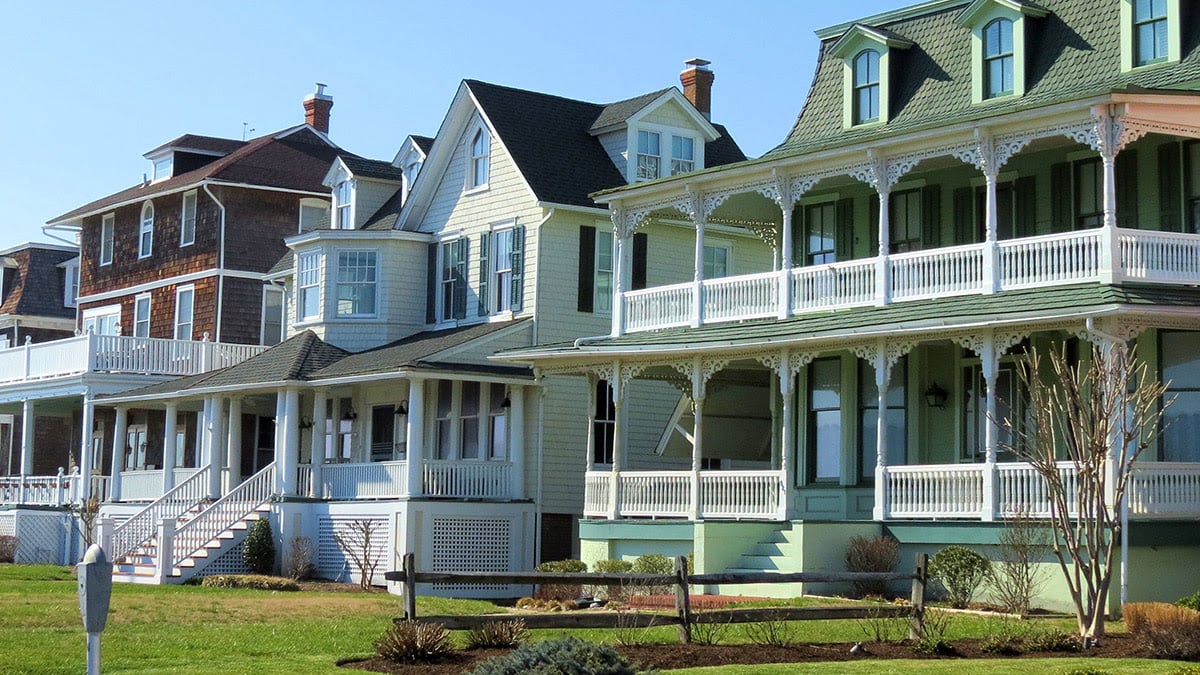
Both options are resistant to everything the coast can throw at them, both can look very good when professionally installed, and both offer a variety of colors to match your design. That said, CertainTeed has a few more options than ASCEND® for design.
When you balance your needs, your aesthetics, and your budget, the answer may become clear. But if you want a professional opinion, you’ve definitely come to the right place. With over 30 years of experience replacing siding all up and down New Jersey’s coast, Magnolia Home Remodeling Group are your experts in all things siding.
We’re more than happy to take a look at your home, discuss your options, and give you a free estimate for siding with ASCEND®, CertainTeed, or another option. Just reach out today to get the process started.