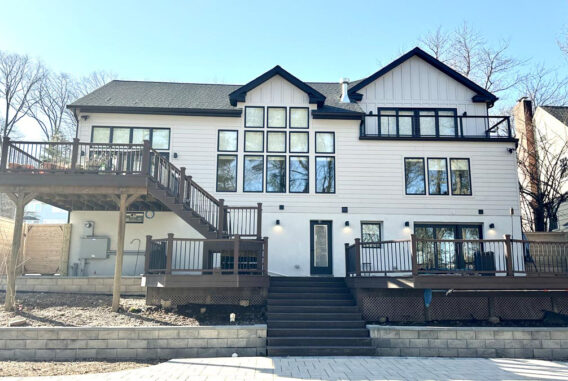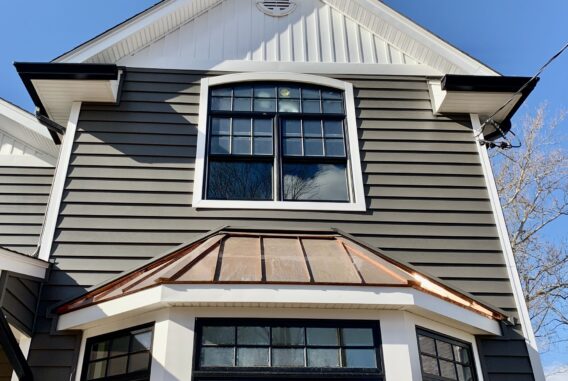
Siding is an incredibly important part of your home, in ways many people don’t think about until it’s starting to break down. It’s not just about the appearance of your home, though, of course, the curb appeal is relevant. Beyond the looks, siding serves many purposes.
- It’s protection from snow, rain, wind, sun, and moisture.
- It protects the sheathing beneath it from damage, and that sheathing is part of the structure of the home.
- It helps retain temperature, improving energy efficiency and reducing HVAC costs.
- It’s a barrier to pests that would infiltrate the home without it.
As siding gets older, it needs to be repaired, and eventually, it very likely needs to be replaced. The longer you let it go, the more possible damage can be done to the structure of the home beneath, and the costlier it will be to repair.
When it comes time to replace the siding on your New Jersey home, you’re probably going to dive into a rabbit hole researching different brands and products. What’s the best option? What are the pros and cons of different siding styles or materials? There’s a lot to learn, but that’s why you’re here.
Two major brands of siding available in New Jersey are CertainTeed and Everlast. We’ve talked about them both before, but now we’re putting them head-to-head. We’ll cover the major points you’ll want to know, and help you make the decision that suits your needs the best. Or, if you just want to talk to our experts about your home directly, you can contact us now, and we’ll get you a free estimate right away.
What Siding Does CertainTeed Offer?
Let’s start with CertainTeed. CertainTeed is one of the leading brands for all manner of housing materials, from housewrap to shingles, but their siding is easily one of their most common products. There’s a pretty good chance several of your neighbors have CertainTeed siding, and they may look nothing alike.
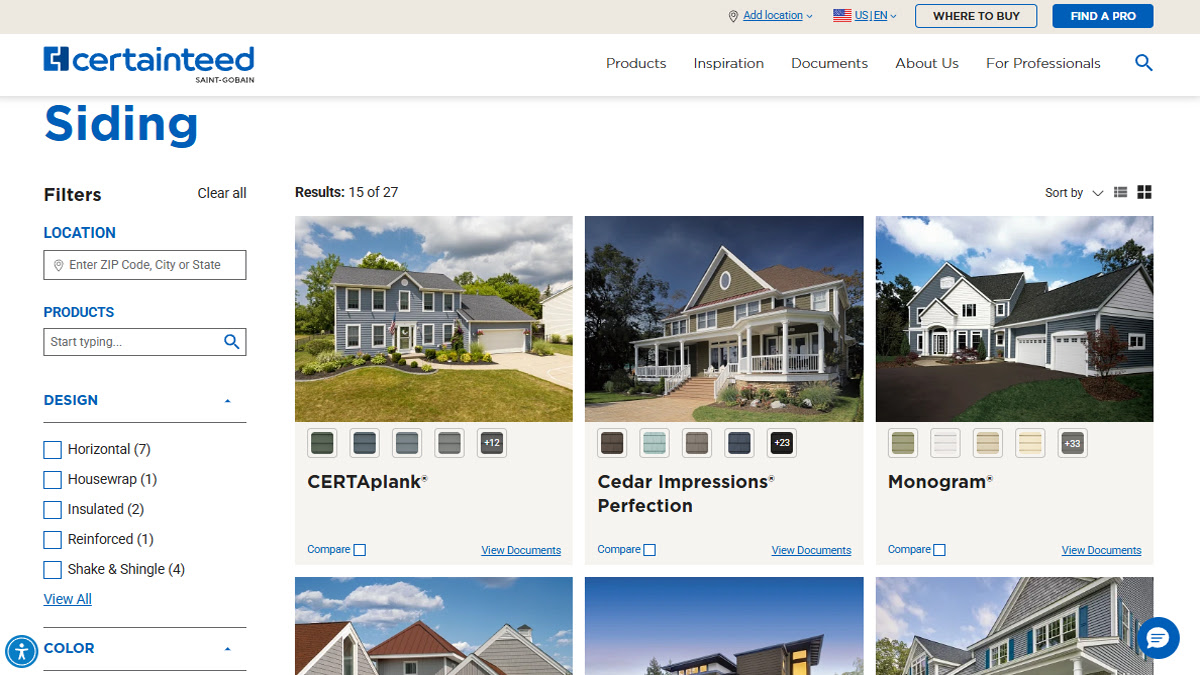
CertainTeed siding comes in a lot of different designs and color options. They have traditional horizontal lap planks, broad architectural panels, vertical board and batten, faux cedar shakes, and even a fake stone façade design. Each product has a unique selection of colors, with anywhere from 10 to 30 different color options.
All of the siding produced by CertainTeed these days is vinyl, which is one of the most common siding materials in the country. It’s durable, resilient, cheap, and easy to make and install. Modern vinyl siding is also a lot better than vinyl siding used to be, with improvements in durability, resistance to warping or thermal deformation, and even color retention over time.
With a great option like this around, what could compare? Well, a lot of things, but today we’re looking at Everlast.
What Siding Does Everlast Offer?
Chelsea Building Products is the manufacturer of the line of siding known as Everlast, which has been around for around 50 years now. Like CertainTeed, they manufacture a variety of housing items, including doors, windows, shutters, and gutters, but the siding is their most popular range of products.
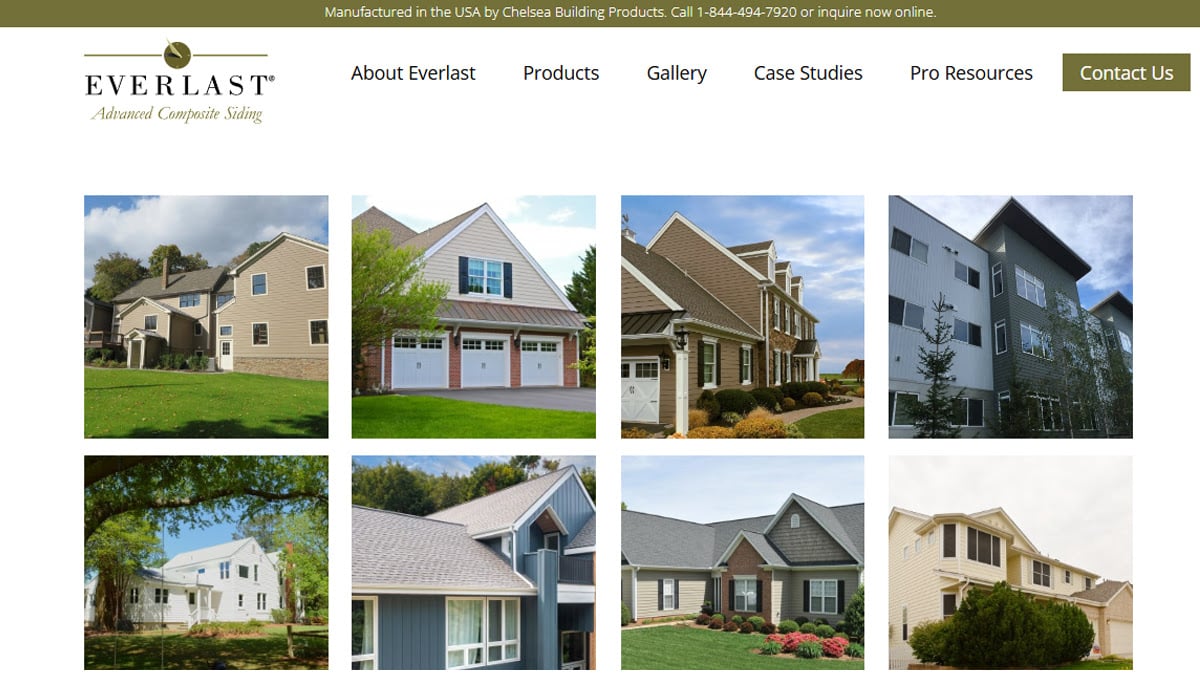
Unlike CertainTeed, Everlast offers a much smaller range of products. They have a vertical board and batten, and two horizontal laps of different heights. Their color options are broad, with a range of muted and vibrant colors across 15 different options.
Rather than vinyl, Everlast siding is a composite material. They don’t say exactly what’s in it, but it’s a mixture of minerals, polymers, resins, and colorants, which forms a strong, durable, color-fast material.
How do these two siding products compare? Let’s look at them across different categories.
CertainTeed vs. Everlast: Durability and Longevity
When you’re getting new siding, the expectation is that it’s going to be with you for a long, long time to come. Most siding is expected to last around 30 years, at least, as long as nothing happens to it, like a generational storm, a fire, or other unusual damage.
Vinyl siding can sometimes come in at the lower end of longevity. Lower-end vinyl products, especially if they’re exposed to a lot of sunlight or extreme temperatures, might only last 20 years. The good news is, CertainTeed is a higher quality vinyl siding than some other brands, and often lasts 30-40 years. Some well-maintained installations have made it as much as 50!
Everlast siding is fairly comparable in lifespan. It usually lasts 30 years easily, and can go as much as 50 when maintained. The maintenance burden can be slightly different, but the two materials are actually somewhat comparable in a lot of ways. They are, in a sense, both kinds of plastic. Vinyl is more flexible, while composite is more rigid, but they’re both a lot lighter and more flexible than something like fiber cement.
Both brands actually offer limited lifetime warranties to demonstrate that they stand behind their products.
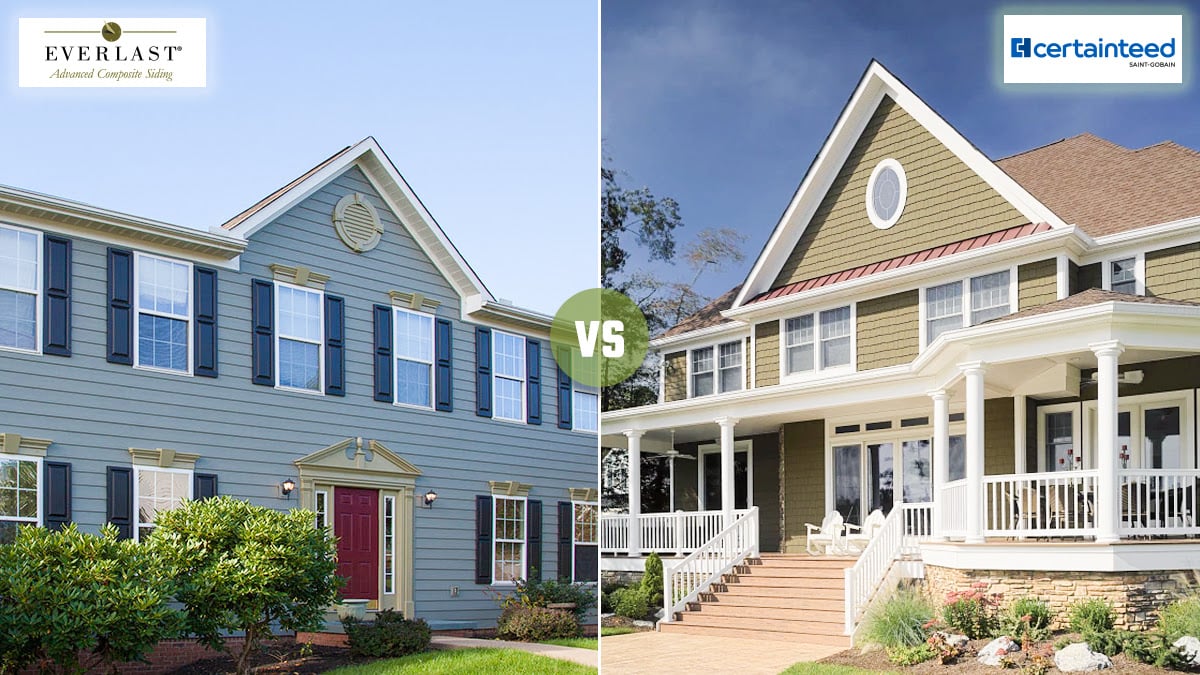
What about durability? New Jersey, as you know, has to deal with a lot. From cold winters and freezes to the hot summer sun, from constant humidity and rain to hailstorms and the seaside air, your siding can really take a beating.
Both CertainTeed and Everlast are capable of withstanding anything New Jersey can throw at it, more or less. The biggest issues actually come from when trim or flashing fails, and water gets in behind the siding, which is going to be a problem no matter what brand you choose. Both products are also pretty easy to fix if individual panels are damaged.
One of the biggest worries with vinyl siding is actually heat. A common issue is people who run a grill for their neighborhood barbecue, only to find they were too close to the house and they’ve melted their siding. Everlast’s composite is a little more resilient to heat, though it can still melt or burn if it gets too hot.
You might also be concerned with the durability of the look of the siding. How well does the siding retain its color? Vinyl can fade over time, primarily due to UV radiation from the sun breaking down the chemicals that give it its color. Modern vinyl siding like CertainTeed is still quite good at retaining color, but after 20+ years, it might have lost a little of its luster. Everlast, meanwhile, stays vibrant for a very long time, due to the way the color is infused into the material.
Overall, though, both CertainTeed and Everlast are fairly comparable materials in all of the ways that matter. You’d need to have some specific circumstances to really prefer one over the other on just the grounds of durability.
CertainTeed vs. Everlast: Aesthetic Choice
Aesthetics are where one of the big differences between CertainTeed and Everlast comes up.
Everlast is, all things considered, very limited. With just three styles and just 15 color options, there’s really not a lot of flexibility. Now, sure, there’s a pretty good chance you’re going to want one of those three styles, since a majority of homes go with either a lap or a board and batten siding style. But if you wanted something different, you won’t get it with Everlast.
CertainTeed, meanwhile, has a much larger product catalog. Not only do they have more styles than just board and batten or lap, but they also have multiple kinds of each of them. Whether you want a deeper or shallower overlap, a taller or shorter lap board, or with shingle-style, different arrangements and regularity in shingles, you have those choices with CertainTeed.
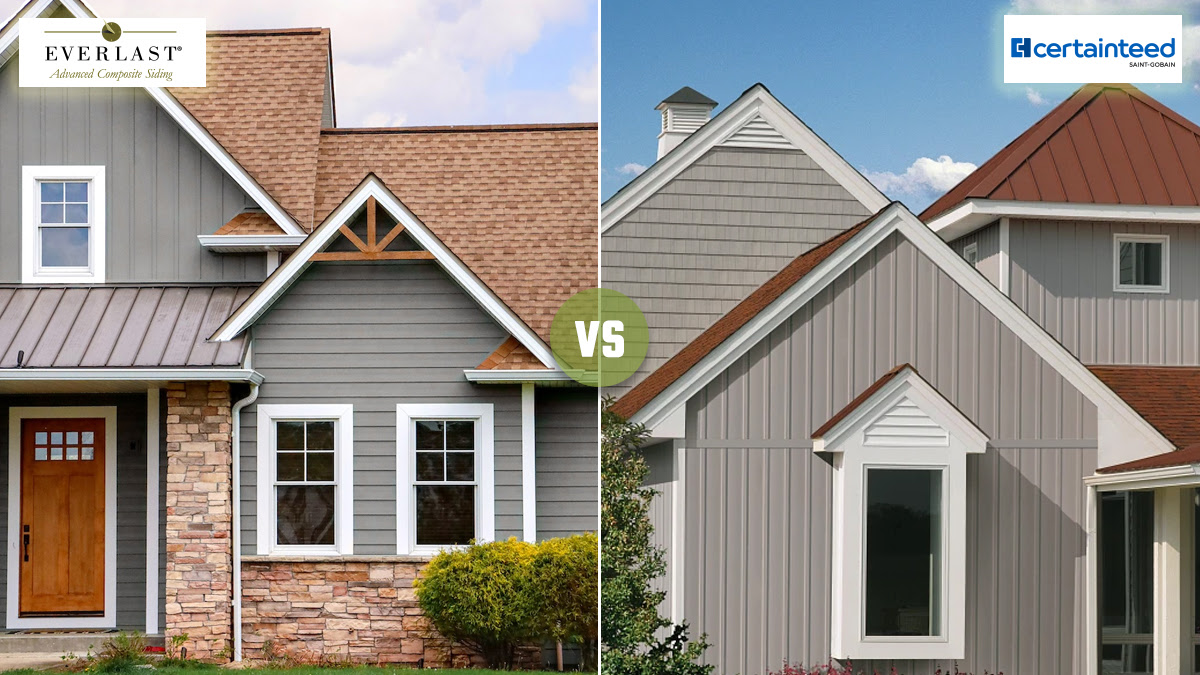
One of the very few downsides to the aesthetic range offered by CertainTeed is that some of their products have a very limited color selection. Their CedarBoards board and batten style, for example, only comes in eight color options: white, snow, herringbone, granite, sterling, clay, wicker, and autumn red. You might notice that seven of the eight are some kind of light gray, cream, or white; it’s not a lot of options.
While both materials can technically be painted, neither one is really designed for it, and doing so will void your warranty and ramp up your maintenance burden, so it’s not recommended.
Overall, CertainTeed is the clear winner when you want more aesthetic choices and flexibility, which is another big reason why it’s so incredibly popular.
That said, one area where Everlast might win out is in the appearance of natural wood. While Everlast doesn’t offer a cedar shake version, the lap boards they make have a deep and robust wood grain appearance that looks a lot more like natural wood than CertainTeed’s vinyl equivalents. If that real wood appearance is a must-have, you could consider Everlast.
CertainTeed vs. Everlast: Ongoing Maintenance
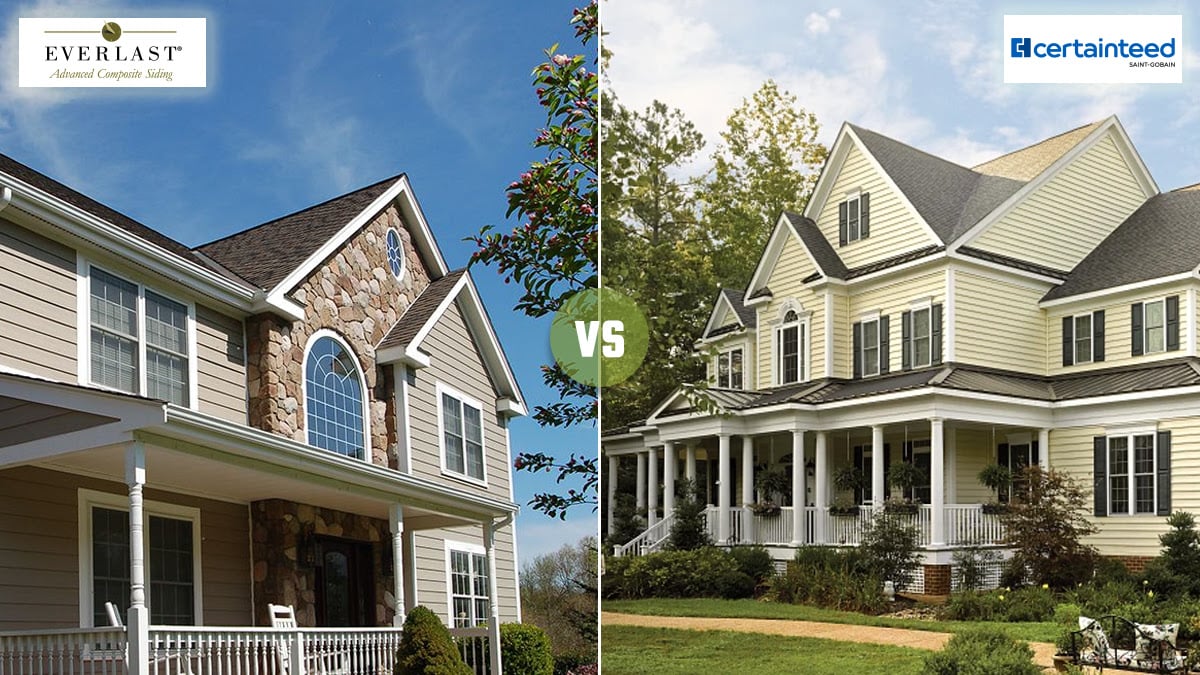
The good news about both CertainTeed vinyl siding and Everlast composite siding is that the maintenance required to keep them looking great is very minimal.
Basically, you only need to do three things.
- Wash it down once every year or so. This removes built-up dirt, dust, sea minerals, and budding mold that might grow from the humidity we have here in New Jersey.
- Inspect the siding, with particular attention to corner trim, edges, and other joins. Look for signs that anything has come loose, been pulled away, or that moisture is getting in.
- Replace anything that needs to be replaced. You might need to re-secure trim, replace a board that takes a ding from a hailstone, or otherwise make minor repairs. This will likely only be required every handful of years at worst.
That’s it! You don’t need harsh or specialized chemicals, you don’t need touch-up paint or repainting, you don’t need stains or sealants. There’s so little to do that most people who buy either brand consider it effectively zero-maintenance.
CertainTeed vs. Everlast: Cost
Budget is always a consideration when planning a major home improvement. It’s always something you’ll want to pay attention to when planning, especially so you can allow some wiggle room in case something unexpected comes up.
CertainTeed, being a vinyl siding product, is one of the most affordable siding materials available. Vinyl is the cheapest siding material in general, and while CertainTeed isn’t the bargain-bin brand, they’re still quite affordable.
Pricing with CertainTeed will depend a lot on which of their styles you want. Their budget-friendly options range from around $4 to $6 per square foot, while their high-end products can be as much as $16 per square foot. That means for a 2,000 square foot home, you’d be looking at between $8,000 to $32,000 for the installation.
Everlast doesn’t have as many options to choose from, but there can still be variations in geographic location, current product availability and demand, and other concerns. You’re usually looking at somewhere in the $8 to $12 range for Everlast siding per square foot, which places that same 2,000 square foot home at a range from $16,000 to $24,000.
Yes, that means CertainTeed can be cheaper or more expensive than Everlast, depending on your choices. That’s flexibility for you!
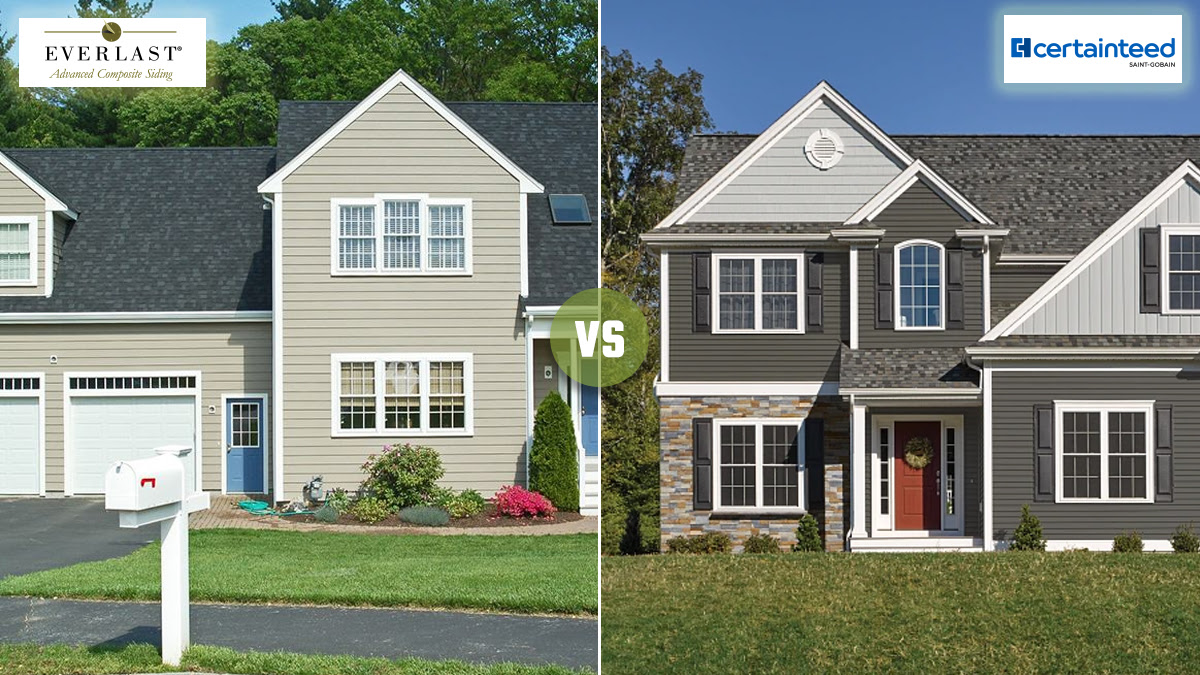
Remember, of course, these are very generic price ranges; to know what your home’s pricing would be, you can contact us for a completely free estimate, and we’d be happy to talk about your options.
If you’re concerned about the cost, it’s also worth remembering that replacing siding often has an 80% or greater return on investment, meaning a majority of the money you put into your home will be reflected in increased home value, which can grow over time. You’ll also very likely save money on greater energy efficiency once it’s done, as well.
So, do you think you’ve made your choice, or do you want to explore other siding options? We’ve been discussing other brands as well, so feel free to browse our blog for those comparison posts. You can also talk to us directly. At Magnolia Home Remodeling, we’ve been your trusted siding installer in New Jersey for over 30 years. Put our expertise to use by talking about your options, and once you’ve made a decision, we’re happy to get your project started.