Vinyl vs Fiber Cement Siding for New Jersey Homes
Aug 24, 2026
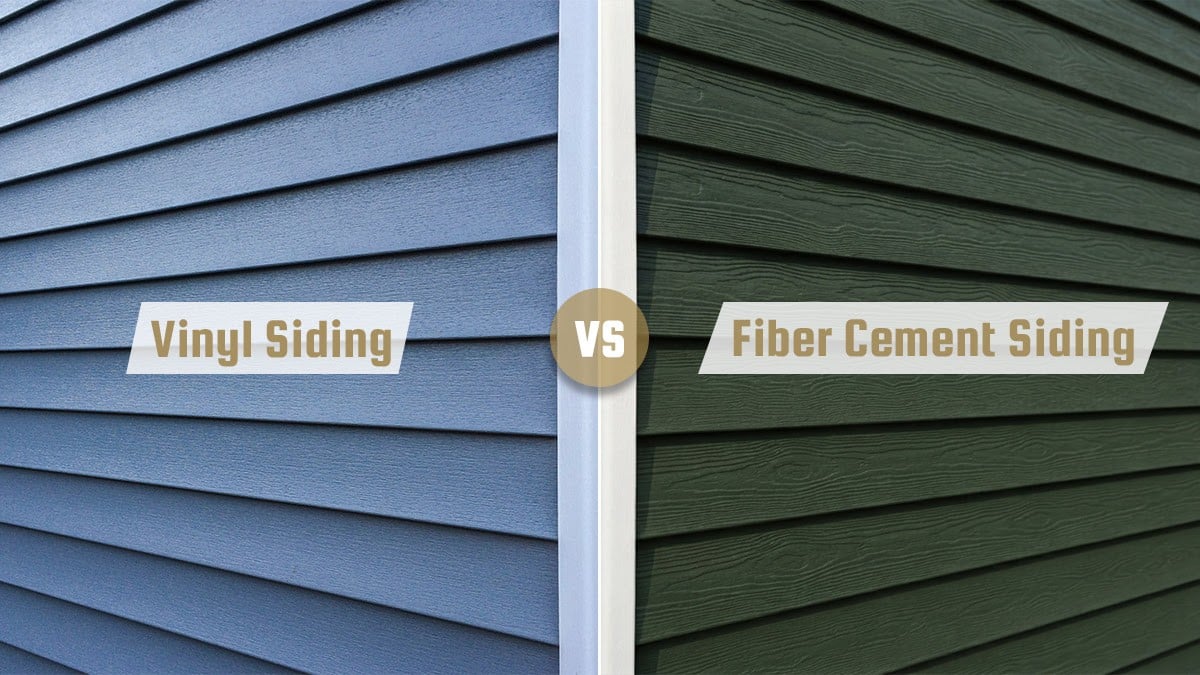
When it's time to replace your home's exterior siding, picking the right siding can be daunting. There are hundreds of different options across the spectrum, and you have to balance everything from material longevity to color and aesthetics to pricing and ROI.
Here in New Jersey, most of the time, you can narrow it down to two main choices of material. The majority of homeowners we work with tend to choose either vinyl siding or fiber cement siding.
The question is, which is the right choice for your home?
We put together this guide to help you pick between the two materials, and from there, you can start comparing brands and product lines. If you want our expert opinion, taking your home's style, your neighborhood, and your preferences into account, feel free to reach out to us for a discussion and quote. We've been installing both vinyl and fiber cement siding throughout north and central New Jersey for over 30 years, so we can tell you what works and what you're better off avoiding.
Let's get right into the comparison and see which siding wins in a head-to-head battle.
| Feature | Vinyl | Fiber Cement |
|---|---|---|
| Lifespan | 20-30 years | 40-50 years |
| Upfront Cost | Budget-friendly | Higher |
| Durability | Good | Excellent, fire-resistant |
| Maintenance | Annual wash only | Wash, caulk, repaint ~10 yrs |
| Insulation (R-value) | 2-3 (insulated) | ~0.5 |
| Color | Infused, can fade | Painted, repaintable |
| ROI | Good | Better on mid/high-end homes |
| Best For | Tight budgets, low upkeep | Coastal, long-term, luxury |
To start, let's take a look at the materials each form of siding is made from.
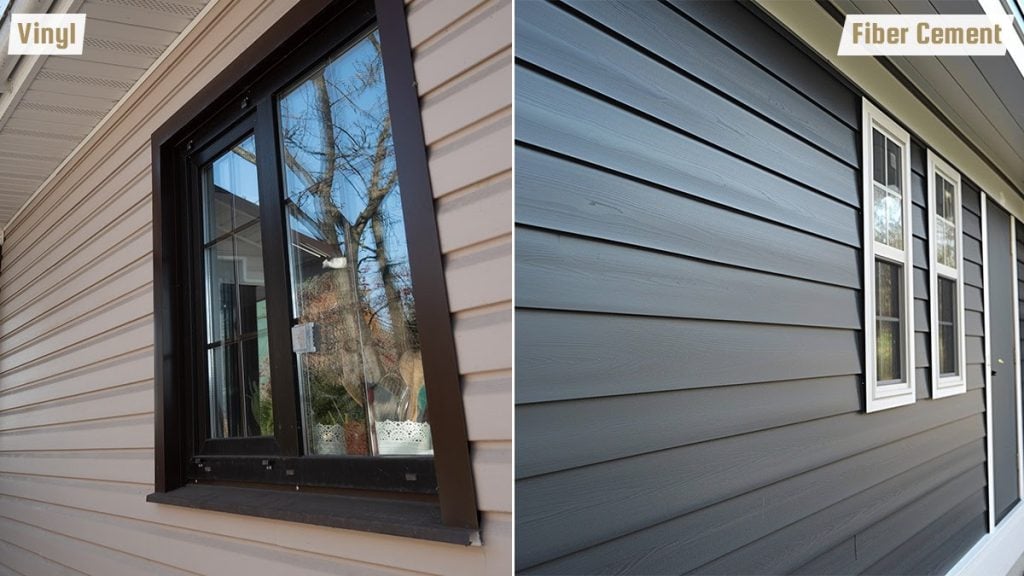
Vinyl siding is an artificial, extruded plastic product made from PVC. As an inorganic material, it is durable, resists pests, moisture, and fading. It can be simple vinyl or insulated vinyl, which improves the R-value of your home and can save a little on energy bills over time.
Fiber cement is also an artificial product, but it's made of natural materials like sand, cellulose fibers, and cement to bind it together. The fibers lend it strength and durability, while the sand allows it to resist all kinds of damage.
You probably don't need us to explain that PVC is worse for the environment than something made of sand and wood pulp, but it's worth stating plainly. If anything, the big concern would be hidden environmental damage in the fiber cement.
Well, it's worth a look, right? Cement, actually isn't very sustainable; it's a very energy and water-intensive process. Is it worse than PVC? Doubtful.
All of that said, it's also worth mentioning that the biggest maker of fiber cement siding offers a specific line of greenguard gold-certified siding, which is evaluated for low emissions, local production, and minimal transport.
Not everyone worries about the environmental considerations of their siding (there are a lot of bigger concerns in the world, after all), but if it's something you want to consider, that's the answer.
How strong is your siding, and how long can you expect it to last?
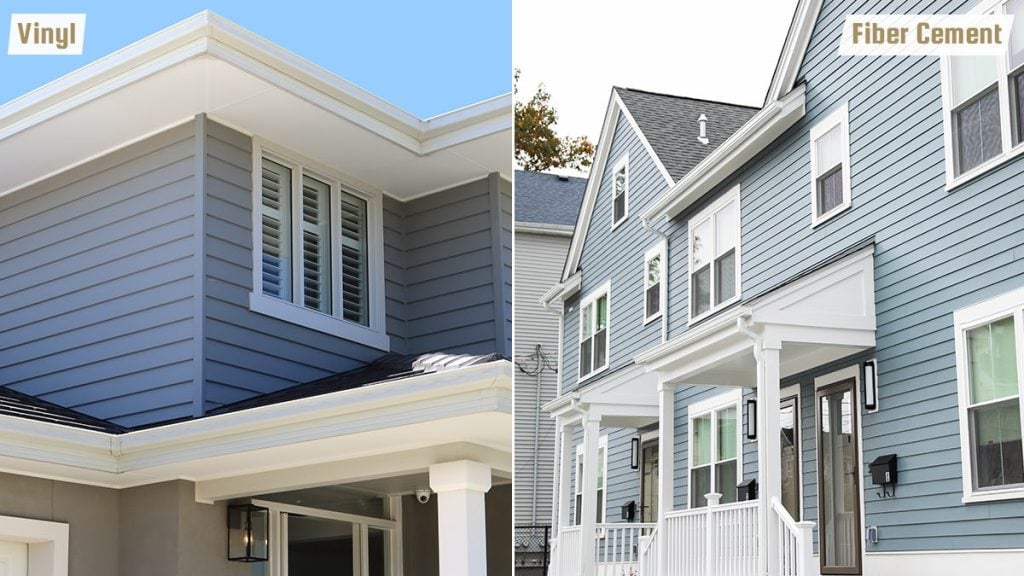
Vinyl is a fairly durable material, but it's far from perfect. It can fade over time, and constant exposure to the environment can leave it brittle after a couple of decades. Strong enough impacts can break it, it can crack under large temperature swings, and high heat can warp it.
In our experience, the most common sources of damage to vinyl siding are:
Fiber cement is stronger and much more difficult to damage. It's very resistant to impacts, temperature, and more. It's also fire-resistant. It can still develop some problems over time, though:
Almost all of this is caused by improper installation, though some can crop up decades in after neglect and disrepair. As long as you take care of your siding, it will take care of you for a very long time to come.
Vinyl siding, on average, lasts around 20-30 years before it needs to be replaced. Small dings and damage can be repaired by replacing individual slats along the way. Fiber cement is even more long-lasting, with many versions lasting 40-50 years. It needs proper maintenance, but so does everything else about a house, right?
You want to come home every day and see a house that looks good, don't you? So, picking the right aesthetic can be a compelling driver of your decision-making process.
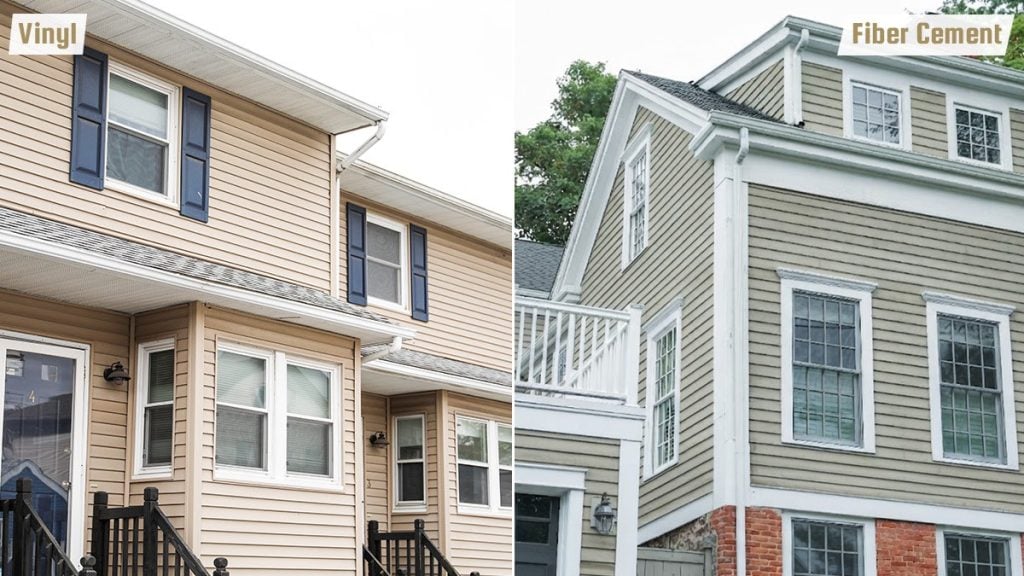
Vinyl siding comes in a lot of different styles, from horizontal lap to faux shingles to board and batten styles and more. Since it's a mechanically extruded product, it can be made in a wide range of different styles.
Fiber cement tends to be a little more limited in styling, but not by a lot. For nearly every home, you'll find the style you want in both materials.
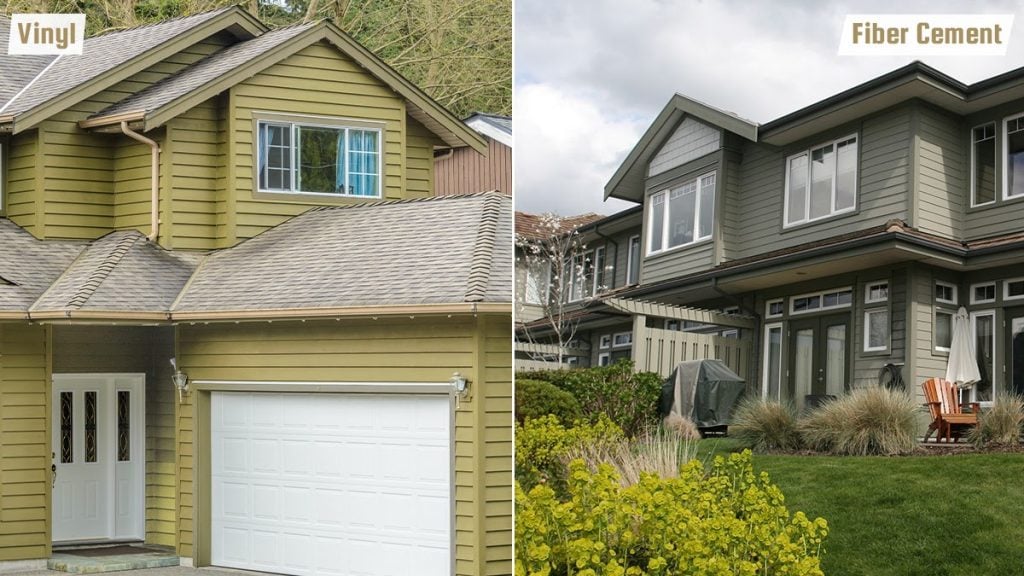
Since both materials are produced rather than natural, they can be found in flat finishes or in faux woodgrain to give your home the appearance of wood. Fiber cement tends to have deeper patterning and looks more like real wood than vinyl, and vinyl's patterning can dull over time. But, after a few coats of paint, fiber cement can also lose some of that definition.
One of the big differences between the two is in color. Vinyl is infused with color when it's produced, and can't really be recolored. The colorant is resistant to sun fading, but can still fade over the course of its lifespan. Fiber cement, on the other hand, relies on paint to get its color. You can buy it pre-primed or pre-painted, but the paint will need touching up over time.
What do you need to do to keep your siding looking good over the years?
Vinyl siding doesn't need much of any upkeep at all. Once a year, you'll want to hose it down or give it a quick once-over with soap and water. This helps strip off all of the mold and mildew, the dust, and anything else that builds up over time. Coastal homes might want to wash it more often to deal with salt build-up.
Other than that, all you need to do with vinyl is give it an inspection. Look for places where it might have warped or come loose from the wall, where it has cracked or been damaged, and so on. It's easy to repair, but you still need to spot the issues to fix them.
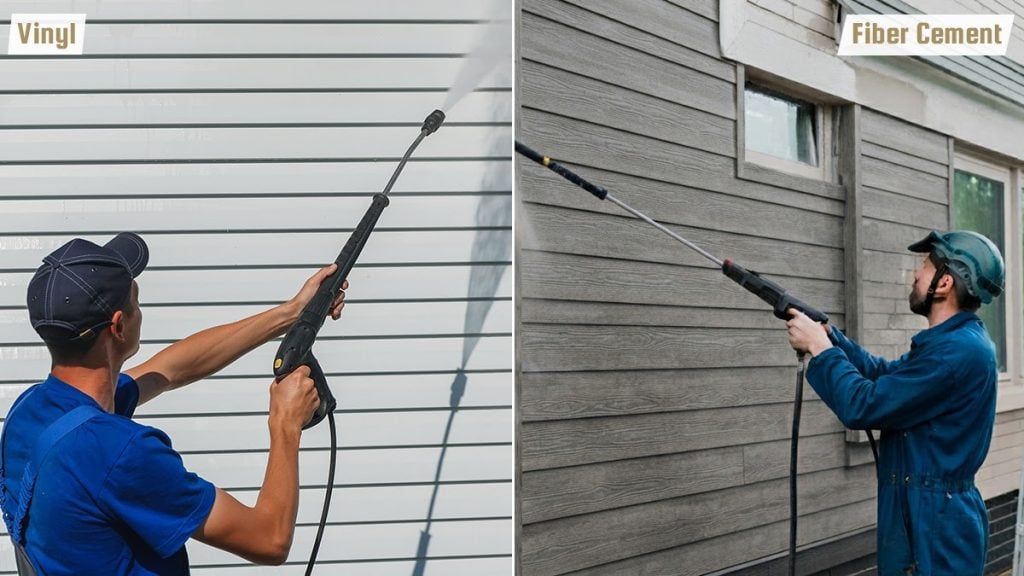
Fiber cement siding needs a little bit more maintenance. Like vinyl, you want to wash it down annually. You also want to inspect it. Beyond that, fiber cement relies on caulking to seal gaps between boards, and that caulk needs to be inspected and periodically replaced. We've already mentioned repainting it, which usually needs to be done every 10 years or so.
Let's be honest: budget is going to be the deciding factor for many homeowners.
Vinyl is usually the most budget-friendly option, though premium vinyl siding will command a premium price. Fiber cement costs more, both because the material itself is pricier and because it's heavier and more labor-intensive to install. The two ranges get close in the middle, though. The top of the vinyl market and the bottom of the fiber cement market aren't far apart, so if you're already pricing high-end vinyl, entry-level fiber cement may be closer than you'd expect.
To put real numbers on it: vinyl siding projects in New Jersey typically start around $7.50 to $10 per square foot for an average home, while fiber cement projects start around $12 to $20 per square foot.
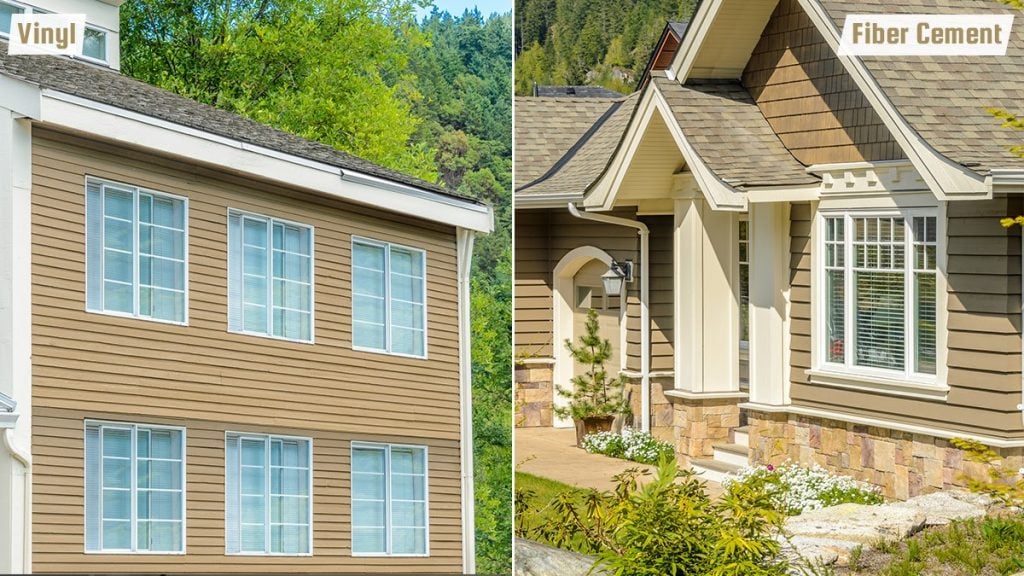
Those are starting points, not quotes. Every home is different, and the final price depends on a lot more than the material you pick. The number of stories, the angles of the house, and any architectural details all change how much labor is involved. So does the trim around your windows and doors, how the corners are treated, and how many overhangs the crew has to work around. Then there's what's under the surface: how many layers of existing siding need to come off, what type of insulation goes on before the new siding goes up, and whether any of the wood underneath needs repair once the old siding is off. Two houses with the same square footage can land at very different prices once all of that is accounted for.
Upfront cost isn't the whole picture, either. Fiber cement carries a maintenance burden that vinyl doesn't. Buying a house's worth of paint every decade or so isn't a ton of money, but it's a recurring expense you never have to think about with vinyl.
As far as ROI is concerned, fiber cement tends to perform a little better. It's viewed as a higher-tier product, so mid-range and high-end homes tend to get more return out of it. You don't see it as much on lower-end homes, where the premium is harder to recoup.
All of that said, vinyl can end up costing more in the long run depending on the conditions. If your vinyl needs replacing at 20 to 25 years, you're buying two whole homes' worth of siding in the time you'd have needed only one 50-year set of fiber cement. Run that against today's New Jersey numbers and two rounds of vinyl lands roughly in the same neighborhood as one round of fiber cement, and the second round comes with a tear-off of the first.
If you want an actual number for your house rather than a range, contact us for a free estimate!
How much does your choice of siding affect the interior of your home?
Basic vinyl siding is very thin and doesn't offer much in the way of insulation. Insulated vinyl has a layer of insulation, which adds to the R-value of your home and resists exterior heat and cold. It's not going to replace actual insulation in your walls, but a little bit of added help can shave a few dollars off of your energy bills. Though you do need to make sure your windows are efficient too!
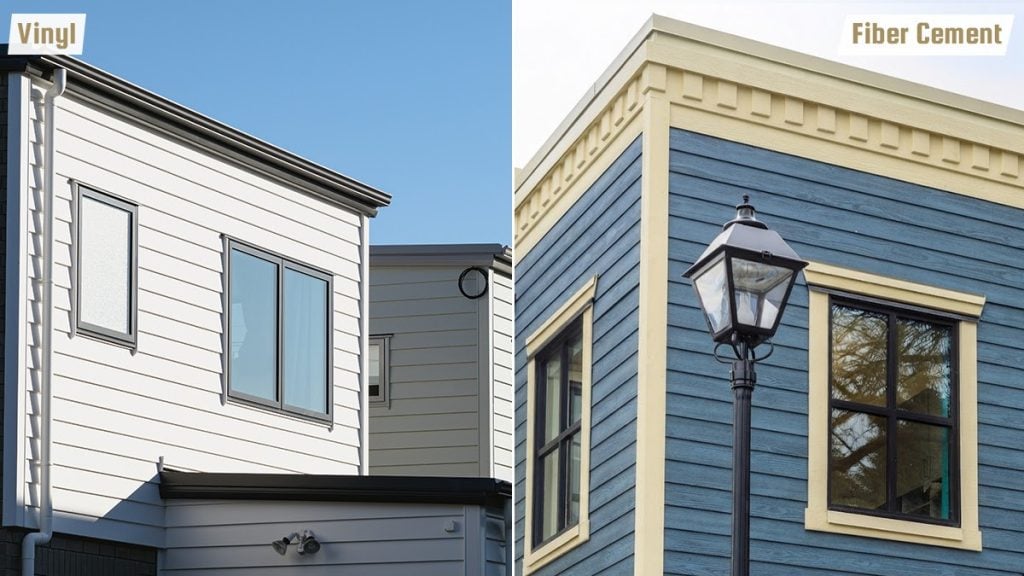
Fiber cement, despite being a thicker material, is not an insulative material. It doesn't do much for the R-value, at just .5 versus 2-3 for insulated vinyl. It's not going to be a life-changing difference in insulating either way, but it's worth keeping in mind.
Putting the siding on your home is a project, and the easier a project is, the smoother it will go.
Vinyl is one of the most common kinds of siding. It's very fast and easy to install, with a whole house able to be finished in a few days or a week. Now, there's more to the whole project, from planning to tearing off the old siding to any under-siding repairs that can extend that timeline, but the fact is, vinyl is fast and easy.
You also don't have to look very hard for a crew that knows how to install vinyl siding. Since it's so common, there's hardly anyone in the home improvement trade that doesn't have experience with it. Our team has decades of expertise!
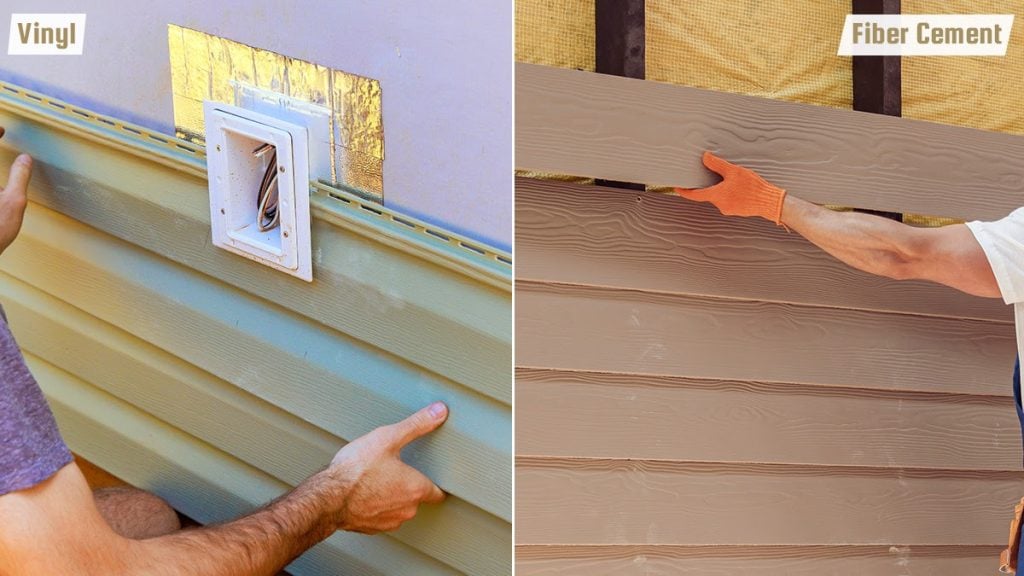
Fiber cement is trickier. It's heavy and bulky, and it requires specialized tools to cut, modify, and install properly. Properly installing and sealing fiber cement is a more intensive process, requires more knowledge, and just takes longer to do.
That said, a crew that knows what they're doing, like ours, can still get it done pretty quickly. It will take a couple of days longer than vinyl, probably, but it's not like there are weeks of difference between them.
For a specific quote for how long a project will take on your home, contact Magnolia Home Remodeling Group today. We discuss your home, including architectural details, the overall size, and any complexities with the project, and can give you an estimate of both pricing and timeline to help you make your decision.
So far, we've been talking in generic terms, but there's a reason for that: we've covered siding extensively with direct brand-to-brand comparisons already!
Here in New Jersey, the best choice for fiber cement siding is James Hardie. For vinyl, on the other hand, you have options. Two of the most popular brands are CertainTeed and Alside, and we have comparison posts for both.
If you're trying to decide between two kinds of siding, feel free to give us a call, and we'll offer our expert opinions as well.
So, which comes out ahead? There's no one right answer.
We usually recommend vinyl when:
On the other hand, fiber cement is a great option when:
Vinyl tends to be the most common choice just because it's both cheap and readily available. But we find that our clients who go with fiber cement are very satisfied with their choice, whereas those who go with vinyl don't necessarily feel strongly about it.
And, of course, there are other options as well. Stone veneers, real wood, and even metal can all be worth considering. As always, we're happy to talk about your options and help you make a choice; just drop us a line!
Which is better for New Jersey homes: vinyl or fiber cement siding?
There's no single right answer. Vinyl suits smaller budgets, sheltered locations, and low-maintenance needs. Fiber cement is ideal near the coast, for long-term durability, and for a more luxurious, eco-friendly appearance. Most New Jersey homeowners choose between these two materials. Consider your home's style, neighborhood, and preferences, then reach out to us for expert guidance and a personalized quote.
How long does each type of siding last?
Vinyl siding typically lasts around 20-30 years before needing replacement, though individual damaged slats can be repaired along the way. Fiber cement is more durable, with many versions lasting 40-50 years when properly maintained. Because vinyl may need replacing sooner, you could buy two homes' worth of vinyl in the time one set of fiber cement lasts.
What maintenance does each siding material require?
Vinyl needs very little upkeep-just an annual wash with soap and water plus periodic inspections for warping, cracks, or loose panels. Fiber cement requires more attention: annual washing, inspections, caulk replacement to seal joints, and repainting roughly every 10 years. Coastal homes may need more frequent washing to handle salt buildup regardless of the material chosen.
Which siding offers better insulation and energy efficiency?
Basic vinyl is thin and offers little insulation, but insulated vinyl adds R-value (around 2-3) and can shave a few dollars off energy bills. Fiber cement, despite being thicker, isn't insulative, providing only about 0.5 R-value. Neither replaces proper wall insulation, so make sure your windows are efficient too for the best results.
Which siding provides a better return on investment?
Fiber cement typically delivers better ROI, especially on mid-range and high-end homes, since it's viewed as a premium product. Vinyl is usually more budget-friendly upfront, though premium vinyl commands higher prices. Keep in mind fiber cement's added maintenance costs over time. For a specific quote tailored to your home, contact Magnolia Home Remodeling Group today.