Hardwood vs Luxury Vinyl Plank: Which is Better for NJ Homes?
Sep 01, 2026

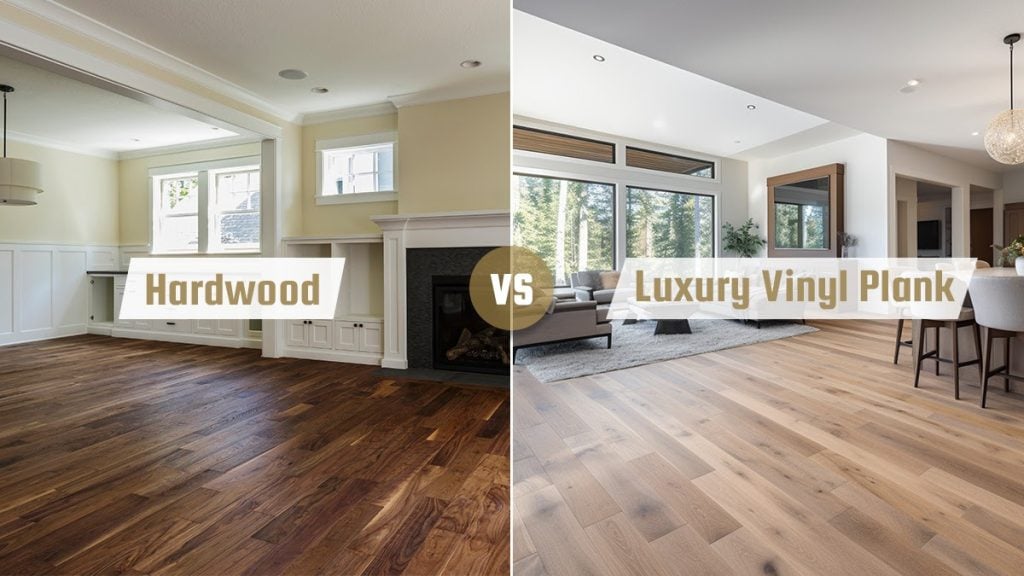
You've probably seen a video or two by now that goes a little something like this.
A couple of new homeowners bought a house, and they're in the process of renovating it and documenting that renovation for the internet. Today's video is all about the floors. They're pulling up the old carpet or linoleum, both because it's ratty and damaged and needs replacing, and because there could be something special underneath.
Maybe, this time, when they pull up that carpet, they see nothing more than a boring subfloor. Or maybe this is the jackpot; they pull up the carpet and find decades-old hardwood, in surprisingly good condition. They dance, they celebrate, they praise their good luck.
But it begs the question: why was this hardwood covered up in the first place?
There are two main answers to this question. The first is maintenance. Carpet is a lot easier, when all you need to do is vacuum occasionally and maybe wash it from time to time, instead of painstakingly sand and refinish. The second, and more important, is style. Back in the 50s, 60s, and even 70s and 80s, hardwood was everywhere, but carpet was viewed as more of a luxurious status symbol.
Over time, the trends shifted. Now, we're seeing it bend back in the other direction. Carpet is everywhere, it's tatty, it's boring. But hardwood? That's a sign of luxury.
Many homeowners here in New Jersey are looking to replace their floors and are faced with a decision.
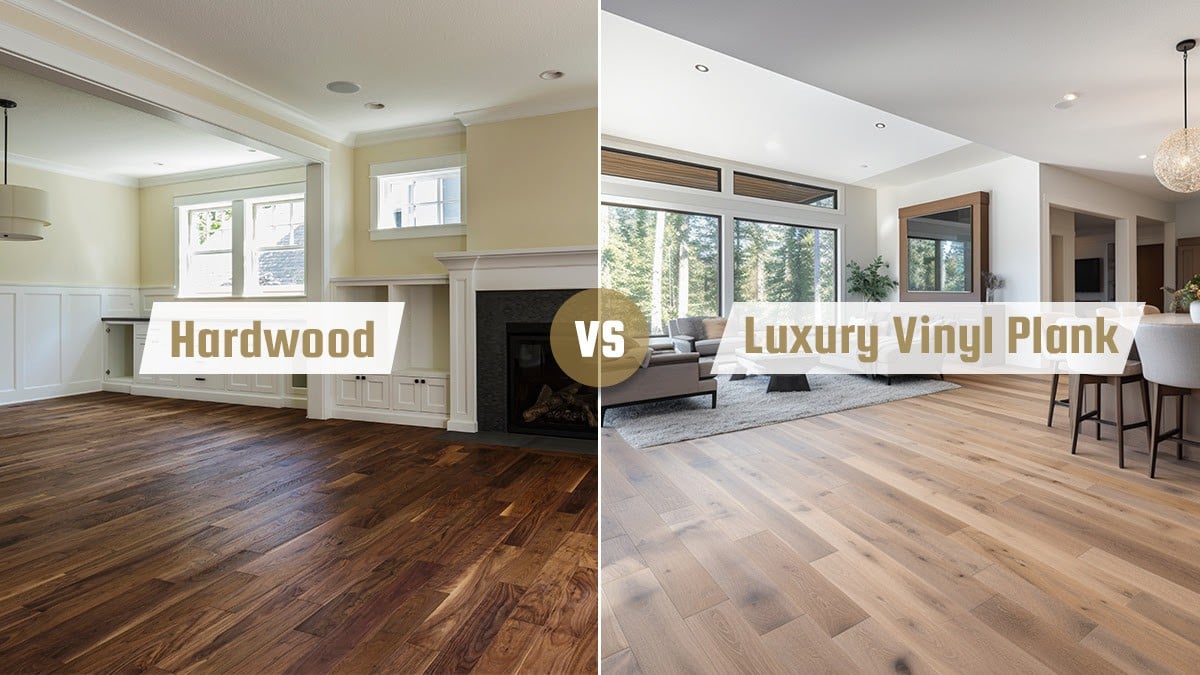
Do you install new hardwood, or do you go with a luxury vinyl plank that mimics the look and feel of hardwood?
We're here to help you make that choice. Read on for our analysis and recommendations, or reach out so we can talk details for your project directly.
Hardwood flooring can refer to two main kinds of flooring: natural hardwood and engineered hardwood.
Natural hardwood flooring is simple boards hewn from trees, dried and milled flat, and installed as flooring. It's often red oak, white oak, maple, hickory, cherry, or walnut, with different woods offering different colors, different grains, and different material properties.
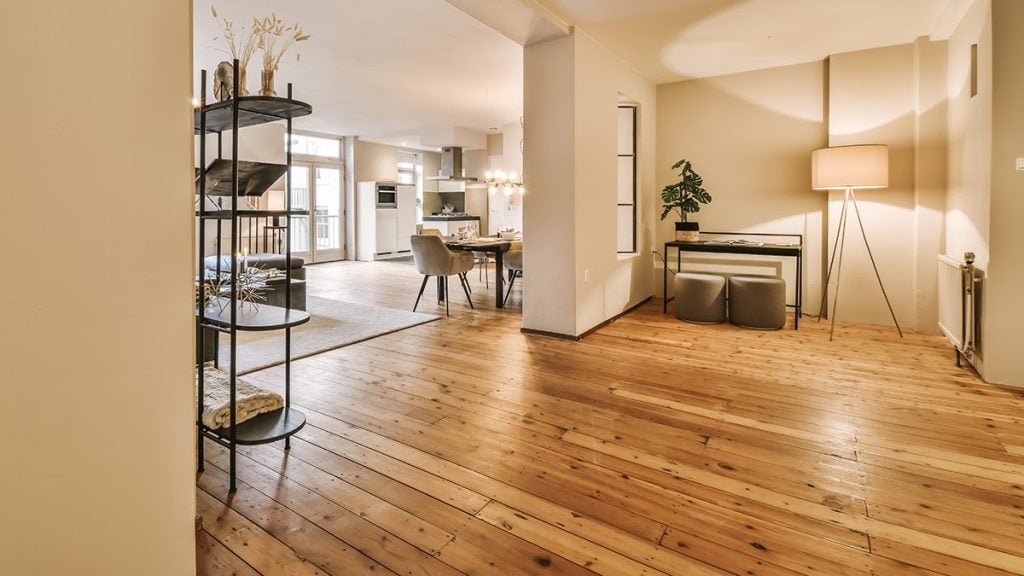
Engineered hardwood is still real wood, but it's not just one board. It's usually a board of plywood or fiberboard, sometimes with added materials to help it resist damage, warping, or staining. It's topped with a real wood veneer, so it looks virtually identical to natural hardwood.
Engineered hardwood has a shorter lifespan and can't be refinished more than a couple of times before the veneer is gone. But it's easier to install, more versatile, and can go in more rooms, particularly those below-grade or on concrete. It also costs a little less than natural hardwood.
Since today's comparison is between hardwood and vinyl, we're mostly going to be talking about real hardwood. Just know that engineered hardwood can also be a viable option.
Luxury vinyl plank, or LVP, is a vinyl material made to look and feel almost exactly like real wood. It's luxury, because it's not just a layer of ink printed over plastic. It's plank, because it's manufactured in longer, narrower pieces than something like LVT, luxury vinyl tile.
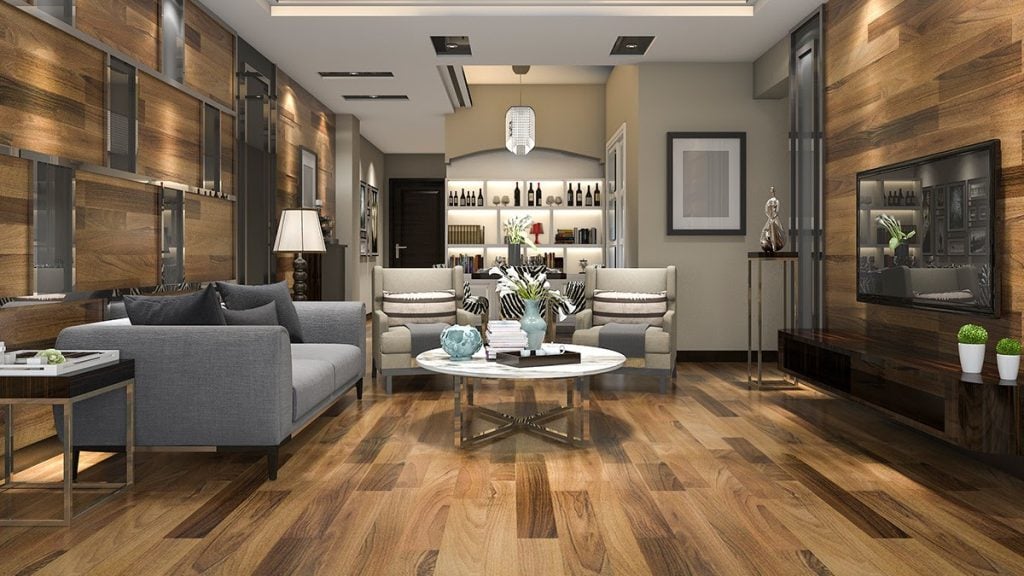
Vinyl flooring has been around since the 1930s, when vinyl composition tile debuted at Chicago's Century of Progress Exposition, but LVP as we know it is much newer. British manufacturers Amtico and Karndean pioneered luxury vinyl in the 1960s and 70s, and the wood-look plank formats that dominate today came later still.
Modern LVP is built in layers: a backing for stability, a rigid core (usually stone-plastic or wood-plastic composite), a printed "visual layer" carrying a high-resolution woodgrain image, a clear wear layer that protects it, and a urethane topcoat. Together they make the floor durable, stain-resistant, and easy to clean.
Most products also include UV inhibitors to slow fading, though any vinyl floor will lighten under years of direct sun.
Now that we have a baseline for what we're talking about, let's compare these two kinds of flooring head-to-head.
| Factor | Hardwood | Luxury Vinyl Plank |
|---|---|---|
| Look & Feel | Unique, natural grain; harder underfoot | Realistic but patterns repeat; slight springiness |
| Durability | Prone to dents/scratches; refinishable | Highly scratch- and water-resistant |
| Lifespan | 100+ years with refinishing | 15–25 years |
| Maintenance | Careful cleaning; refinish every 5–10 yrs | Low; touch-up kits for minor damage |
| Best Rooms | Bedrooms, dens, living/dining rooms | Almost anywhere, incl. baths & basements |
| Cost | Higher upfront; strong resale value | Slightly cheaper; lower resale value |
| Eco-Friendliness | Renewable & recyclable | Petroleum-based; specialty recycling |
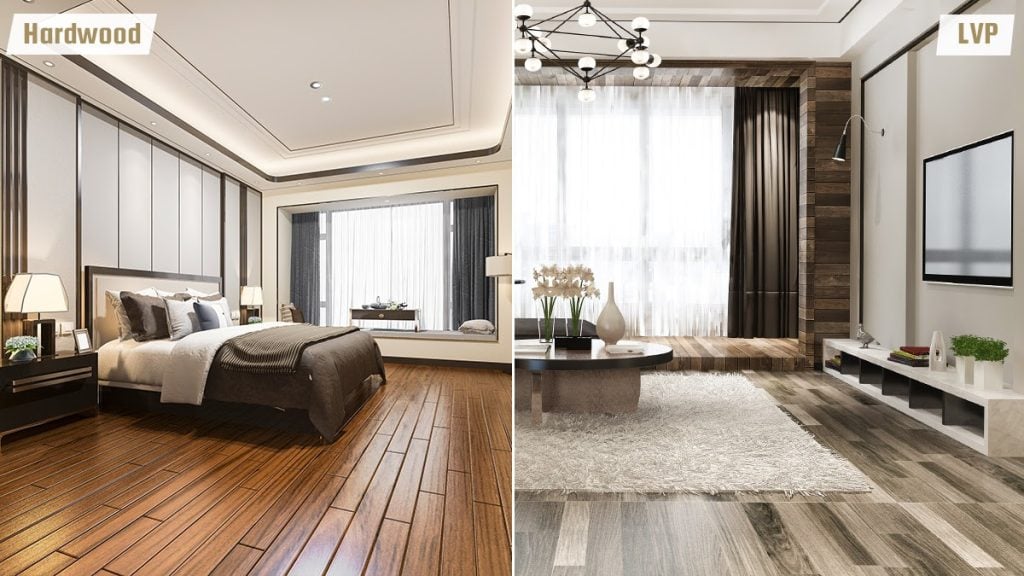
The look and feel of your flooring is very important to the overall look and feel of a room. For the most part, hardwood and LVP are similar, but there are a couple of differences worth knowing.
Look-wise, they're almost the same. The one big difference is in the consistency of patterns. Hardwood is a completely natural product. No two boards will ever be the same; every grain, every knot, every swirl, every inclusion will be completely unique.
LVP, though, has a printed image layer. This looks a lot like hardwood, but eventually the pattern can repeat. Some brands have smaller patterns and more likelihood of repetition in a smaller space than others. Clever installation, turning boards around and staggering them, can also minimize any obvious repeats. But, in a large enough room, you're bound to notice a few places where the pattern repeats.
That doesn't bother some people, but sticks out like a sore thumb for others. What do you think?
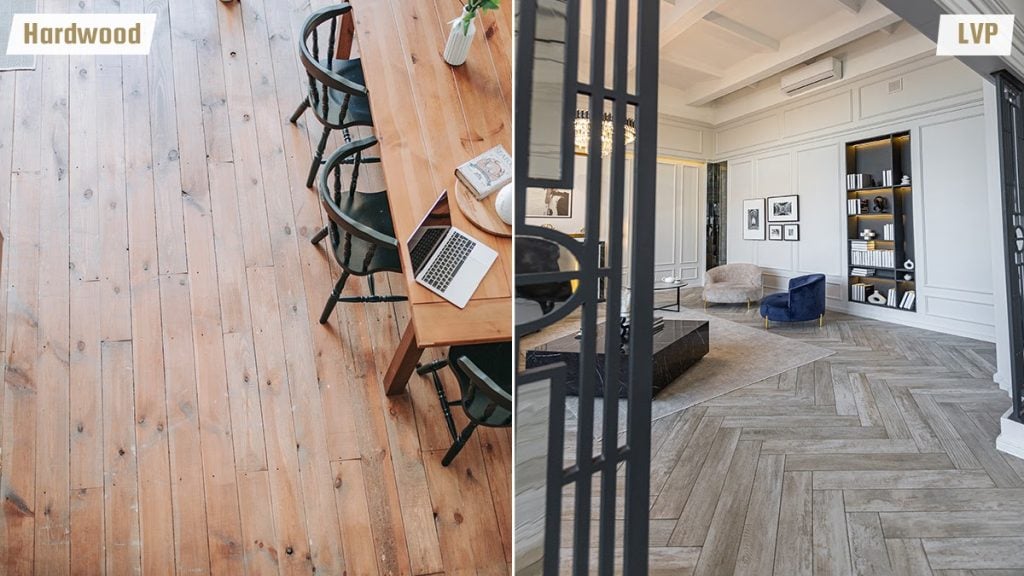
The feel of the material can also be a little different. Hardwood is tougher and feels harder underfoot, while vinyl has a little bit of give to it, with a subtle springiness due to the way it's installed. LVP also tends to be a few degrees cooler, since wood holds warmth a little bit better.
Which you prefer can depend entirely on personal preference, so we call them about even on this front.
Durability is an interesting point of comparison for these two materials.
LVP is easily the more durable up-front. Since the top layer of LVP is a tough ceramic coating, it's very resistant to dents, scratches, abrasions, and other damage. It's also quite resistant to stains and water, though in some circumstances it can still be damaged by any and all of the above.
Hardwood, on the other hand, is a comparatively vulnerable material. Drop something heavy on it, and it can dent. Drag a piece of furniture, and you can leave a scratch behind. Roll an office chair around on it for a while, and it will get abraded and scuffed. It's naturally porous, so it can absorb moisture and stain easily if it isn't sealed.
Sealing hardwood is a key part of making it last. A sealer resists water and staining, and scratches and abrasions will affect the sealcoat rather than the wood beneath.
You might think that, in light of this, LVP is the better choice. But in actuality, hardwood is much better at standing the test of time, for one reason: refinishing.
As LVP gets damaged over time, there isn't much that can be done to repair it. There are topcoat chemicals and similar options to fix it up a little, but you can't refinish the entire surface; it's usually much better to replace it. LVP tends to last around 15 to 25 years in an average home.
Hardwood, though, lasts pretty much indefinitely. Pretty much no matter what kind of damage it accrues, it can be sanded down and refinished and look good as new. And, it's a natural wood product made with commonly grown and produced woods. A few planks here and there can be easily replaced if they're too damaged. Real hardwood, refinished properly, can last well over 100 years.
For base durability, LVP wins; for overall lifespan, hardwood is king.
What does it take to maintain your floors? Well, the story in the intro paints a picture: maintenance is a big reason why a lot of homeowners of decades past covered up their hardwood.
Both require routine sweeping and/or vacuuming, with the occasional mopping to handle tougher grime.
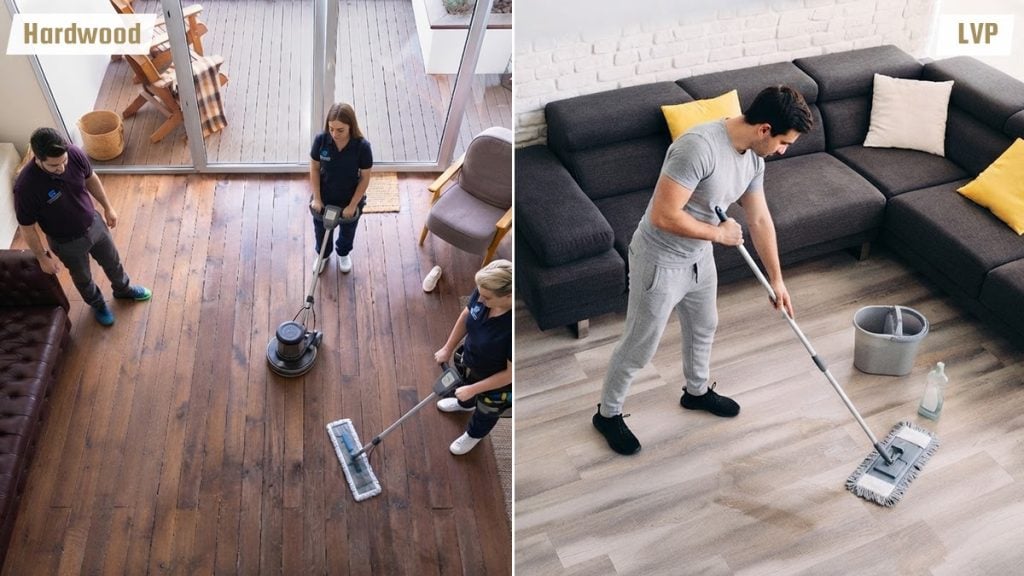
For light scratches, abrasions, and damage, LVP can be repaired with touch-up kits. But, deeper damage can't really be repaired, only sealed to prevent deeper damage.
Hardwood, on the other hand, is more of a maintenance burden. When properly sealed, it's somewhat moisture-resistant, but it can be damaged and stained, so cleaning is more important. Mopping is difficult due to the moisture involved, so wood cleaners are more generally recommended.
Every 5-10 years, hardwood should be thoroughly refreshed with sanding and refinishing. This can be a major project that takes several days and makes the room unusable, which is why it's often put off and deferred, which makes it an even bigger project when it needs to happen.
LVP wins with maintenance, which is a big part of why it has been so popular in recent years.
While hardwood has some very good benefits, it's also limited in where you can install it.
Hardwood should not be installed:
This makes hardwood a great option for places like bedrooms, dens, dining rooms, playrooms, and living rooms. But it's less good for bathrooms, basements, kitchens, and laundry or utility rooms.
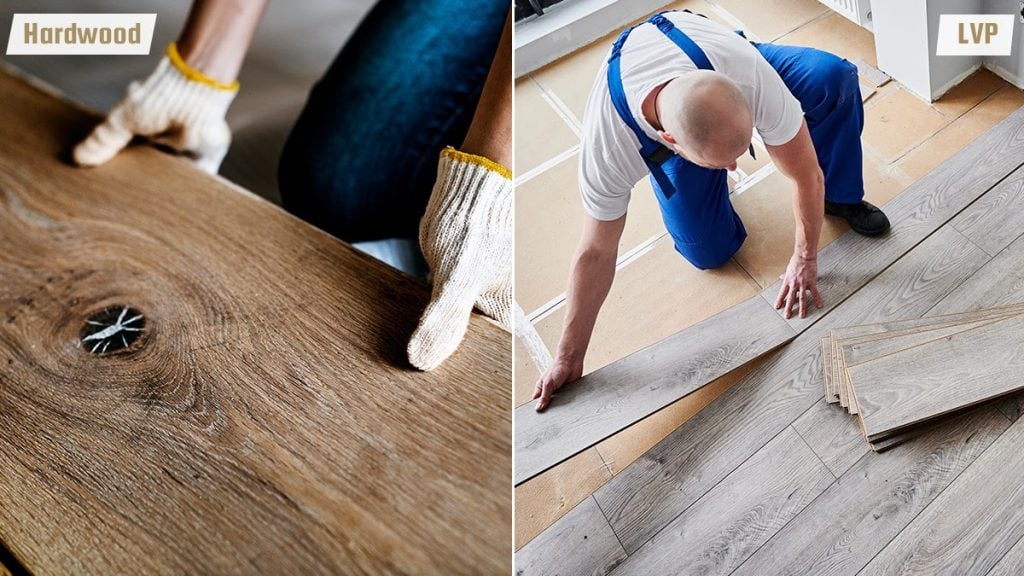
LVP, on the other hand, can be installed in more places. Since it uses a floating installation method, it can be installed on concrete floors. Since it's water-resistant, it can be installed in laundry rooms, kitchens, and bathrooms.
The biggest drawback of LVP in this sense is that, despite having UV resistance, it can still be damaged by sun exposure over time. Putting it in a sunroom or other very exposed room can cause issues over time, with fading and warping.
What else is worth mentioning for these two materials?
First of all, it might be worth checking if you already have hardwood under your existing flooring, and if it's worth refinishing and salvaging. You might be surprised, especially if your New Jersey home is on the older side!
Another potential concern is the eco-friendliness of the material. Hardwood is a renewable, sustainable, and recyclable material. Even if you're tearing it out, people will buy and reuse those boards, which is not something you can say for most household materials. LVP, on the other hand, is a petroleum product. It can, sometimes, be recycled, but it's a specialty recycling process so you can't just put it out by the curb.
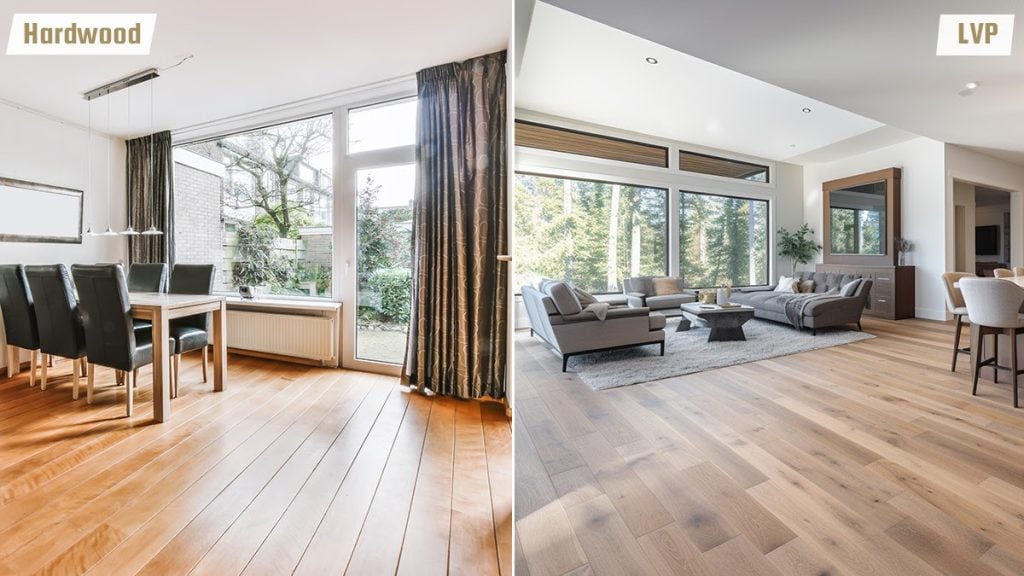
Cost and value are, as always, concerns as well. LVP is less expensive than hardwood, but not by a lot, unless you're going with a very budget vinyl floor. If you are, you'll run into more of the appearance and durability issues over time. Over the lifetime of a home, though, hardwood won't require replacing, while LVP may.
Resale value swings in hardwood's favor, at least right now. Modern homebuyers love hardwood, whether it's vintage restored wood or newly installed wood flooring. Vinyl doesn't carry the same panache.
As you can probably guess, the answer here is: either one! Or, possibly, neither one!
Hardwood is great if you want absolute longevity, the durability to withstand a lot and be refinished if anything major happens, and the authentic feel and value of real wood. On the other hand, you can't use it in every room, since it doesn't work in places where there will be a lot of humidity and moisture.
LVP is a very good option for a high-end floor that looks and feels a lot like wood, but can be installed in more places. But it won't last nearly as long as well-maintained wood. It's a little more budget-friendly, as well.
Other options are also worth considering. Many homeowners use tile for utility rooms, entryways, and kitchens, since it's even more durable and resistant to the kinds of damage likely in those rooms. Or, if budget is a primary concern, laminate or non-luxury vinyl plank can be good options as well.
If you have questions, we'd love to answer them. Here at Magnolia, we've been installing new floors in North and Central New Jersey for over 30 years. When you work with us, you're getting professional, high-quality flooring that's sure to make your home feel great. Just reach out for a quote today, and we can discuss the perfect flooring for you.
Which lasts longer, hardwood or luxury vinyl plank?
Hardwood wins on longevity, lasting well over 100 years because it can be sanded and refinished repeatedly. Luxury vinyl plank typically lasts around 15 to 25 years in an average home before it needs replacing, since damaged LVP cannot be refinished or fully repaired.
Is luxury vinyl plank more durable than hardwood?
Up front, yes. LVP's tough ceramic wear layer resists dents, scratches, abrasions, stains, and water far better than natural wood. Hardwood is more vulnerable to daily damage, but its ability to be refinished means it ultimately outlasts LVP over the life of your home.
Can hardwood be installed in basements, kitchens, or bathrooms?
No. Hardwood shouldn't go below-grade, on concrete, or in wet, high-traffic rooms because moisture causes rot, mold, and warping. It's ideal for bedrooms, dens, dining rooms, and living rooms. LVP installs almost anywhere, including basements, kitchens, and bathrooms, thanks to its water resistance.
Which flooring requires less maintenance?
LVP requires less upkeep. Both need routine sweeping, vacuuming, and occasional mopping, but LVP handles moisture easily and small damage can be touched up. Hardwood needs careful cleaning with wood-safe products and thorough sanding and refinishing every 5 to 10 years, which is a multi-day project.
Which flooring offers better resale value?
Hardwood currently holds stronger resale appeal. Modern homebuyers love both restored vintage wood and newly installed hardwood, and it's renewable, sustainable, and recyclable. LVP is slightly cheaper and more versatile, but as a petroleum product it doesn't carry the same value or eco-friendly reputation.