How to Waterproof a NJ Basement Before Finishing It
Oct 05, 2026

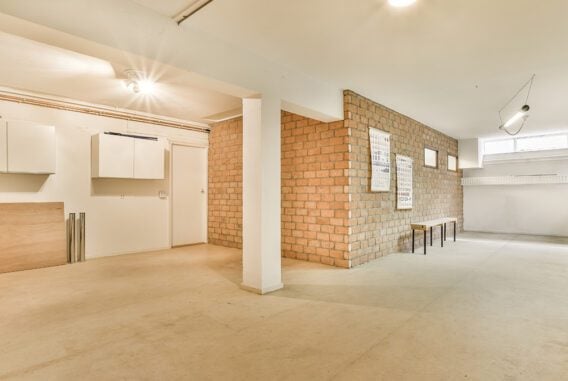
An unfinished basement is a hassle. A finished basement is a whole new room. It's a no-brainer which one adds more value to your home, not to mention more utility and more space to enjoy.
Unfortunately, finishing a basement isn't as simple as you might hope. You have to do more than put up some wallboard and lay down some flooring.
In particular, waterproofing is absolutely essential. Without adequate waterproofing, your basement can end up a haven for mold and all sorts of nastiness, before it inevitably floods and destroys all your hard work.
Much of New Jersey has high water tables, and seasonal storms can dump a lot of water into the ground very quickly. Most local homeowners with unfinished basements know that the water can seep in from all manner of tricky spots, so adequate waterproofing can be a significant challenge.
What happens if your waterproofing isn't up to snuff? A lot can go wrong.
First and most obvious is simple flooding issues. If enough water gets in, you'll go down to your nicely finished basement and the carpet will squelch like a sponge. No one wants to find water where there shouldn't be water.
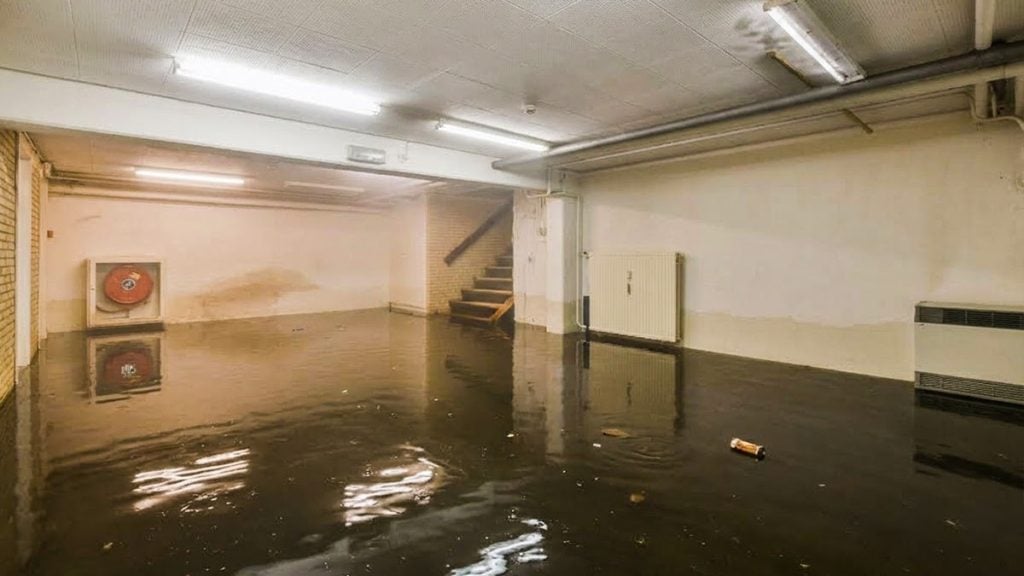
It's also an immediate and significant bill. You went through all the work to finish your basement, and now you need to tear a bunch of it out so you can fix the waterproofing. That's thousands of dollars and more weeks of time spent on something that should have been done first.
What happens if the water issues are smaller? This is actually the bigger risk, believe it or not. Water that you don't notice has a chance to do a lot of damage. Framing can rot out. Mold can grow and flourish behind the walls, causing respiratory problems and health issues for everyone in the home. Pests can get in and live where there's water, including termites, which can then travel further up to the home and do even more damage.
Then you have even more expensive remediation bills.
How can you have your basement waterproofed before starting a project for a finished basement? Let's talk about the options.
Most homeowners want to waterproof their basements from the inside, before installing various fixtures and finishes to make it a finished basement. This isn't necessarily the best option, but it's the most affordable option, so it's the one most people will choose when given the quotes.
The advantage of interior waterproofing is that it's all done inside. That doesn't mean it's as easy as a coat of sealant, though. Depending on how your basement is constructed and what has already been in place, you might need to do some serious work on your foundation.
An interior waterproofing strategy usually involves three main components.
The first is a sump pump. A sump pump is installed in a basin in the lowest point of your basement, with drains around the perimeter that lead to the basin. The pump sits in this basin and, when water builds up, pumps it out through a drain. Where it drains out to can depend on the layout of your home, but it usually goes to a drainage ditch, a storm drain, or even a dry well. The main point is, it's far enough from the home that the water doesn't just flow right back in.
Since a sump pump is an electronic device, it requires power to run. What happens if your home suffers a power outage during a storm, right when the rain means you need it the most? If you don't have a whole-home generator, you'll need a battery backup for the sump pump to make sure the basement doesn't flood when power is unavailable.
The second component is French drains around the perimeter of the basement. These are basically a channel dug around the perimeter of the basement, where a perforated pipe surrounded by gravel collects water that seeps in from the exterior before it can get any deeper into the basement. The pipes lead to the sump basin, so any water that could get in is redirected and pumped out.
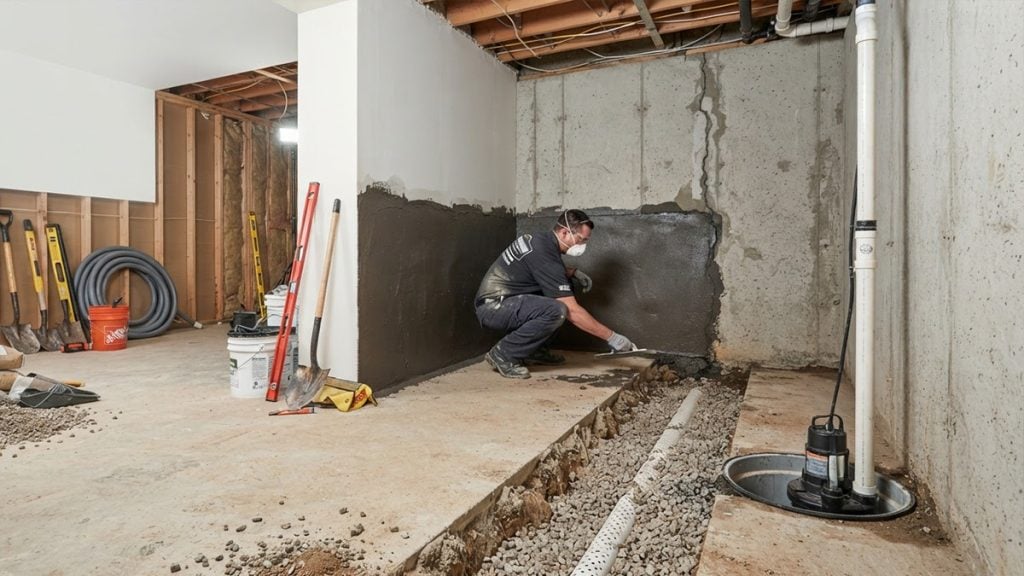
Not every home will need these two components. It's a common combination in New Jersey, since we have clay-rich soils that don't readily absorb water, high water tables, and enough freeze-and-thaw cycles that foundations take a lot of abuse. But if your home happens to be positioned such that it's more isolated from water, like on a hill or slope with good drainage, you might not need them.
How do you know if you need a sump pump? The best way to tell is by talking to a skilled contractor, like the experts at Magnolia Home Remodeling. If you've ever had a flooded basement and it wasn't due to something like a bad water heater or a leaky pipe, though, chances are you'll need them. But if you've had a bone-dry basement even after heavy rains or during spring snowmelt, you might be fine.
The third component is wall waterproofing. This is a heavy-duty membrane installed around the exterior walls. Since foundations are frequently porous enough to allow moisture through, and that moisture can cause rot and mold problems, the barrier is necessary. It prevents moisture from penetrating through the walls, and instead redirects it to the French drains.
Before doing any of this, you will need to fix any cracks, holes, or other issues throughout your basement foundation, as well as seal around where the floor and wall meet. Cracks can be filled with polyurethane injections and sealed, as long as they aren't too severe.
You'll definitely want to have someone inspect your basement before embarking on this project. Severe enough foundation cracks or other damage might indicate more severe issues, which need to be fixed before you can consider finishing the basement.
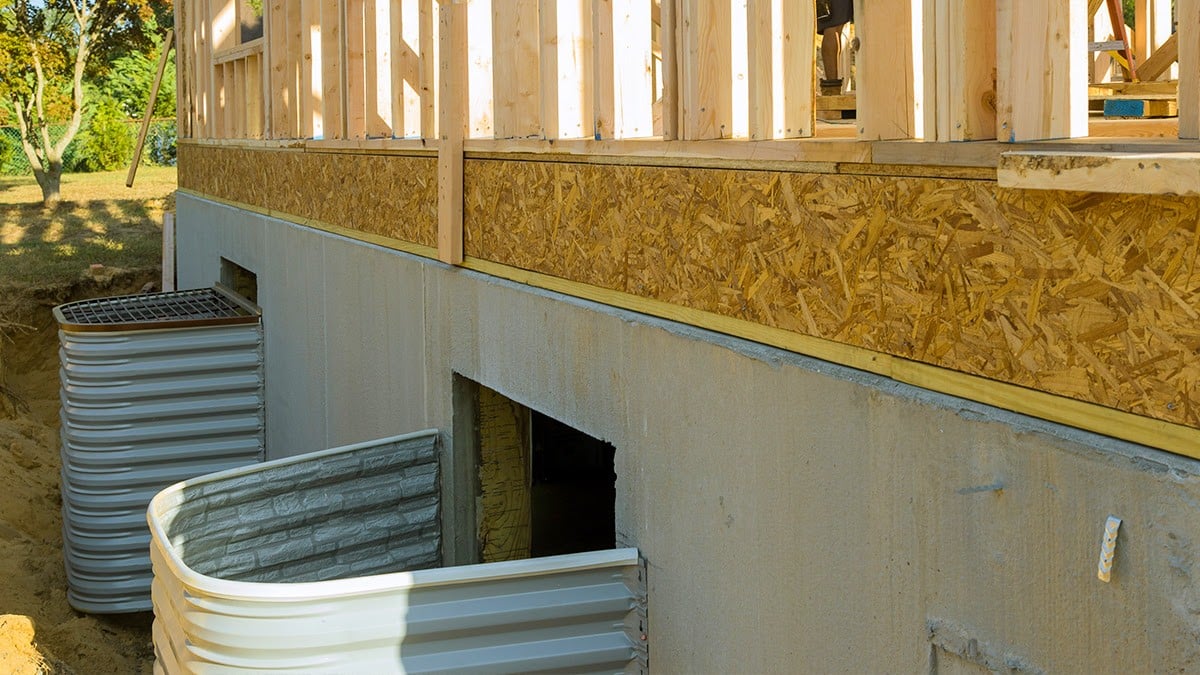
Exterior waterproofing is highly reliable and lasts a long time, but it's going to be a more intensive project, with all of the timelines and costs that come with it. It's also going to require serious landscaping, so if you have a bunch of manicured garden, hedges, or other features up against your home, you'll need to either move them or lose them. You might also risk losing a deck or patio in the process, since you can't skip part of the foundation when it comes to water.
| Feature | Interior Waterproofing | Exterior Waterproofing |
|---|---|---|
| Cost | More affordable | Higher, more intensive |
| Project Scope | Work done inside | Excavation & landscaping |
| Main Components | Sump pump, French drains, wall membrane | Sealant coating, exterior drains, regrading |
| Durability | Reliable with upkeep | Highly reliable, long-lasting |
| Landscaping Impact | Minimal | Significant |
One option is the excavation and sealing option. Much like how you put a waterproof barrier on the inside of your basement for interior waterproofing, you do the same on the outside.
This is a pretty intensive project, since step one is to dig up the ground around your home to expose the foundation. Once it's exposed, the concrete is cleaned and, if necessary, repaired. Then, a layer of sealant is applied.
This is usually either a rolled-on or sprayed-on polymer coating, which essentially coats the exterior of your home in an impermeable membrane. Water that tries to get through won't be able to, so it will either sit against the foundation or slowly drain away.
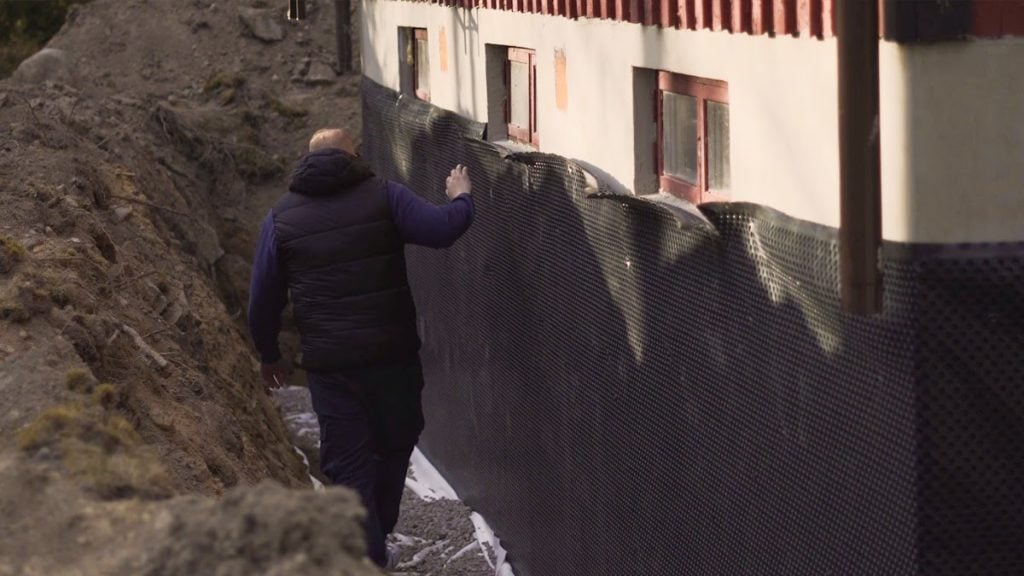
When the excavation is filled back in, the soil is strategically compacted, and it may be mixed with other materials to help it drain better. For example, in clay-rich soils like NJ's soils, adding sand to the mix can help a lot.
Exterior French drains are also typically installed while the foundation is open. Much like interior French drains, exterior French drains are perforated pipes installed in gravel beds up against the footing of the foundation. Water that would seep downwards and into the home instead follows the path of least resistance into the French drain, where it's redirected away from the home.
The other big thing that can be done to the exterior for waterproofing is regrading the land around your foundation. If your home tends to flood when there are heavy rains or snowmelt, but not when the water table is high, it could be primarily because water is flowing towards your home rather than away from it.
If that's the case, regrading can raise the land around your home and direct water away from the foundation, towards a lower point, drainage ditch, or storm drain. That way, water can be guided away from the home even during severe storms or wet springs, so it won't get into the basement.
The best strategy for waterproofing your basement is likely a combination of both interior and exterior strategies. Grading plus interior waterproofing can do a lot without needing the full excavation, while the excavation can do most of the work with a good vapor barrier inside.
There's no one-size-fits-all solution to basement waterproofing. A lot will depend on your basement, your water issues, what waterproofing is already in place, what can be done to the land, and even where your home is positioned.
To that end, why not contact us? At Magnolia, we've been doing basement remodels of all sorts all throughout north and central New Jersey for over 30 years. We know what to look for and what your basement will need to stay dry and safe once you finish the interior. Quotes are completely free, so there's no reason not to reach out.
Yes and no.
If you have very simple, very minor water issues in your basement, you might be able to use some off-the-shelf products and a few YouTube tutorials to figure out how to seal it all up. That's good enough for an unfinished basement.
But you really, really don't want to run the risk of water behind the walls or under the floor in a finished basement. The problem with DIY waterproofing is you can only do so much, and water has a way of getting past even the best engineering.
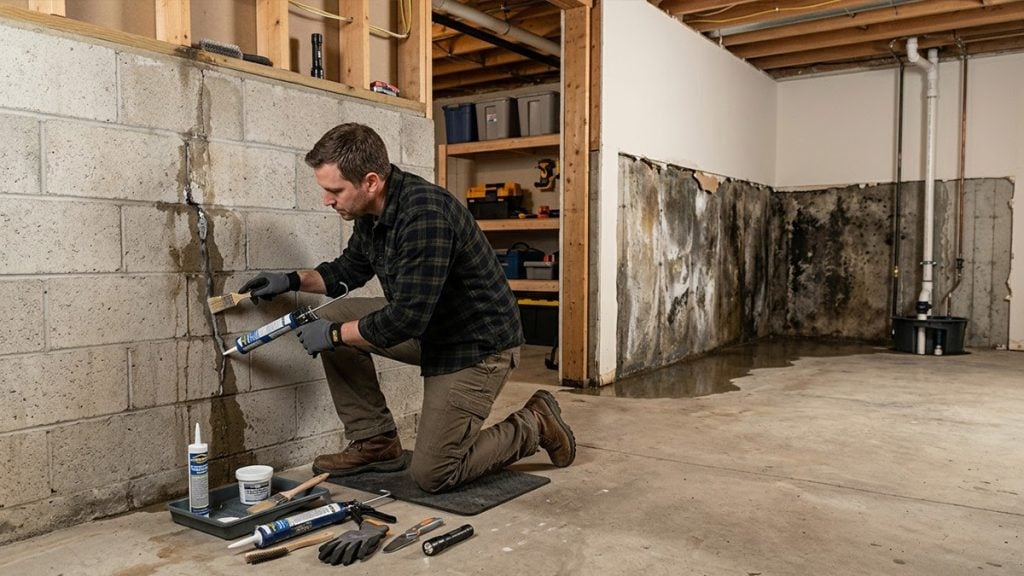
Even if you adequately waterproof your basement now, if you aren't installing more permanent solutions like a sump pump or exterior waterproofing, those fixes you implement will fail sooner rather than later. Eventually, water will get back in.
If you have more severe water issues, you very likely won't be able to DIY a solution at all. If you have a license to operate an excavator, know how to handle one next to a home, and know what you're doing with water… well, at that point, you're probably a waterproofing professional yourself, so it's hardly DIY anymore.
And let's be honest here. Water is not something you want to treat lightly. You can put your whole home in jeopardy from rot issues, and mold can cause severe health problems for everyone living in your home. A quick DIY waterproofing and then installing walls and floors is a sure-fire way to have all of those problems in a few years.
Anyone living in north or central New Jersey should reach out to us. We know the questions to ask, we know how to look for signs of water intrusion, we know how to evaluate your home and your land, and we know what to recommend to make sure water can't get into your basement.

Yes, it can be a lot of work, and can take weeks to get it all done right.
Yes, it can be costly, especially if there's extensive excavation to be done for exterior waterproofing.
But it all pales in comparison to the problems and expenses you can have if you don't adequately waterproof your basement before finishing it. Trust us; we've seen the results of water behind finishes, and it isn't pretty.
And hey, you might be lucky. You might be well-positioned and already mostly waterproof, and could only need a little bit of touching up. Maybe all you need is some grading and a backup for your sump pump. There's only one way to know for sure, and that's to talk to the experts.
So, if you want your basement done the right way the first time, we're the ones to call. Let us make sure your basement renovation goes smoothly and stays dry for decades to come.
New Jersey's high water tables, clay-rich soils, and seasonal storms make water intrusion a serious risk. Without proper waterproofing, a finished basement can develop mold, rot, pest infestations, and flooding, destroying your investment and leading to expensive remediation. Waterproofing first protects your finishes and your family's health for decades.
What's the difference between interior and exterior basement waterproofing?Interior waterproofing is done from inside and is more affordable, typically involving a sump pump, French drains, and wall membranes. Exterior waterproofing is more intensive and reliable, requiring excavation to seal the foundation, install exterior French drains, or regrade the land. Often, a combination of both provides the best protection.
How do I know if I need a sump pump and French drains?The best way is to consult a skilled contractor. If you've had a flooded basement not caused by a leaky pipe or bad water heater, you'll likely need them. However, if your basement stays bone-dry even after heavy rains or spring snowmelt, you might not require these components.
Can basement waterproofing be a DIY project?For minor issues in an unfinished basement, DIY sealants may suffice. But for a finished basement, DIY is risky. Temporary fixes fail over time, letting water in behind walls and floors. This can cause rot, mold, and serious health problems. Severe water issues almost always require professional solutions.
Why should I choose Magnolia Home Remodeling for my basement project?Magnolia has completed basement remodels throughout north and central New Jersey for over 30 years. We know how to inspect your home, identify water intrusion signs, evaluate your land, and recommend the right solution to keep your basement dry and safe. Quotes are completely free, so there's no reason not to reach out.