Is a Sunroom Addition Worth It in New Jersey?
Nov 13, 2026

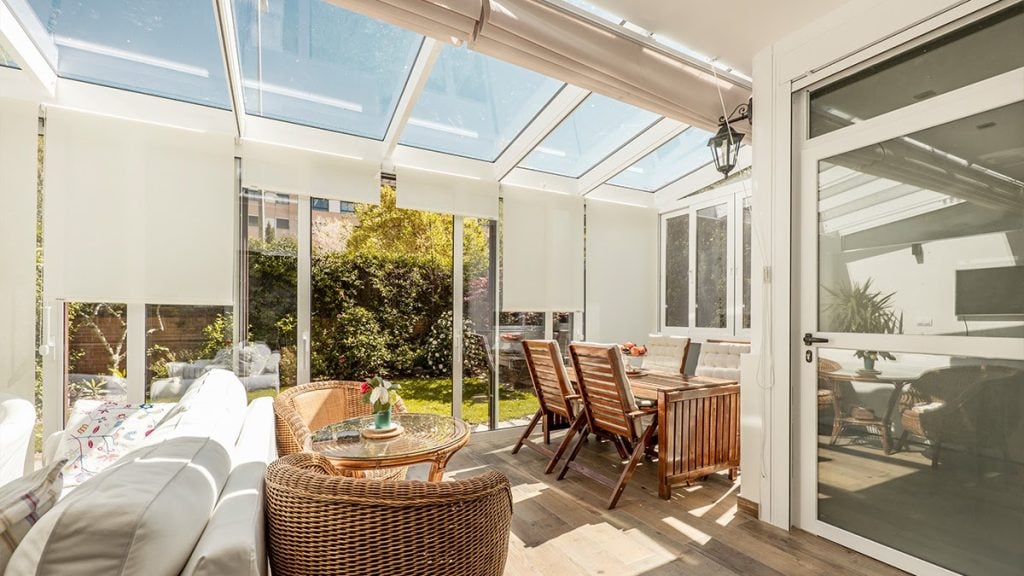
When you're exploring options for adding square footage to your home, one of the options you'll often see is a sunroom. Sunrooms can be very compelling, from a cost standpoint, a utility standpoint, and even an aesthetic standpoint. But they aren't without their downsides, so it's worth getting the full picture before you pull the trigger on a major home addition.
If you just want a quick answer from your New Jersey home remodeling experts, we say yes: in many cases, a sunroom is an excellent addition to a New Jersey home. That said, there are a few reasons why you might not want one, and they can depend a lot on where exactly you're located, what budgetary considerations you have, and what you want to get out of the room you're adding.
We're more than happy to discuss your home renovation project directly. We can lend you our expertise and offer opinions on the best course of action for your home, not just a general online resource. To get that insider viewpoint, just fill out our form for a free, no obligations discussion and quote.
Before we can really get into the weeds about whether or not a sunroom is worthwhile, it's a good idea to get on the same page about what a sunroom even is. We've talked to a lot of people over the last 30+ years, and the preconceptions and opinions vary a lot.
A sunroom is a lot like a room addition, but lightweight. They tend to be faster and easier to create, though they often still need a foundation poured for them. Sometimes, an existing deck or even a patio can be converted into a sunroom instead.
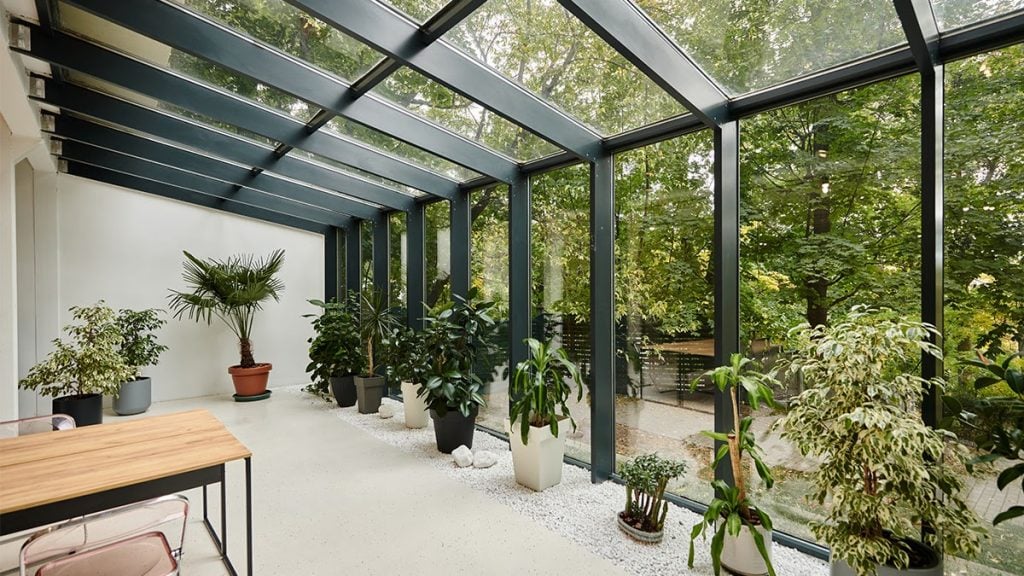
Sunrooms aren't stick-framed; they're predominantly made of windows, almost like a classic greenhouse. They're great for visibility and natural light, but they have all the drawbacks a room made of glass is likely to have.
On top of that, there are two (or maybe three) kinds of sunrooms, depending on what you view a sunroom to be.
First is the not-quite-a-sunroom, which is simply a screened-in porch or screenroom. You're sheltered from things like insects and blowing leaves, but there's no solid barrier to maintain temperature, so they're usable just like a porch would be.
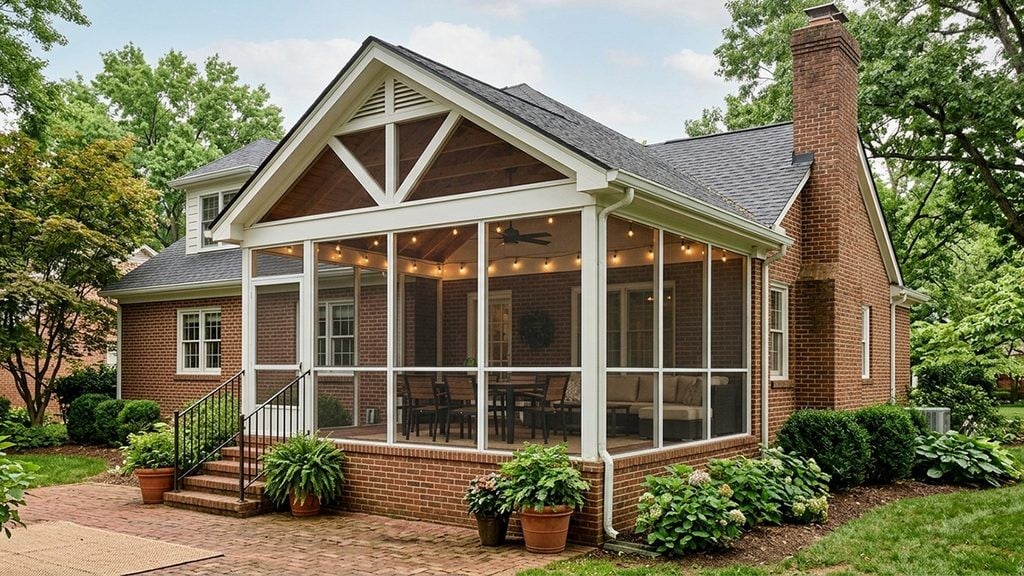
We don't consider these to be sunrooms at all, but some people might.
One of the most common sunroom designs is the three-season sunroom, or just three-season room. These are light-framed rooms with a lot of windows, a simple floor and roof, and maybe a door to the outside.
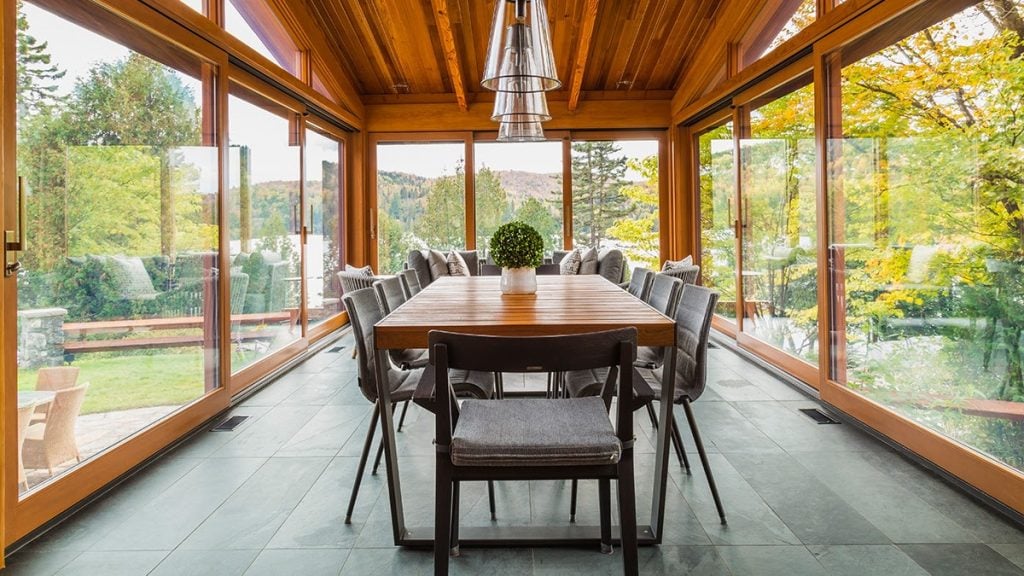
They're called three-season rooms because they're usable for three seasons of the year, from mid-spring to mid-autumn. The problem is, they aren't well-insulated, and they aren't tied into the home's HVAC, so they don't get heating in the winter (or cooling in the summer), so that one stretch of the year is too inhospitable to use the room comfortably.
Four-season sunrooms, then, logically must be better suited to use all year 'round. And that's true!
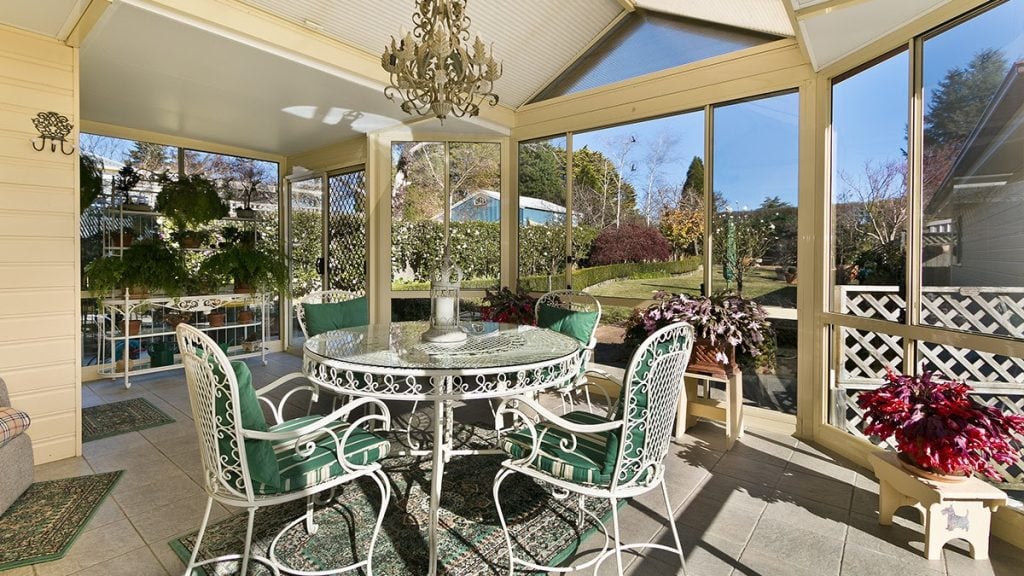
Four-season sunrooms are still mostly made of windows, but the windows are much better insulated, and the framing is thermally insulated as well. More importantly, these rooms are usually tied into the home's HVAC, so you get heating in the winter and air conditioning in the summer. They're almost, but not quite, full room additions. More on that later, though.
There are, actually, a couple of other kinds of sunrooms, though they have special names and features.
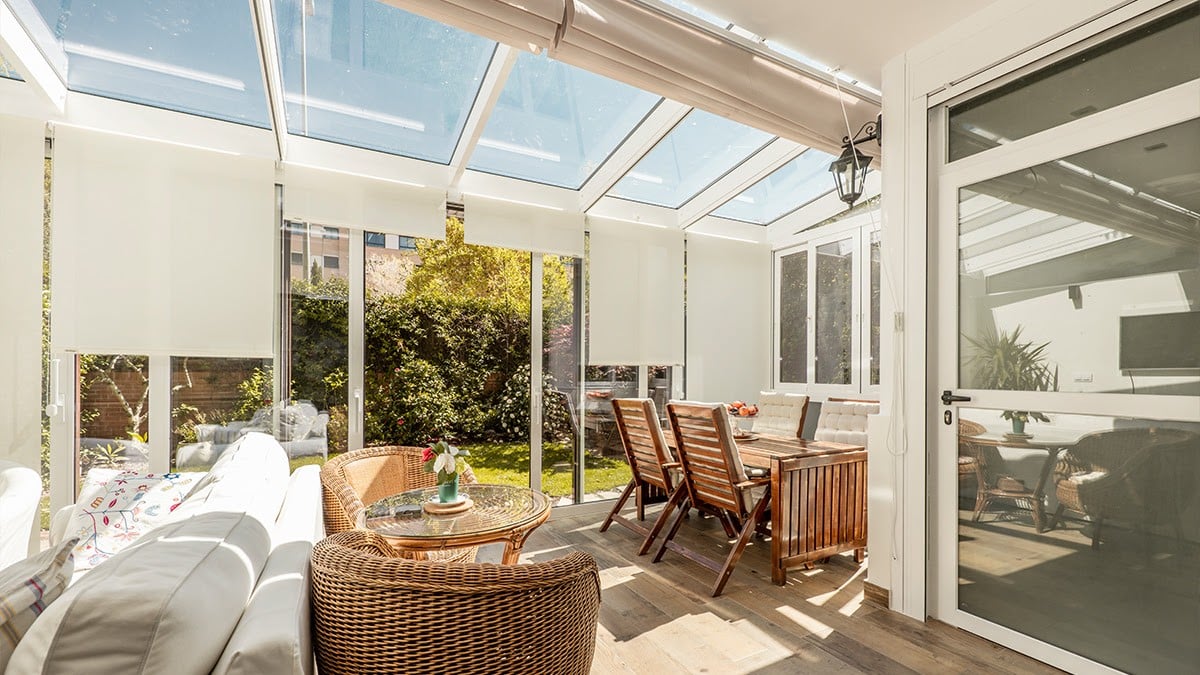
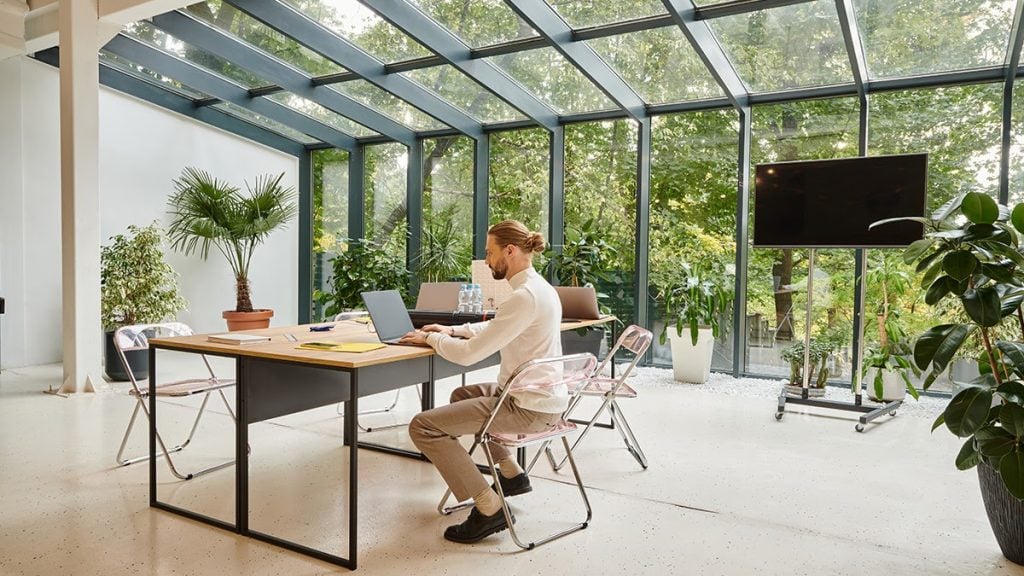
One is the solarium. Some people think solarium is just a fancy name for a sunroom, but there's one key difference. Solariums generally have a glass roof as well, giving great views of the sky and even more natural light. They're frequently used as plant rooms, or at the very least, bright and well-lit spaces.
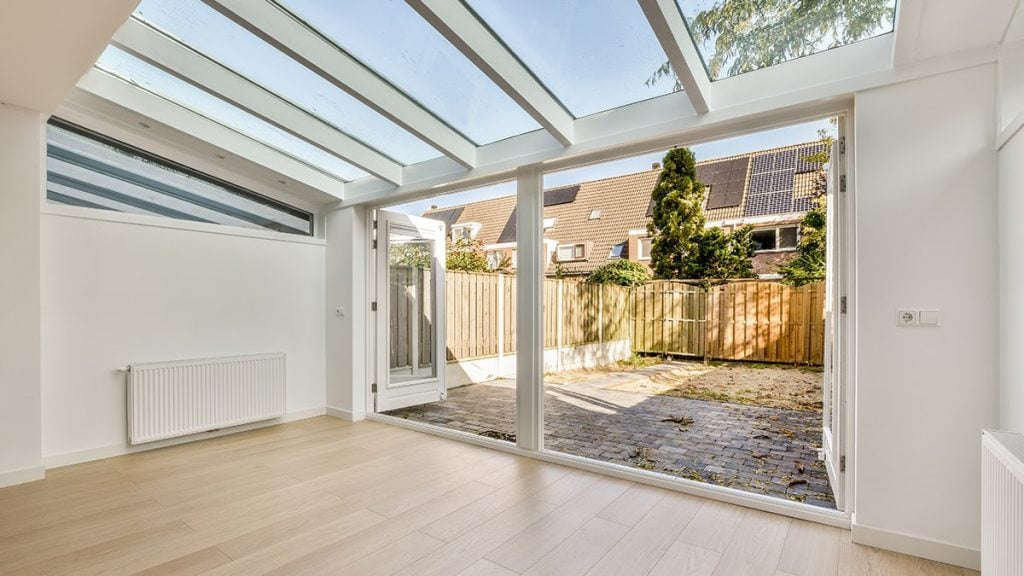
The other kind is the conservatory. Conservatories are very similar to solariums, but they're more often designed to be part of the living space, rather than a specialized plant-focused room or a more three-season room. They're kind of like the four-season version of a solarium.
The lines between these different rooms can be pretty blurry, and frankly, they don't actually matter all that much. No one is going to get mad if you call a conservatory a solarium, you know? Still, it can be worth knowing the terms people are likely to throw around.
| Feature | Three-Season Sunroom | Four-Season Sunroom |
|---|---|---|
| Usability | Mid-spring to mid-autumn | Year-round |
| Insulation | Minimal | Well-insulated |
| HVAC Connection | No | Yes |
| Average ROI | 45–55% | 50–70% |
| Relative Cost | Lower | Higher |
The difference between a three-season sunroom and a full addition is obvious. A four-season sunroom, though, that sounds a whole lot like a full room addition, doesn't it? You have a foundation, you have walls and a roof, you have insulation and climate control. What's the difference?
The main difference is in the construction and design. A sunroom is made with a lot of windows, if not entirely windows for the walls. They maximize natural light and visibility, while potentially sacrificing on energy costs and insulation.
Room additions have more solid, stick-built construction just like the rest of a home. The walls are more opaque, with only a window or two instead of nearly all windows. They also tend to cost more to construct.
The construction process is simpler and can go faster, as well. On the other hand, sunrooms have a lower return on investment, since the space is likely less useful than a full room addition would be. You're probably not turning a sunroom into a bedroom, after all.
Say you have a patio or deck space, or just an open bit of yard, and you want to convert that space into a sunroom. What are the benefits you can expect for your home here in New Jersey?
The big one is adding square footage to your home. Any addition to the home is valuable, even if the space is just a three-season room and isn't usable all year. Full four-season sunrooms are even better, since you can use the space all year. A full home addition has a bit more value because of the flexibility and utility of the space, but a sunroom is still great.
Another benefit is the view. Sunrooms thrive on view, so if you have a nice yard or garden, a good neighborhood, or even a good view from up on a hillside, a sunroom can be an incredible addition to your space. Being able to sit at a table with your morning coffee and look out over an expanse of woods or a bustling neighborhood can be a very compelling atmosphere.
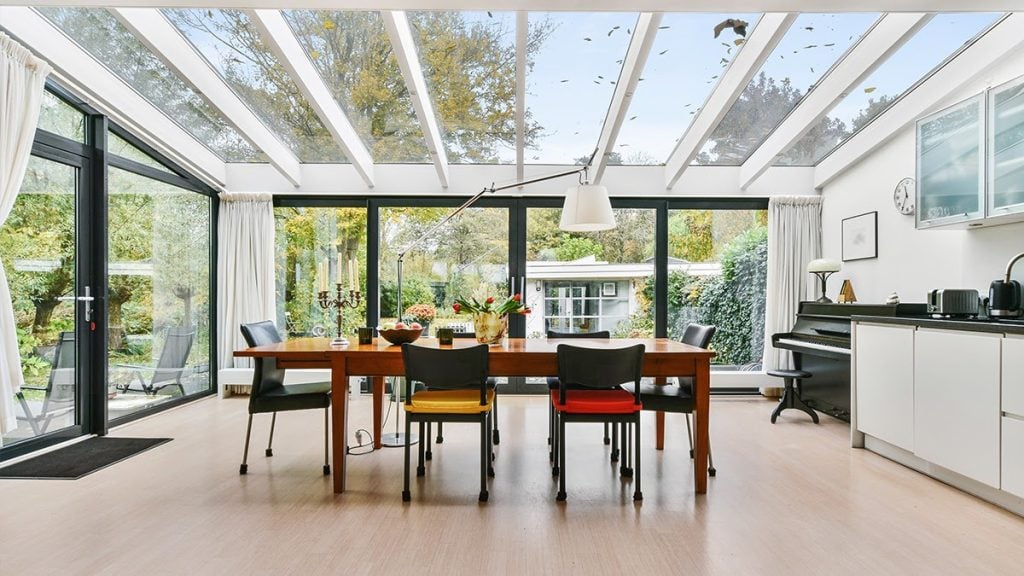
They also bridge the gap between inside and outside on days where you'd like to be outside, but the weather isn't quite appropriate. Maybe it's a little cooler than would be pleasant, but the greenhouse-like effect helps keep your room warmer and pleasant to be in. Or, maybe it's warmer out than you'd like, but the cross-breeze through all the windows keeps you nice and cool.
There are even implicit benefits, like the added natural light providing a source of vitamin D, the ability to grow houseplants helping to keep your home air fresh and clean, and the connection to nature helping to calm a stressful lifestyle.
Unfortunately, sunrooms have a few drawbacks that make them less than ideal for certain circumstances.
The most obvious is the windows. While they're great for light and view, even the best insulating windows are still worse than insulated walls, so you're going to lose more heat in the winter and more cool in the summer. They either can't really be used for parts of the year (for a three-season) or they'll spike your energy bills keeping the temperature under control (for a four-season).
Sunrooms also still require a good amount of construction work in most cases. If you have a very well-poured patio or a deck with strong footings, you might be able to put a sunroom on top as-is. Most of the time, though, you need to pour a new foundation just like you would with a home addition like a kitchen addition, and that's a significant project.
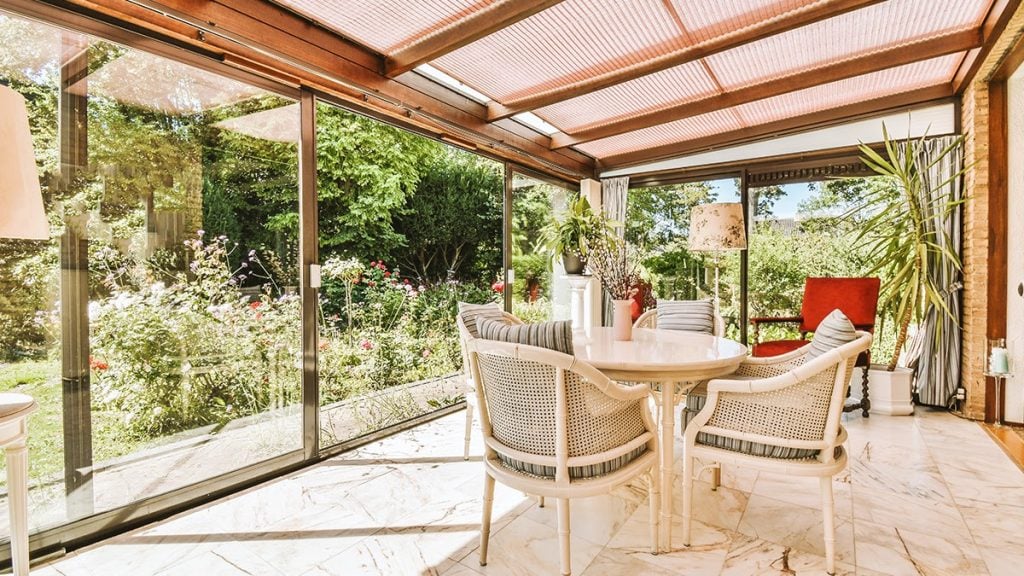
Sunrooms also aren't appropriate for every home. If you live in a dense neighborhood, have no real view, or have a limited yard space, then it's going to feel like a waste. Who wants a sunroom with all these gorgeous windows when you're just looking out at your neighbor's walls?
Speaking of those windows, can we say maintenance? Most people already don't clean their windows as much as they should, but those issues are a thousand times more visible on a sunroom.
There's also one thing worth making special note of here: coastal regions. The coastal regions of New Jersey have to deal with some unique elements that can affect how a sunroom works. In particular, salty sea air, humidity, and storms can all make a sunroom both less pleasant to be in and more prone to corrosion and other damage. They need more maintenance and need to be constructed of particular materials to withstand the elements. That can add to the cost, too.
Unfortunately, a sunroom is on the lower end in terms of ROI. It's not entirely abysmal, but it's far below a lot of other renovations, including full room extensions.
A four-season sunroom tends to have an average return on investment of around 50-70%. If you've spent $50,000 on your sunroom, that means you'd expect somewhere around $20-30k to be added to your home's value. That's nothing to scoff at, but a full room addition sits at as much as 80%, so you don't get quite as much value.
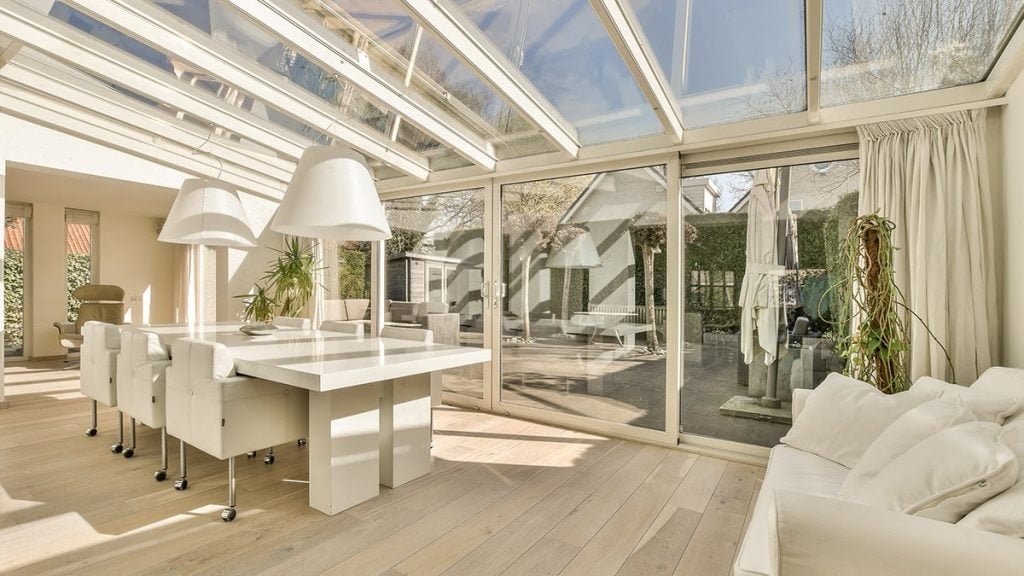
A three-season sunroom is, as you might expect, a little worse. The limitations on the utility of the room, coupled with some home buyers not wanting a room with such a specific use case, means you're looking at 45-55% on average for your ROI.
Now, the raw cost of a sunroom is lower than a full home addition, which is one reason why you might consider a sunroom instead of an addition. But when financing is available, it might make more sense to stretch for the more valuable, more useful room.
Despite the drawbacks, a sunroom can be a great addition to many New Jersey homes.
A three-season sunroom is great if:
A four-season sunroom is great if:
And, of course, if you want more square footage and utility, and don't need the visibility, a full room addition might be the better choice.

So, does a sunroom sound like a great addition to your New Jersey home? If so, drop us a line! We'll come out and have a full discussion, give you your best options, and leave you with a free estimate for your project.
If your home is anywhere in North or Central New Jersey, including Essex, Sussex, Morris, Middlesex, Passaic, Warren, Hudson, Union, Bergen, Hunterdon, or Somerset counties, we're here for you. As New Jersey's premier home remodeling experts, with over 30 years of projects under our belts, you can be sure you'll get the best possible room you can.
A three-season sunroom is usable from mid-spring to mid-autumn but lacks insulation and HVAC connection, making it uncomfortable during peak summer and winter. A four-season sunroom has better-insulated windows, thermally insulated framing, and ties into your home's HVAC system, allowing comfortable year-round use. The four-season option is closer to a full room addition, while the three-season version offers a more affordable, semi-outdoor experience.
How is a sunroom different from a full room addition?Sunrooms are lightweight structures built predominantly from windows to maximize natural light and views, though they sacrifice some insulation and energy efficiency. Full room additions use solid, stick-built construction matching the rest of your home, with opaque walls and only a window or two. Additions cost more but offer greater flexibility and utility, such as serving as a bedroom. Sunrooms build faster but deliver lower return on investment.
What are the main benefits of adding a sunroom in New Jersey?A sunroom adds valuable square footage to your home, with four-season versions usable year-round. It takes advantage of nice views, whether a garden, neighborhood, or hillside, and bridges indoor-outdoor living on days when weather isn't quite ideal. Sunrooms also offer wellness perks, including extra natural light for vitamin D, space for air-cleaning houseplants, and a calming connection to nature that can reduce everyday stress.
What drawbacks should I consider before building a sunroom?Windows insulate worse than walls, so you'll lose heat in winter and cooling in summer, limiting use or spiking energy bills. Most sunrooms require pouring a new foundation, a significant project. They're not ideal for dense neighborhoods or homes lacking a view, and the extensive glass demands regular cleaning. Coastal New Jersey adds challenges like salty air, humidity, and storms, requiring special materials and more maintenance.
What ROI can I expect from a sunroom?Sunrooms sit on the lower end for return on investment. A four-season sunroom averages roughly 50-70% ROI, so a $50,000 project might add around $20,000-$30,000 to your home's value. Three-season sunrooms return about 45-55% due to limited utility and narrower buyer appeal. While sunrooms cost less than full additions upfront, a full room addition can return as much as 80%, making it worth considering if financing is available.