Ice Dams on NJ Roofs: Will a New Roof Fix the Problem?
Nov 20, 2026

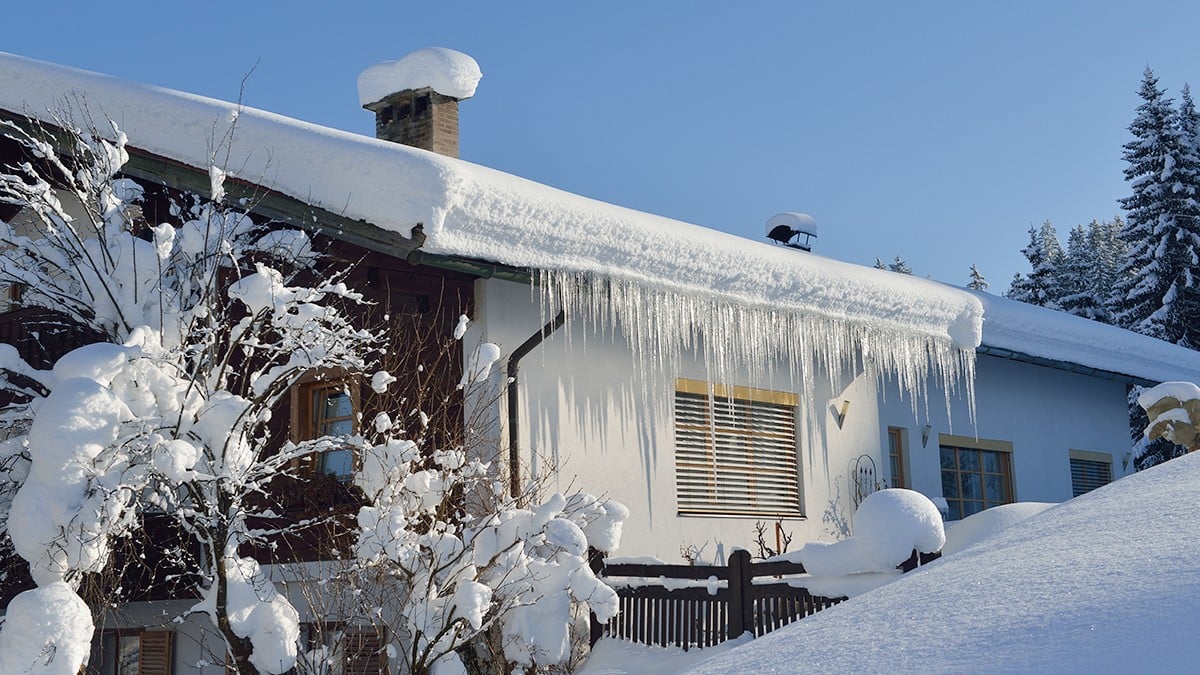
It's a crisp and chilly Saturday morning in New Jersey. You've finished your morning coffee, and it's time to get to work shoveling the snow off the driveway. You head out, sheltering your eyes against the sun. You turn, and you look, and you see it.
Above the icicles, above the dripping meltwater from the snow meeting the morning's rays; a layer of thick ice built up along the eaves of your roof. Maybe it's a couple of inches thick, or maybe it's even thicker; either way, it's a lot of weight and a lot of water poised right over the edge of your roof.
It's called an ice dam, and it's more of a problem than many people realize. Ice dams aren't just the foundation for icicles or a risk to the head if they fall off. They signal something wrong with your roof, a problem that has much worse implications than what you can see.
An ice dam is a thick chunk of ice that builds up along the lower eaves of your roof when there's snow on it.
Ice dams occur when there's a temperature differential settled around the freezing point of water, 32 degrees. When there's snow on your roof, that snow is subject to temperature from both outside and inside.
If the air outside is at or below 32 degrees, but the inside of your home beneath the roof is warmer, that heat starts to radiate out through the roof. It melts the snow from the underside, causing water to trickle down the roof towards the eaves. Heat from the sun can also contribute to this melt, if it's right around freezing and not too cold out.
The problem comes when the water reaches the edge of your roof. Down there, it's usually the case that the roof is much cooler. Heat rises, so it's rising towards the peak of your roof, leaving the eaves cooler. If it's cool enough there to be at or below 32 degrees, the water starts to freeze, and when it freezes, it stops moving.
More water melts and trickles down, but now there's ice in the way. Some of that water also freezes in the same area, and more ice forms.
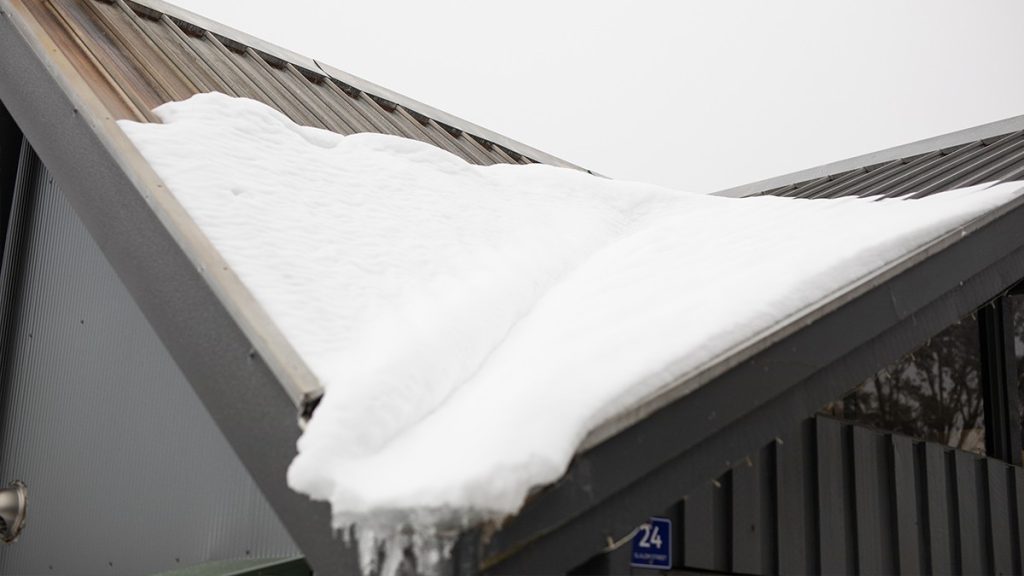
This process keeps happening, until enough ice builds up that now there's a whole dam built up. Now larger amounts of water are trapped, like a puddle behind the dam. Some of it freezes, some of it might work its way to the edge and trickle off the roof, but some, well. We'll get to that in the next section.
Why do some roofs form ice dams and others don't? A few factors.
Many people think that an ice dam is a gutter problem. We've seen people spend thousands on new gutters, or on getting their gutters cleaned and inspected, to make sure water doesn't pool and build up in them. While those tasks can be useful, especially if you have older gutters, they won't solve an ice dam problem. Ice dams are fundamentally not related to gutters at all, and in fact frequently happen on homes with no gutters.
Absolutely.
Ice dams are not just cosmetic. They can cause several problems, some of which are very severe.
The most obvious issue is that the ice has to go somewhere eventually. Sometimes gradual warming over a warmer weather pattern or the start of spring allows it to melt, but more often it will melt enough to lose its grip on your roof and come tumbling off. That can be a huge chunk of ice falling at least 1-2 stories, and that can do a lot of damage.
We've heard stories of cars having their windshields shattered by these falling chunks of ice, gutters being torn from the roof, not to mention what happens if they happen to fall right when you're walking underneath!
Unfortunately, the risk of ice falling onto you in the driveway is the least of your worries.
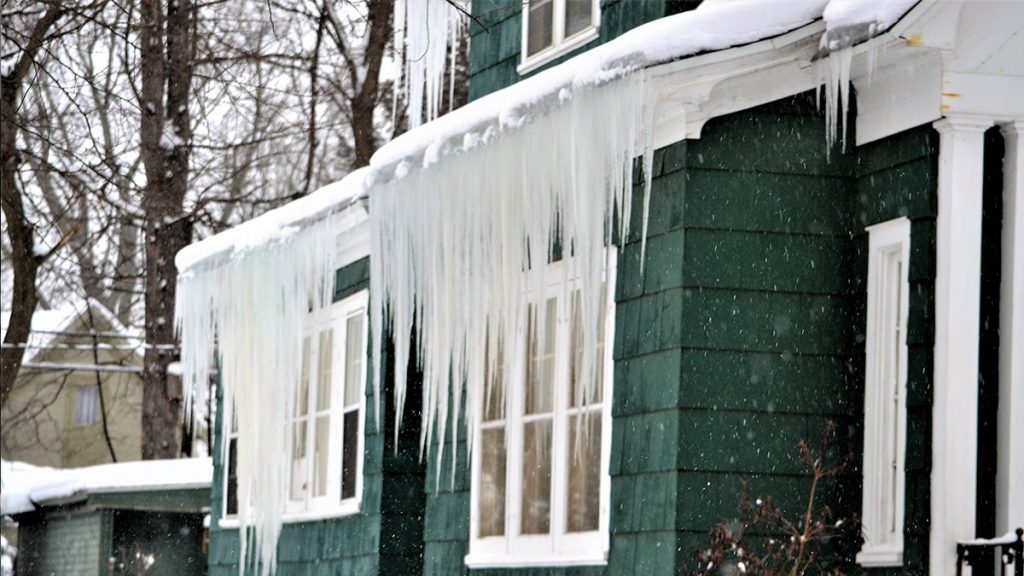
Water, when it freezes, expands. Ice dams trap water at the edge of your roof and at the bottom of your shingles. When the water expands, it slightly lifts the shingles, allowing more water in and more lift to more shingles. This can, eventually, pull shingles entirely off your roof.
The real risk, even beyond that, is water intrusion into the home. Water that backs up under the shingles has to go somewhere. It soaks past the roof decking and can rot the wood of your roof itself. Below that, it can intrude into the attic space, soaking insulation and making it less effective. It can soak into structural cross-beams and vertical posts, rotting away at the very structure of your home.
Where there's water, there's mold and mildew. Water trapped in the attic, in the wall cavities, in the corners of the roof, fosters the growth of mold and mildew. Often, people develop respiratory issues for the winter months and attribute it to stagnant air, when it's really the growth of mold in hidden places they can't see, all caused by ice dam moisture.
When ice dams get extreme enough, and the damage gets bad enough, water can intrude into the main spaces of the home. Upper-floor outer corners of the ceiling end up water-stained or, worse, can collapse in from the weight of water. Stains and mold can show up, and if water breaks through, it can start pouring in, taking the path of least resistance from the reservoir behind the dam.
When you're looking at extensive water damage, structural repairs, mold remediation, and more, and you haven't even addressed the root of the problem, you can see why ice dams need to be addressed right away.
Once you recognize an ice dam, or experience the consequences and have to deal with them, you might be told that you need a new roof.
Do you really?
Here's the good news: you probably don't need a whole new roof. You may need some roof repairs, depending on how much of the structure and decking has been damaged by water. You might need some new shingles if some of them have been torn up and damaged by ice dams, or pulled off when an ice dam falls.
But if you replace your roof without actually addressing the underlying problem, your ice dams will come right back, and you'll be back where you started.
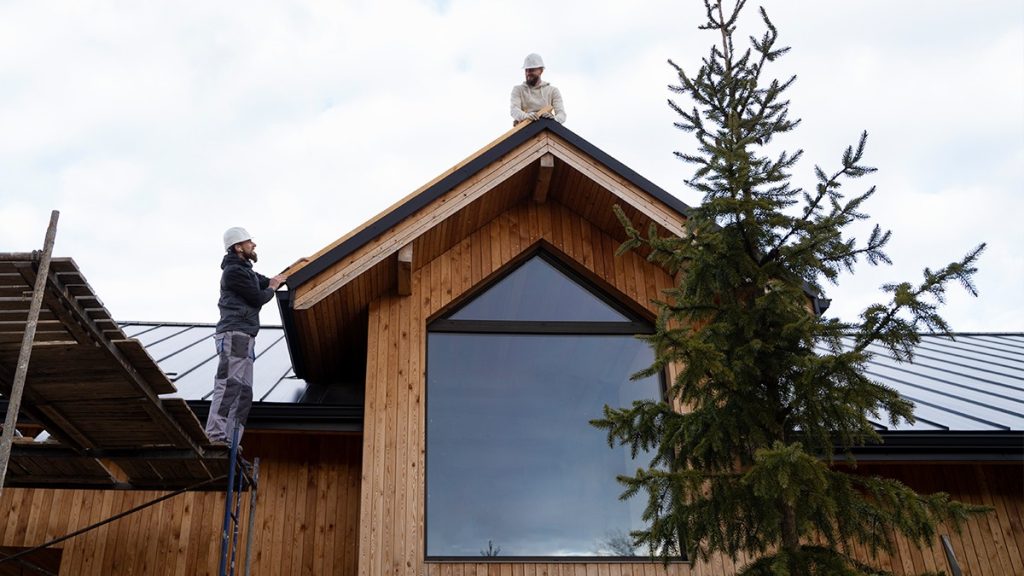
So, why do some contractors recommend a new roof?
Sometimes, there's enough damage to warrant it. In rare cases, the design of the roof is old enough (or the roof itself is old enough) that ice dams are more common and there are fewer ways to deal with them. Most of the time, though, it's because a roof is a better value to the contractor than some repairs.
If you don't need a new roof, though, what DO you need?
The underlying problem causing ice dams is heat escaping from your home.
First, check where the ice dams are forming. You'll generally see one of three things.
This can tell you what the root cause of your ice dam is, and whether it's a matter of handling the heat from a few small egress points, or dealing with insulation throughout your attic.
The best permanent fix is insulation. Since ice dams form because of heat escaping, you just need to prevent that heat from escaping.
If your attic is finished, you'll need to insulate the roof itself. Often when people finish attics, they underestimate how much insulation is required to insulate the roof from the warmth of the room below. It's surprisingly common for finished attics to need to be partially re-done to improve that insulation.
If your attic is an unfinished space, then the goal is a "cold roof" instead. Insulating the floor of the attic prevents as much of the warmth of the home from escaping as possible.
The other key is soffits and ridge vents. Ridge vents sit at the peak of your roof and allow heat that rises to escape out the top. Soffits sit at the bottom of the roof along the edges, and vents there further allow for airflow and warmth to escape. These combine to keep the attic, and consequently the roof, as close to the outside temperature as possible.
When heat isn't escaping, it doesn't melt the snow. When the snow doesn't melt, it can't refreeze and form an ice dam.
There are a couple of other things you might see recommended that can help, but they aren't necessarily the best solution.
| Solution | How It Helps | Drawback |
|---|---|---|
| Attic/Roof Insulation | Stops heat from escaping, the root cause | Upfront cost; may require attic rework |
| Soffit & Ridge Vents | Keeps roof near outdoor temperature | Best paired with insulation |
| Roof Rake | Removes snow before it melts | Constant labor; hard on tall homes |
| Heated Cables | Prevents ice at the eaves | Uses electricity all winter |
| Water Barrier Membrane | Blocks water intrusion | Doesn't stop dams from forming |
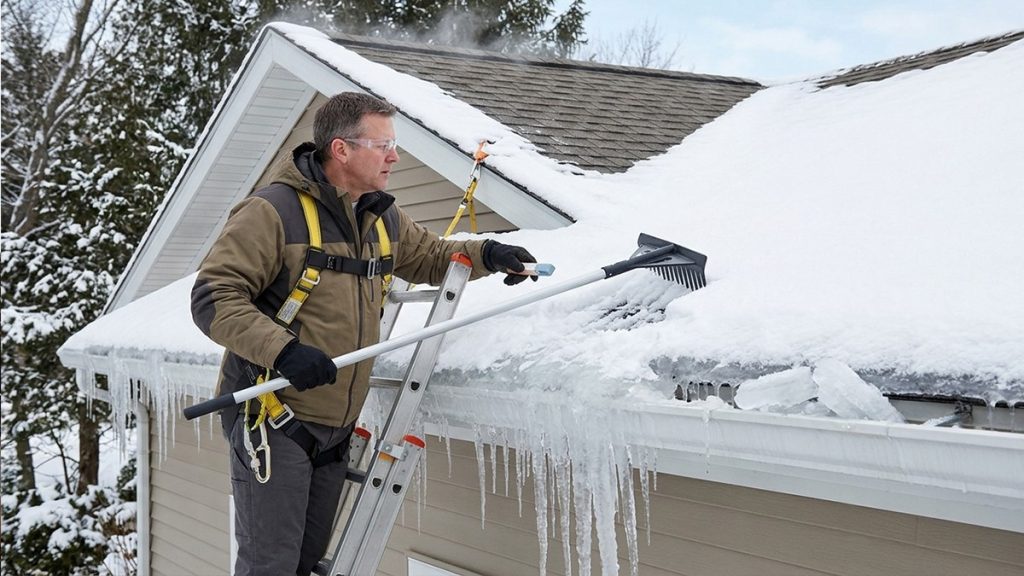
First, you can be proactive at removing snow from the roof. Roof rakes are long tools that allow you to pull snow from the roof from the ground. When there's no snow on the roof, it can't melt into an ice dam.
The downside to this is the labor involved. Going out after every snowfall and clearing the roof is yet another task you need to do, every snowfall, from now until you give up and either let an ice dam form or go with insulation. It's also much harder if you have 2+ floors to reach up.
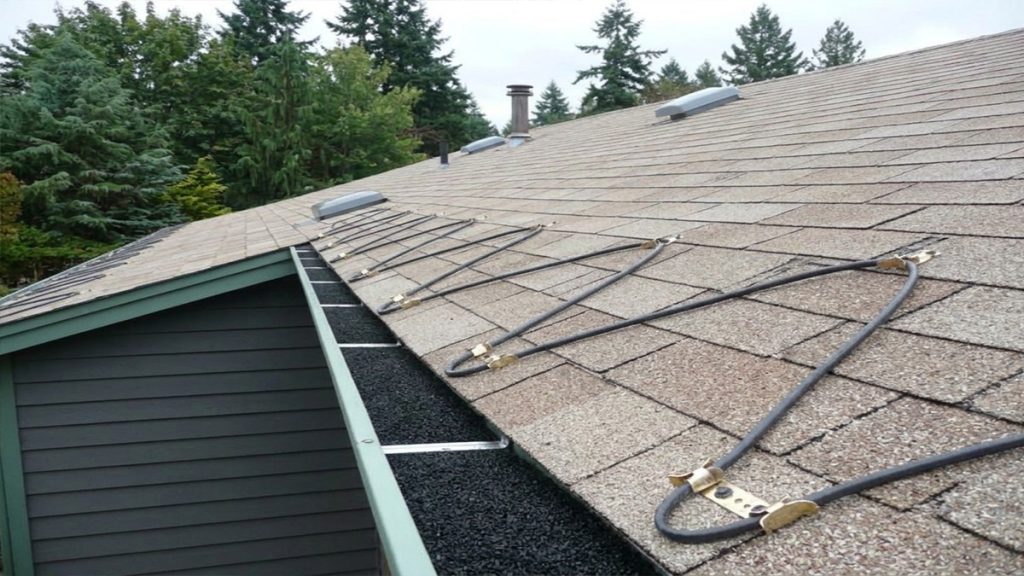
A second option is a heated roof cable. These are cables you run along the length of your eaves, which plug into your home's electricity and generate a small amount of heat right where the ice dam would form. This can prevent an ice dam from forming at all, but will cost you electricity all winter long.
Some contractors recommend a roof replacement with an added anti-ice and water intrusion barrier. These membranes don't stop ice dams from forming, but they do work to prevent water from intruding into the home. Still, it's not solving the underlying problem.
At Magnolia Home Remodeling, we've been doing roofs, eaves, wall repairs, water remediation, and all manner of related home improvement tasks throughout New Jersey for over 30 years. We know how to solve ice dams, how to fix any existing water damage from previous ice dams, and how to prevent them from happening again.
You probably don't need a whole new roof, but if you do, we can do that too.

To discuss your project, drop us a line through our form or by giving us a call. We'll come out, discuss your project, and give you a quote, all for free. So, if you're in one of our service area counties, including Essex, Sussex, Morris, Middlesex, Passaic, Warren, Hudson, Union, Bergen, Hunterdon, or Somerset, we're waiting for your call!
An ice dam is a thick ridge of ice that builds along your roof's lower eaves. It forms when heat escaping from your home melts snow on the roof. That meltwater trickles down to the colder eaves, refreezes, and gradually builds into a dam that traps more water behind it.
Are ice dams actually dangerous or just a cosmetic issue?They're genuinely dangerous. Falling ice can shatter windshields, rip off gutters, and injure people below. Worse, trapped water lifts shingles and seeps into your roof decking, attic, and walls. This causes wood rot, ruined insulation, structural damage, and hidden mold growth that can even trigger respiratory issues.
Do I need a completely new roof to fix ice dams?Probably not. You may need some repairs or replacement shingles if water damaged the decking or structure, but a full new roof is rarely necessary. Importantly, replacing your roof without addressing the underlying heat-escape problem means the ice dams will simply return.
What's the best permanent way to stop ice dams?Proper insulation is the best permanent fix. Since ice dams form from escaping heat, stopping that heat loss solves the problem. Finished attics need the roof itself insulated, while unfinished attics need the floor insulated for a "cold roof." Adding soffit and ridge vents further keeps the roof near outdoor temperature.
Are roof rakes or heated cables good alternatives?They help but aren't ideal. Roof rakes remove snow before it can melt, but require constant labor after every snowfall and are hard to use on taller homes. Heated cables prevent ice from forming along the eaves but consume electricity all winter. Neither addresses the root cause like insulation does.